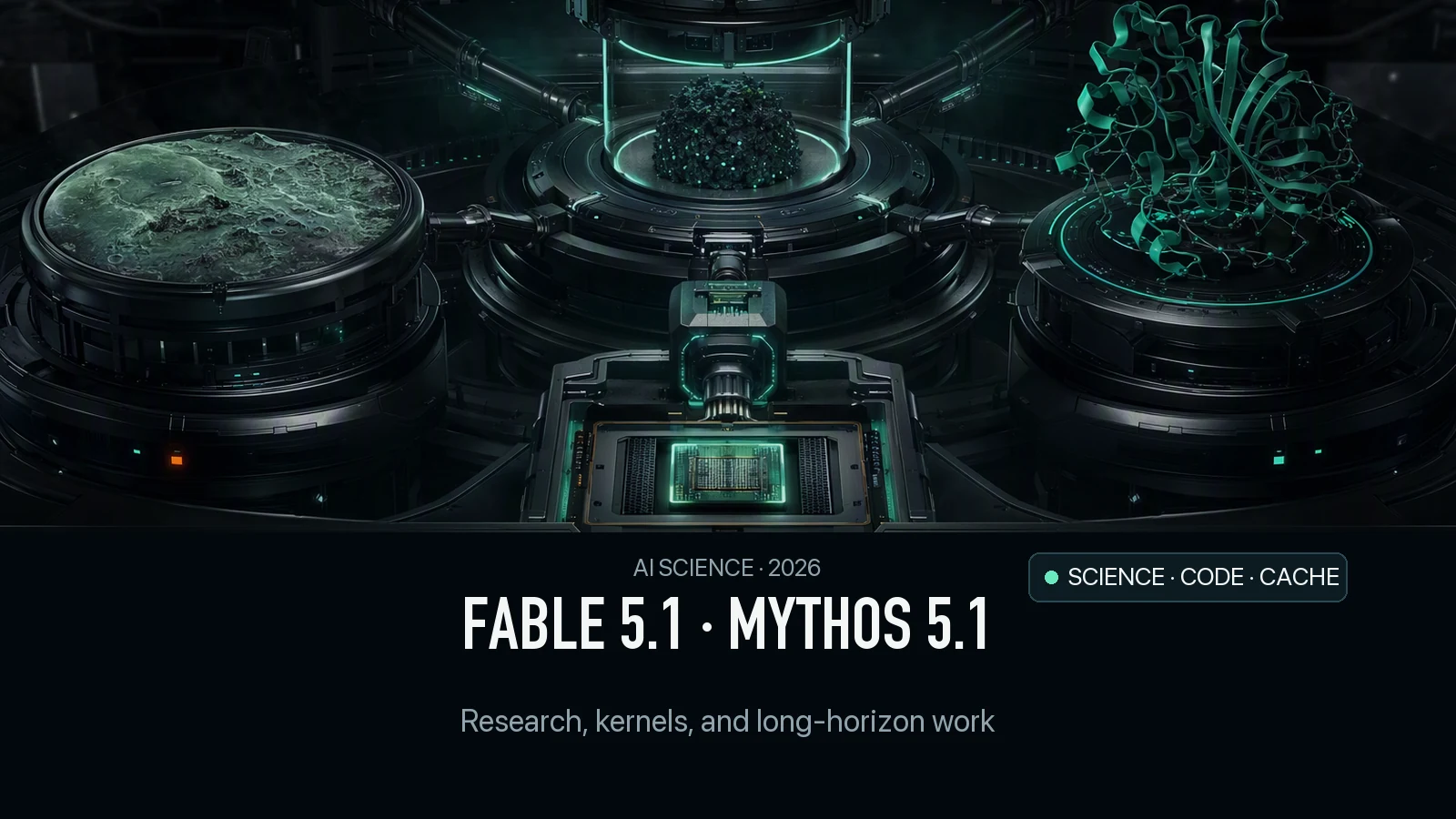
Claude Fable 5.1: Coding, Research and API Pricing
SandBase explains Claude Fable 5.1 coding results, API IDs and cache pricing, with a worked cost example and a separate Astra comparison using actual request bills.
SandBase explains Claude Fable 5.1 coding results, API IDs and cache pricing, with a worked cost example and a separate Astra comparison using actual request bills.

SandBase's Fable 5.1 evaluation design: test a billing-client upgrade across two repositories, recover from tool failures, cap retries, and count accepted-task cost.

SandBase compares Fable 5.1 and Mythos 5.1 access, API pricing, fallback and retention. Learn why a Fable API account does not grant Mythos research permissions.

Examine Fable 5.1 and Mythos 5.1 research cases: Venus mapping, lab-tested protein binders, and GPU kernel speedups, with methods and evidence limits.
Claude Fable 5.1 launched on September 1. Revisit the EAP names, Claude Web routing rumors, and evidence that could not establish a model's identity.
Claude Agent SDK setup guide for Python and TypeScript: installation, pricing, agent loop, permissions, MCP, sessions, and production gateway choices.
Claude Tag lets teams @mention Claude in Slack channels to delegate real work. Multiplayer, persistent memory, proactive, async. Available for Team and Enterprise.
DeepSeek Harness vs Claude Managed Agents compared. Open-source composable plugins vs managed hosted infrastructure. Architecture, trade-offs, and when to pick each.
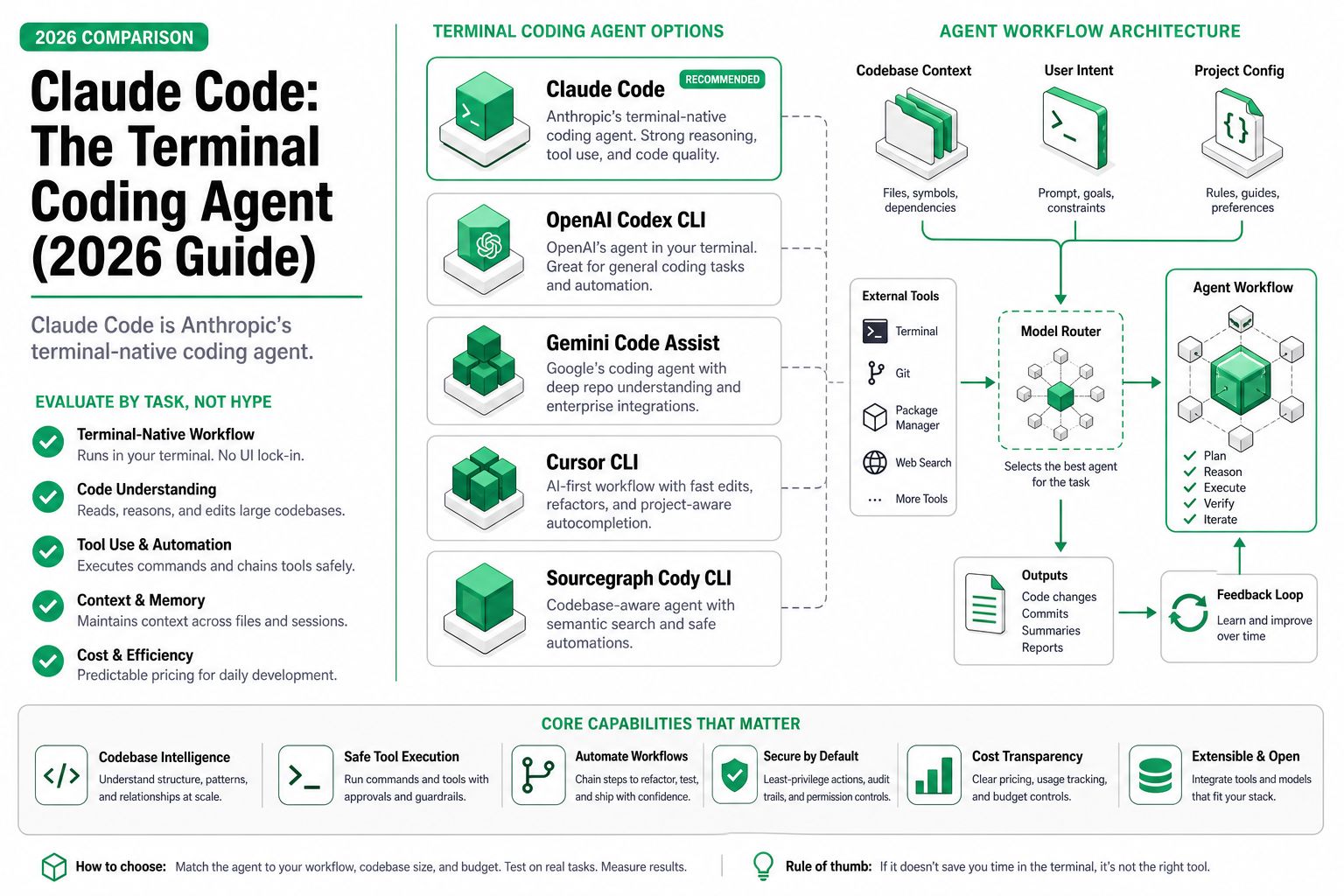
Claude Code is Anthropic's terminal-native coding agent. This guide covers how it works, real usage patterns, costs, and when to use it in 2026.
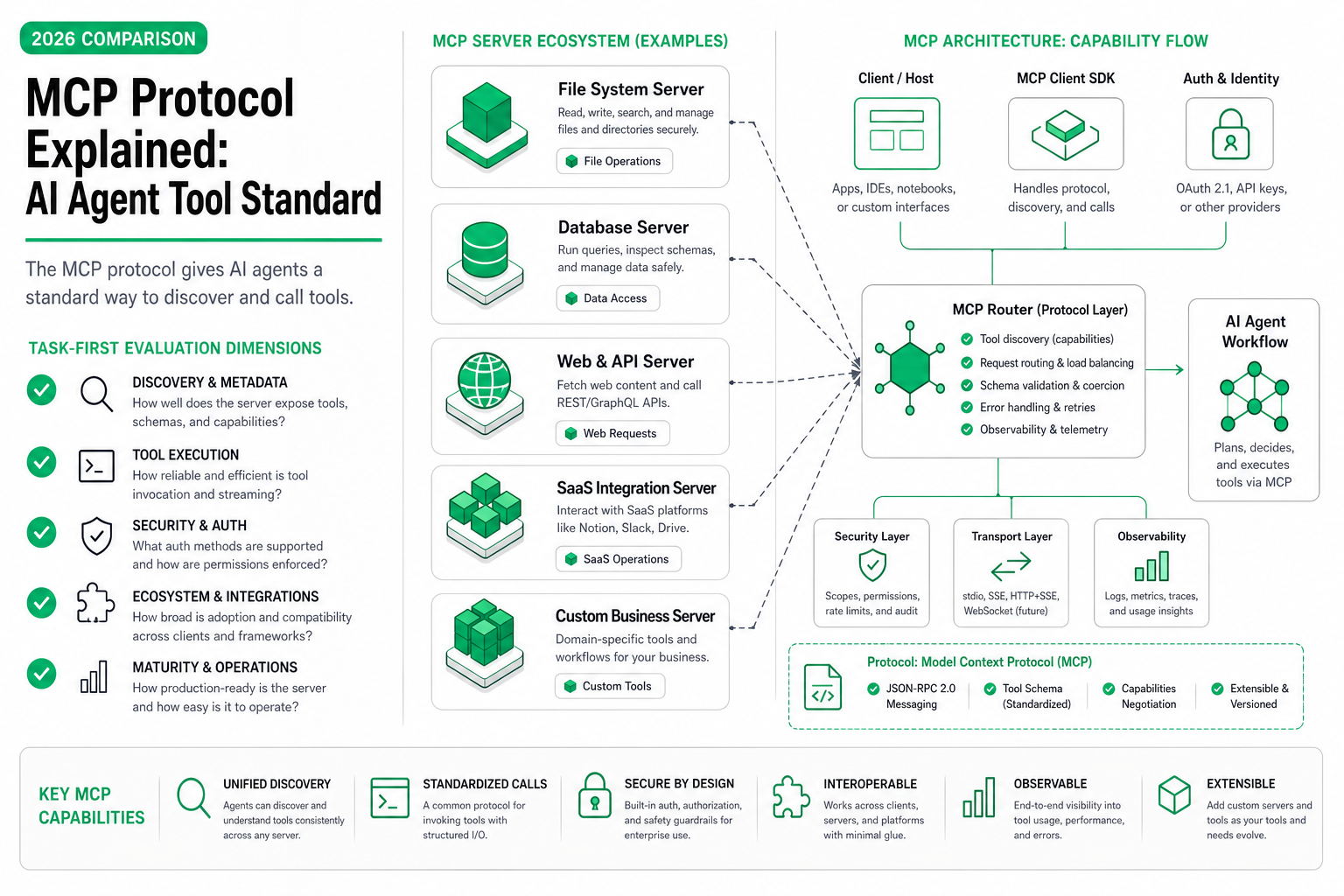
The MCP protocol gives AI agents a standard way to discover and call tools. How it works, how to build a server, and the ecosystem in 2026.
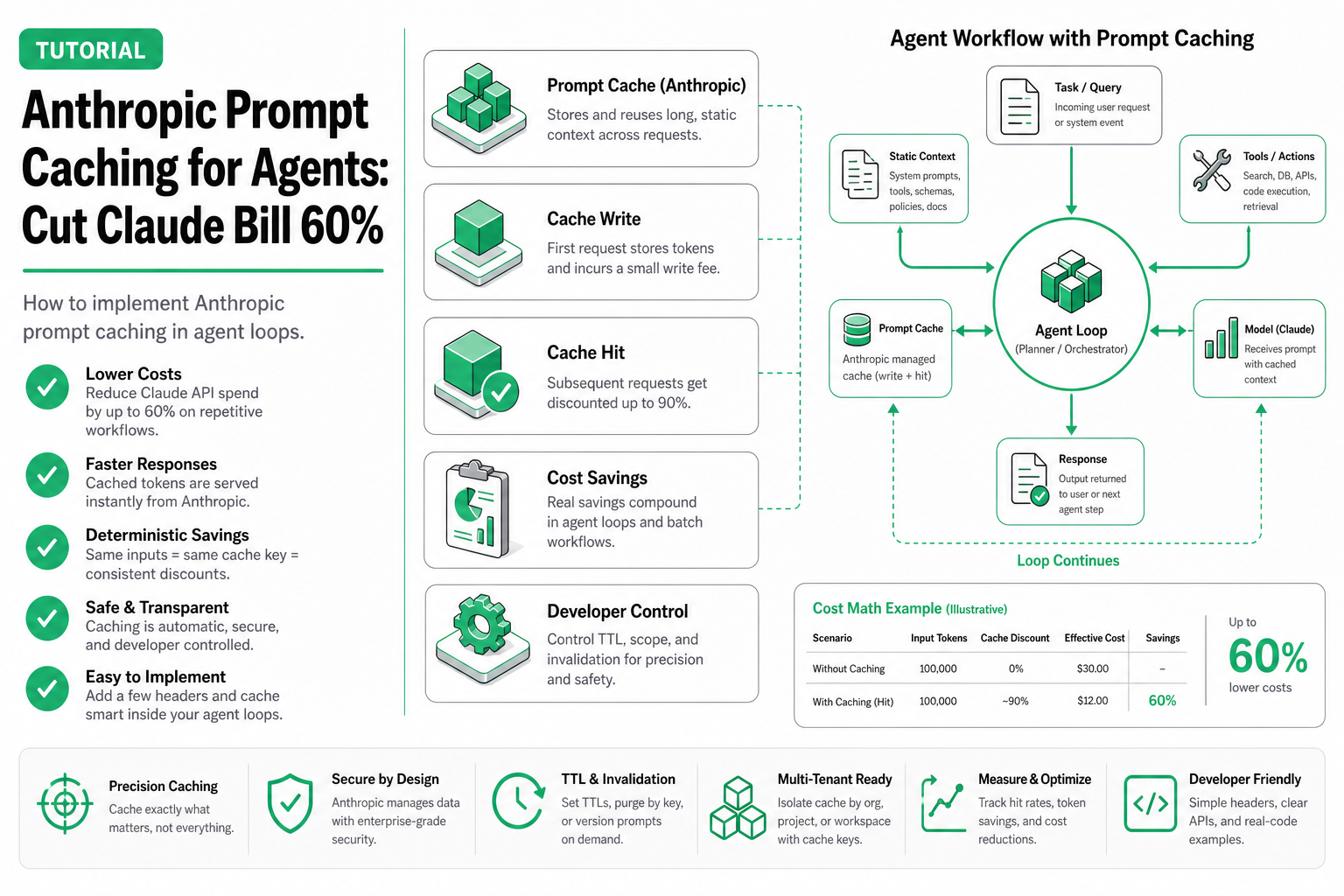
How to implement Anthropic prompt caching in agent loops. Real code, cost math, and advanced patterns that cut Claude API bills by 60% for repetitive workflows.
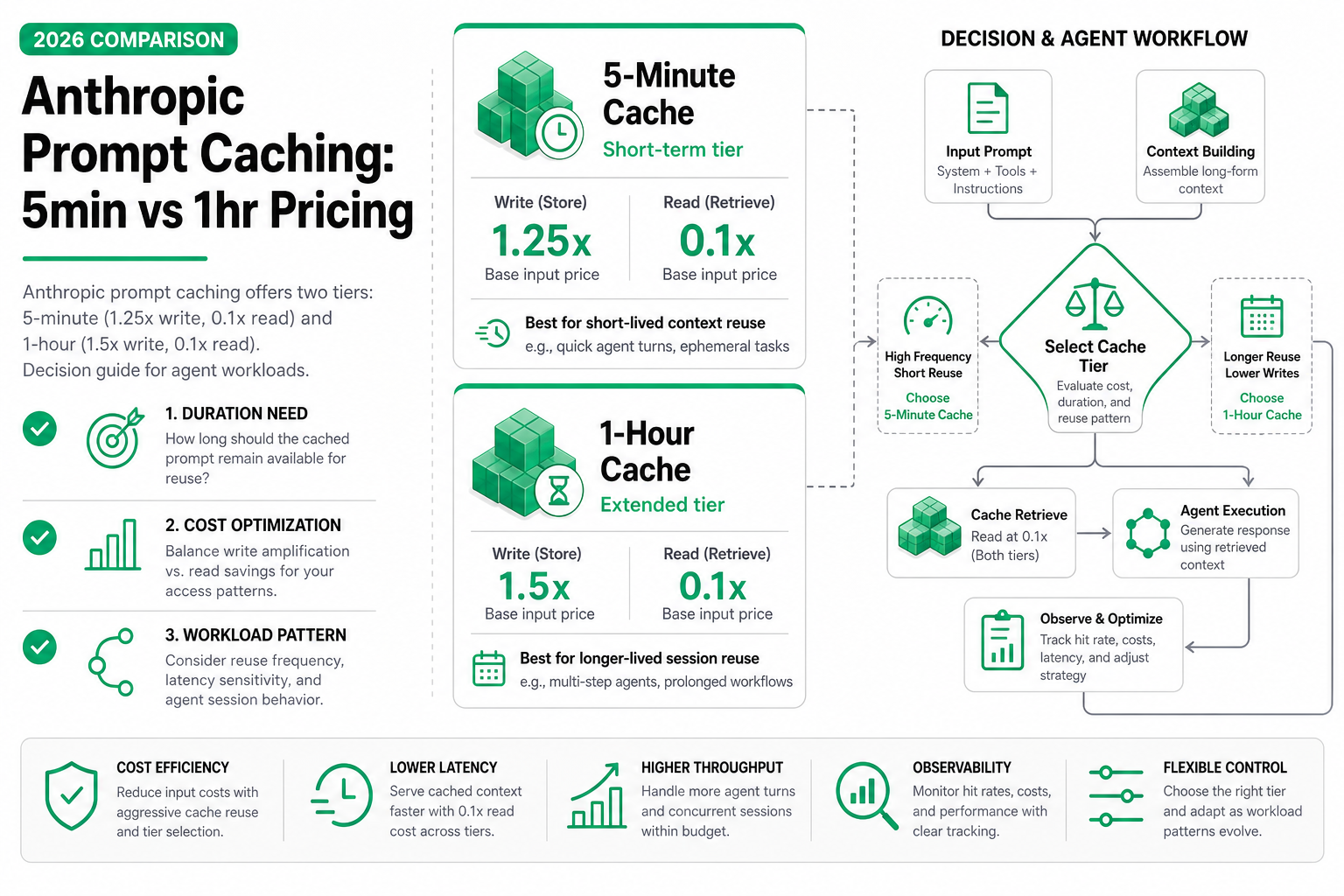
Anthropic prompt caching offers two tiers: 5-minute (1.25x write, 0.1x read) and 1-hour (1.5x write, 0.1x read). Decision guide for agent workloads.
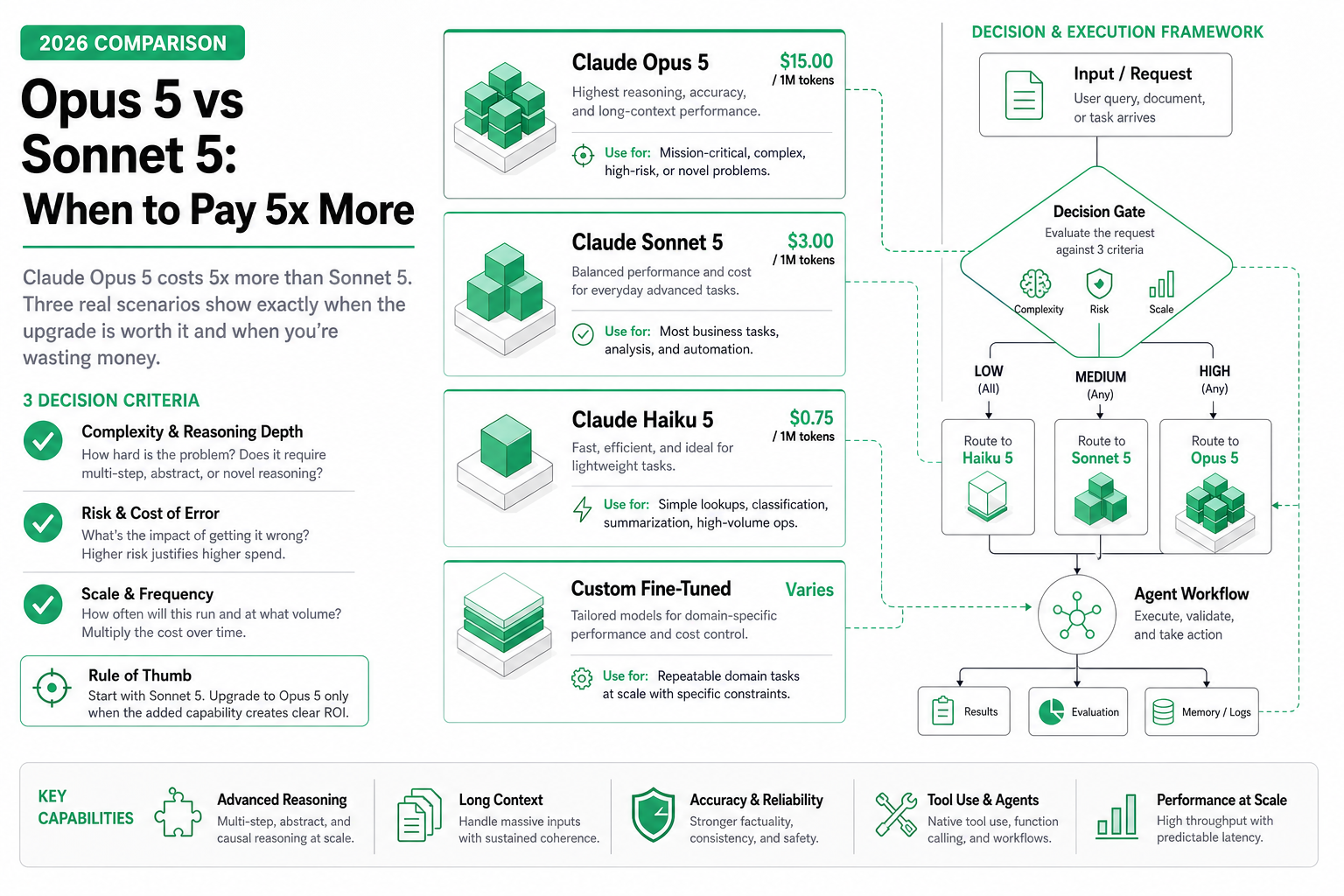
Claude Opus 5 is listed at $5/$25 per MTok and Sonnet 5 at $2/$10. Compare their shared 1M context, speed positioning, and a practical evaluation route.
Claude Opus 5 pricing and review for 2026: 1M context, $5/M input, $25/M output, API limits, adaptive thinking, effort controls, and Opus vs Sonnet trade-offs.
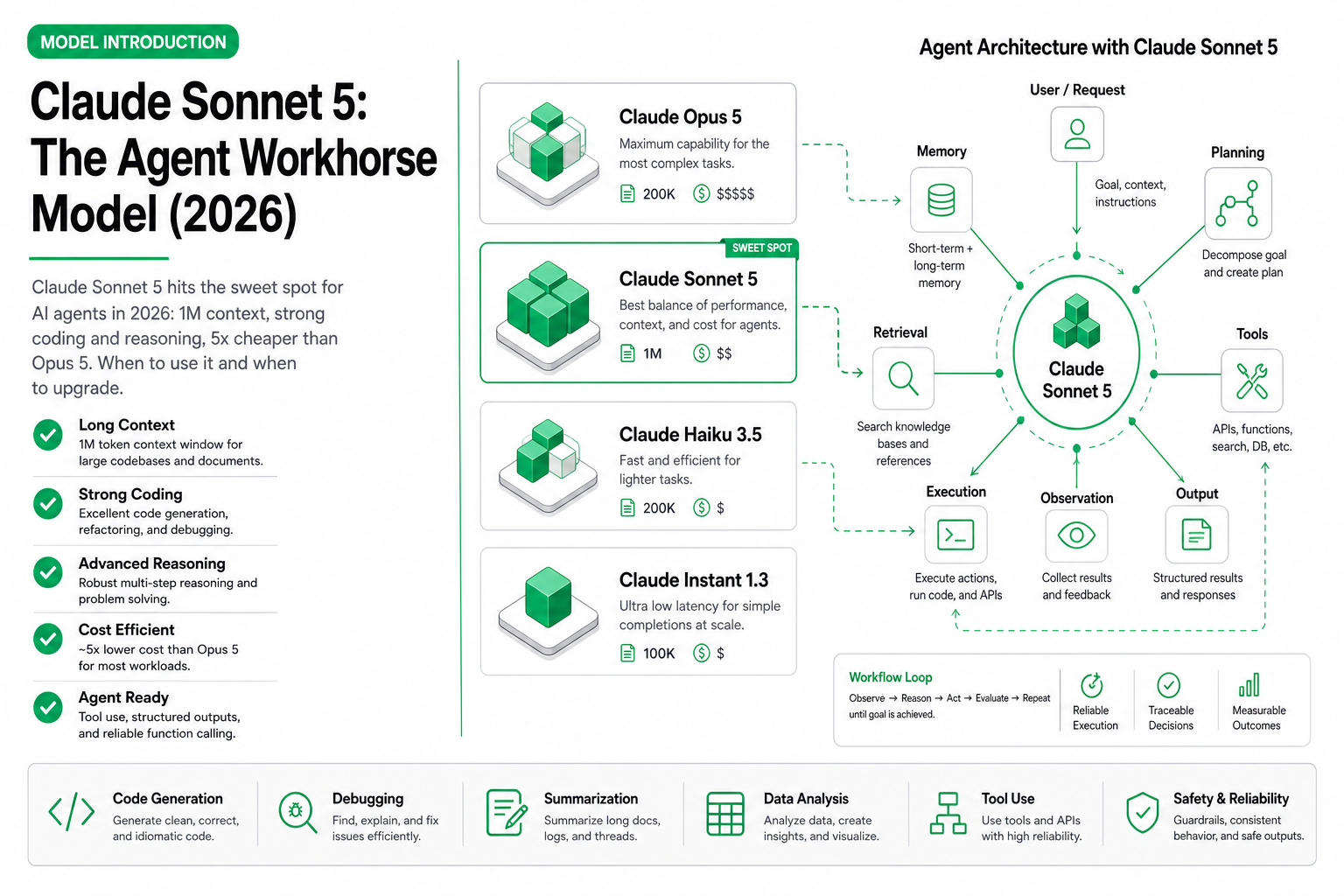
Claude Sonnet 5 is a practical 2026 starting point for many AI agents: 1M context, strong coding and reasoning, and a listed $2/$10 per MTok price. When to upgrade to Opus 5.
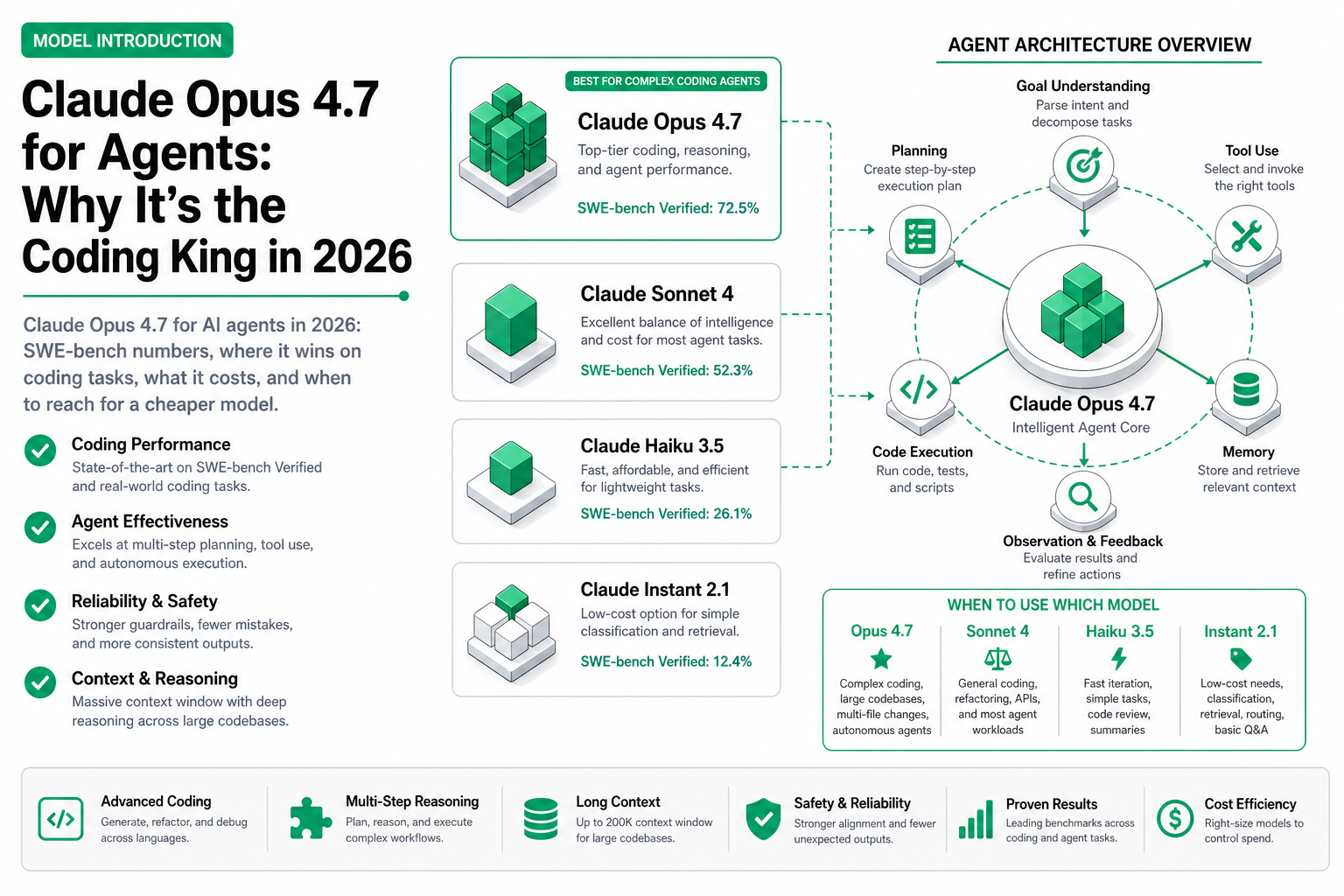
Claude Opus 4.7 for AI agents in 2026: SWE-bench numbers, where it wins on coding tasks, what it costs, and when to reach for a cheaper model.