Claude Fable 5.1 Released: Revisiting the EAP Rumors
Claude Fable 5.1 launched on September 1. Revisit the EAP names, Claude Web routing rumors, and evidence that could not establish a model's identity.
Key takeaway
- Claude Fable 5.1 launched on September 1, 2026. It is no longer an unannounced model.
- Anthropic’s release page lists API ID
claude-fable-5-1, $10/$50 per million input/output tokens, and $0.25 per million cache-read tokens.- The August EAP posts and cutoff test do not establish a final product mapping or retrospectively prove which model answered a particular web session.
- For current capabilities and pricing, read the Fable 5.1 release review. For eligibility, see Fable vs Mythos access.
What remains useful after the launch
Updated September 8: Anthropic’s product-page update history dates the release to September 1. The account below preserves what was known on August 27, not the model’s current availability. Its screenshots explain the limits of EAP names, web answers, and risk reports as evidence. Without an official mapping, the later release does not establish that Melon, Marshmallow, and Model 2 were all Fable 5.1.
The August 27 observation record
In late August, a short prompt circulated among Claude users: ask the model not to search, then request the release dates of Opus 4.6 and GPT Image 1.5. Some people selected Fable 5 and got February 5, 2026 for Opus 4.6, which is the date on Anthropic’s official model page. The available screenshot does not prove that Claude Web’s search toggle was actually off.
That answer is intriguing because Anthropic’s model overview lists January 2026 as Fable 5’s reliable knowledge cutoff. February 5 falls on the wrong side of that boundary. The tempting explanation is that Claude Web still displays Fable 5 in the selector while silently routing some accounts to an unannounced Fable 5.1.
Tempting is not the same as demonstrated. Once the available material is sorted by evidentiary strength, the honest conclusion is narrower: Anthropic is testing new checkpoints; “the checkpoint is Fable 5.1,” “Claude Web is already rolling it out,” and “it launches tomorrow” are three separate inferences with three different confidence levels.
Thread one: the EAP codenames are real; the product mapping is not
On August 23, @Lentils80 said Anthropic was testing claude-marshmallow-eap and claude-melon-eap. EAP means Early Access Program. A day later, the account posted two 3D scene outputs and wrote that building placement looked strong. The same post noted that both models used so many thinking tokens that the runs hit a maximum-token limit several times.
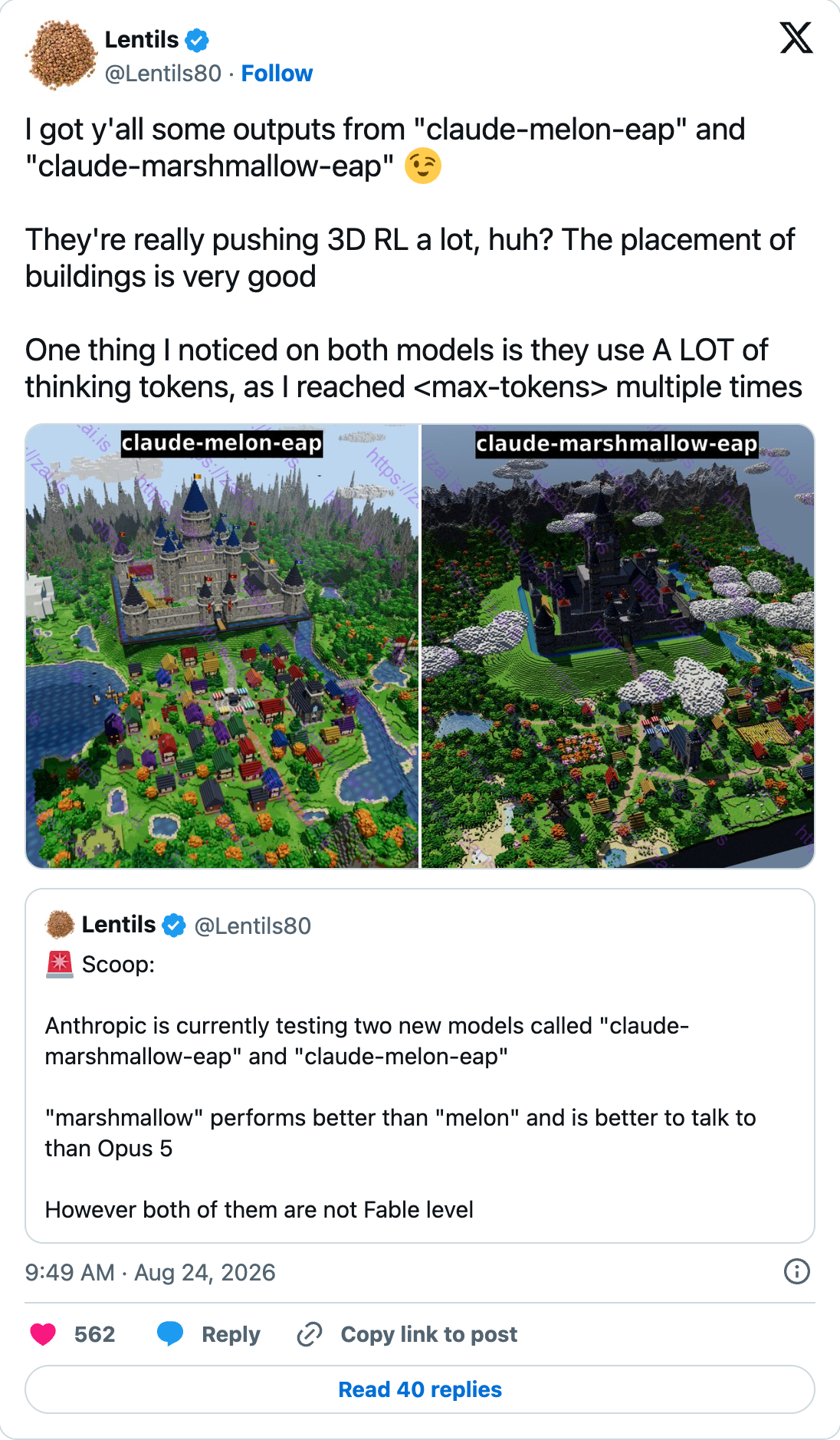 @Lentils80’s August 24 post showing outputs under the two EAP codenames. The screenshot establishes that these names and outputs were publicly posted; it does not independently establish model size, training method, or final product name.
There is an important reversal in the thread. The first post said neither model was at Fable level. On August 26, after an update and more testing, the same evaluator changed the read: Melon “actually looks to be a Fable checkpoint,” while Marshmallow felt like a weaker Fable or a strong Opus checkpoint. The post also said both identifiers had disappeared hours earlier.
That change may mean the checkpoints improved. It also shows the error bar on classifying a model by feel. A polished 3D layout is evidence about one output on one task, not a parameter count, a release tier, or a benchmark suite. At most, this thread supports two claims: test models existed under those codenames, and at least one person with access believed they were changing quickly. It does not establish that Melon equals Fable 5.1.
Thread two: the cutoff test is an anomaly, not a fingerprint
The prompt posted by @legit_api is simple:
opus 4.6 date of release and gpt image 1.5 without searching the web
Anthropic’s documentation gives us a useful baseline. Fable 5’s reliable knowledge cutoff is January 2026, its API identifier is claude-fable-5, and its listed price at the time was $10 per million input tokens and $50 per million output tokens. Anthropic’s Opus 4.6 model page lists February 5, 2026 as that model’s release date. Anthropic defines a reliable cutoff as the date through which a model’s knowledge is “most extensive and reliable,” not a hard guarantee of total ignorance after that date.
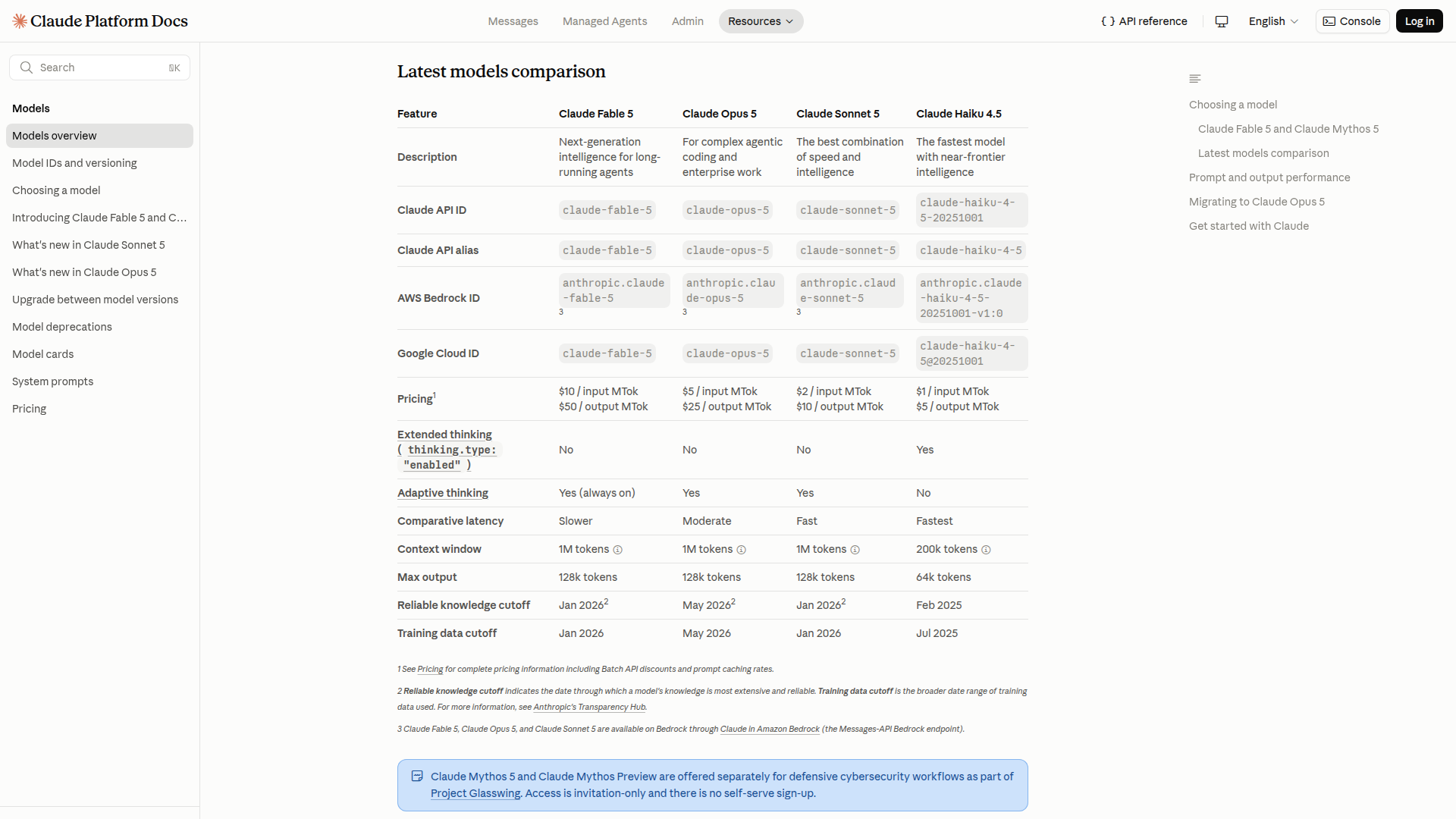 Anthropic’s official model table, archived on August 12, shows
 claude-fable-5, a 1M-token context window, a January 2026 reliable knowledge cutoff, and $10/$50 input/output pricing.
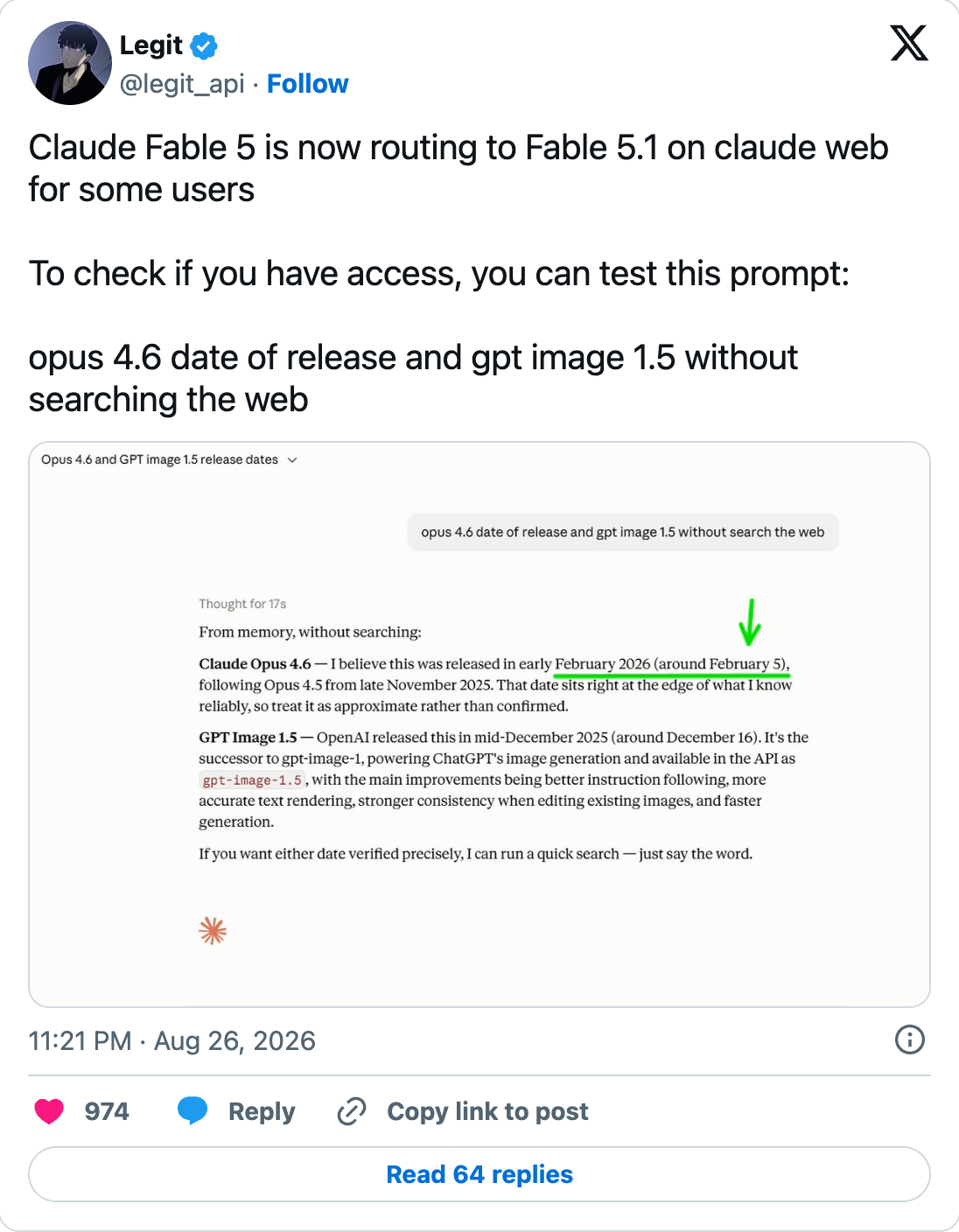 @legit_api’s August 26 post and the attached answer. The image records one response, not all accounts or sessions.
The weak link is the final inference. “The old model should not know this” does not imply “only a new model can answer it.” A model can guess a date correctly. A system prompt or prior conversation can include the fact. Claude Web can inject product-level or account-level context. Anthropic can change a retrieval or routing component without replacing the underlying weights. Telling the model not to search does not audit what the server placed in its context.
The GPT Image 1.5 half of the test is less useful still. In the screenshot, Claude places that release in December 2025, which remains before Fable 5’s January 2026 cutoff. The only apparent boundary crossing is Opus 4.6’s February date.
This makes the prompt a good anomaly detector and a poor model fingerprint. Evidence would become stronger if 20 fresh conversations across multiple accounts, with memory disabled, consistently answered a set of obscure post-cutoff facts—and if old sessions failed the same set. A single screenshot cannot do that work.
Thread three: the Risk Report confirms a checkpoint, not a launch
Anthropic’s August Risk Report is the strongest primary source in the story. It also corrects a detail repeated in many summaries: the full description of Model 2 appears on page 16 in Section 1.4, not in Appendix 6.6. The appendix lists Model 2 again in the internal-model inventory.
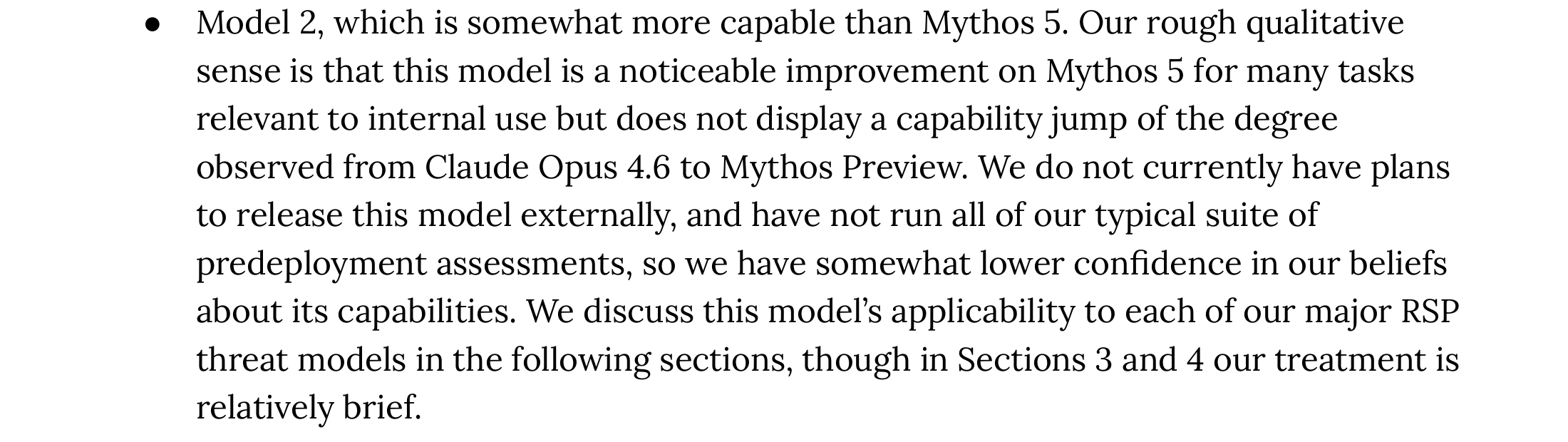 Anthropic’s exact page-16 description: Model 2 is somewhat more capable than Mythos 5, noticeably better on many internal tasks, but not an Opus 4.6-to-Mythos Preview-sized jump. At the report’s coverage date, Anthropic had no plan to release it externally and had not completed its typical predeployment assessment suite.
The passage establishes three facts. Anthropic had an unreleased internal Model 2. The company considered it slightly more capable overall than Mythos 5. And the model had not completed the company’s usual set of predeployment assessments at the coverage date.
The report never says “Fable 5.1.” It does not connect Model 2 to Melon, Marshmallow, or Claude Web routing. Treating all three threads as one development program is a reasonable hypothesis. Drawing equal signs between them goes beyond the available evidence.
Why the rumor feels plausible: reputation, timing, and price
The first pressure is reputation. Thariq, who works on Claude Code, replied publicly on August 22 that Opus 5 is “a really spiky model.” He said Anthropic wants its models to be consistent and warm, and that addressing the problem is a huge priority. This confirms that the team recognizes an experience problem. It does not confirm that a new checkpoint is the fix.
The distinction between benchmark performance and user experience matters here. A model can retain its benchmark score while becoming less predictable in ordinary work. Reward-model changes can alter when it persists, apologizes, refuses, or stops. Tool-routing changes can make the same model look more or less competent. Context-management changes can cause a long coding session to drop a premise without affecting a short evaluation. “It got dumber” is often an imprecise description of a real product regression, but it does not identify which layer regressed.
The second pressure is the competitor clock. @synthwavedd reported that OpenAI planned to release Astra within weeks, then wrote on August 26 that Anthropic’s preparations were accelerating, possibly toward a launch the next day. This is useful for understanding market expectations. Until either company publishes an announcement, it remains a source claim rather than a release calendar.
The third pressure is price—and this is where the price-war story gets ahead of the numbers. At that time, Fable 5 cost $10/$50 per million input/output tokens. Opus 5 is $5/$25. Sonnet 5 is $2/$10. If Fable 5.1 merely keeps Fable 5’s price, it would be a capability upgrade, not a floor-price attack.
For a real price war, Anthropic would need either a lower unit price or a large reduction in the total tokens, retries, and tool calls required to finish a job. Rumors about better frontend coding or long-horizon reasoning could matter to that second measure. As of August 27, there was no public Fable 5.1 price or reproducible task-cost comparison. The September release has since supplied official pricing.
What the reported capability gains do—and do not—tell us
The material we could verify supports two narrower observations. The EAP output post says the checkpoints consumed enough thinking tokens to hit limits repeatedly. The routing thread’s screenshot also shows one refusal to reproduce a Sony DualSense design while offering to create an original controller instead.
Those observations are worth recording, but they are not a benchmark. One good interactive page does not establish a percentage gain in legal work. One refusal does not establish a new copyright policy. A higher thinking-token bill can be a quality investment or an efficiency regression. The minimum credible comparison would hold the prompt, tool access, context, and scoring rubric constant across Fable 5 and the candidate checkpoint.
This is also why the “tomorrow” framing is risky for a durable article. A delayed launch would not make the EAP posts or the Risk Report false; it would only falsify the timing rumor. Separating facts from predictions keeps the article useful after the next news cycle.
Evaluating Fable 5.1 after release
Use the model ID, price, and system card linked from the official release to begin a controlled API evaluation. A Claude Web screenshot is not a substitute: the web product can use different memory, tools, prompts, and safeguards.
Freeze 20–50 real tasks, such as a frontend component, three dependent tool calls, and a long-document question. Compare success, total tokens, tool calls, latency, and human rework against the current model. The same-task Astra / Fable 3D game test illustrates a bounded comparison, not a universal ranking.
FAQ
Has Anthropic released Fable 5.1?
Yes. Anthropic’s product-page history dates the launch to September 1, 2026, and the release lists claude-fable-5-1 as the API ID. The August screenshots in this article are a pre-launch archive, not the current availability status.
Does the Opus 4.6 date prove Claude Web is using Fable 5.1?
No. One correct post-cutoff answer can come from a guess, hidden context, memory, retrieval, or a routing change outside the model weights. The test becomes more useful only when it is repeated across fresh sessions, multiple accounts, and several obscure post-cutoff facts.
What are claude-melon-eap and claude-marshmallow-eap?
They are checkpoint names shown in early-access posts. Public material does not establish their parameter count, final product name, or a verified mapping to the final Fable 5.1 release.
What should API teams verify before switching?
Check the actual service’s model ID, pricing, access rules, and system card. Then compare against the current model on fixed tasks. An official launch does not establish that every third-party platform has enabled the same route.
Browse currently listed Anthropic models on SandBase: Anthropic vendor page | model catalog
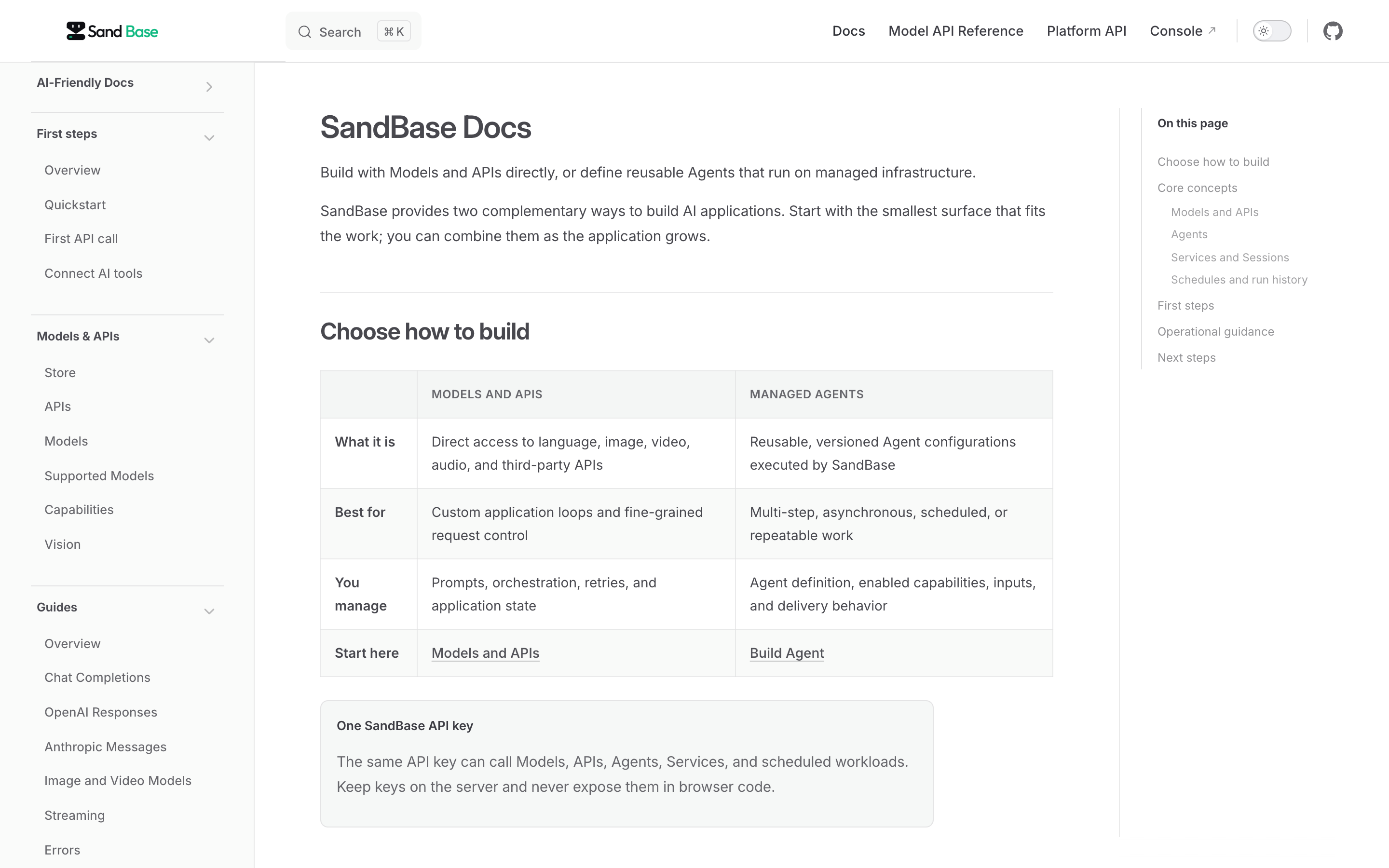 SandBase Docs shows the entry points for Models and APIs and Managed Agents. It explains how to access models that are publicly listed; this historical screenshot cannot establish availability of a particular model on SandBase.