Instagram 主页研究 API 教程 | SandBase
搭一套 Instagram 主页研究工作流:读公开资料、拉近期帖子、翻页 feed——一个 SandBase 密钥,无需 Instagram 登录、无需 SDK。

如果你在 Instagram 上研究创作者或品牌,你想要一个可复用的循环:读一个公开主页拿关键信号、拉近期帖子、翻页 feed 看互动怎么走。这篇 Instagram 主页研究 API 教程用两个 SandBase 端点把这个循环串起来,让 Agent 能端到端跑完。它建立在 Instagram 公开数据 API 汇总页之上;建议先读那篇了解全局。
这里的一切都是公开、只读数据。不需要登录 Instagram、不需要 SDK——但仍需要一个 SandBase API 密钥来鉴权。端点 API 参考是参数和响应信封的权威来源。参考只保证信封本身;下面的载荷字段名来自我实际跑的调用(测试于 2026-09-28,UTC),是示意性的、仅供观测——并非文档保证——请以真实响应为准核对。
先说结论
- 两个端点构成循环:
user-profile(关键信号)→user-posts(近期 feed)。- 每次调用都是
POST /v1/api/instagram/v3/<path>,带一个username,一个SANDBASE_API_KEY。- 用返回的
next_max_id翻 feed。仅公开、只读数据。- 防御式读字段——信封有保证,业务字段仅供观测。
SandBase vs. 官方 Instagram API
| 你的需求 | 用 |
|---|---|
| 公开、只读的资料和帖子 | SandBase Instagram 公开数据 API |
| 发帖、以账号身份操作,或用 Graph API | Instagram 官方平台 |
| 私有或仅账号可见的数据 | 两种公开方案都不适用 |
工作流一览
- 用
instagram/v3/user-profile以一个username读主页。 - 用同一个
username调用instagram/v3/user-posts拉近期帖子,用next_max_id翻页。
每个端点返回共享信封——一个 id、一个 status、model,以及在 completed 运行上 outputs[0].data 下的负载。
 SandBase 上的 Instagram 端点——user-profile 和 user-posts 驱动这个循环。
第 0 步:一个辅助函数管所有调用
import os
import requests

API = "https://api.sandbase.ai/v1/api"
HEADERS = {
    "Authorization": f"Bearer {os.environ['SANDBASE_API_KEY']}",
    "Content-Type": "application/json",
}

def call(path: str, payload: dict) -> dict:
    resp = requests.post(f"{API}/{path}", headers=HEADERS, json=payload, timeout=60)
    resp.raise_for_status()
    body = resp.json()
    if body.get("status") != "completed":
        raise RuntimeError(body.get("error", {}).get("message", f"{path} 未完成"))
    # 信封可能不同:优先读顶层 output,否则 outputs[0].data。
    output = body.get("output")
    if output is None and body.get("outputs"):
        output = body["outputs"][0].get("data", {})
    return output or {}
第 1 步:读主页
profile = call("instagram/v3/user-profile", {"username": "nasa"})
print(profile.get("full_name"), "|", profile.get("follower_count"), "粉丝")
print("简介:", profile.get("biography"))
在我抓到的响应里(user-profile run id c52039c0-5a64-4b87-93c2-1b7a6995c23d,测试于 2026-09-28,UTC),负载带 full_name、biography、category、follower_count、following_count、media_count 和 is_verified——这些是示意性的、仅供观测的字段。用 .get() 读每个,并对照真实响应核对。
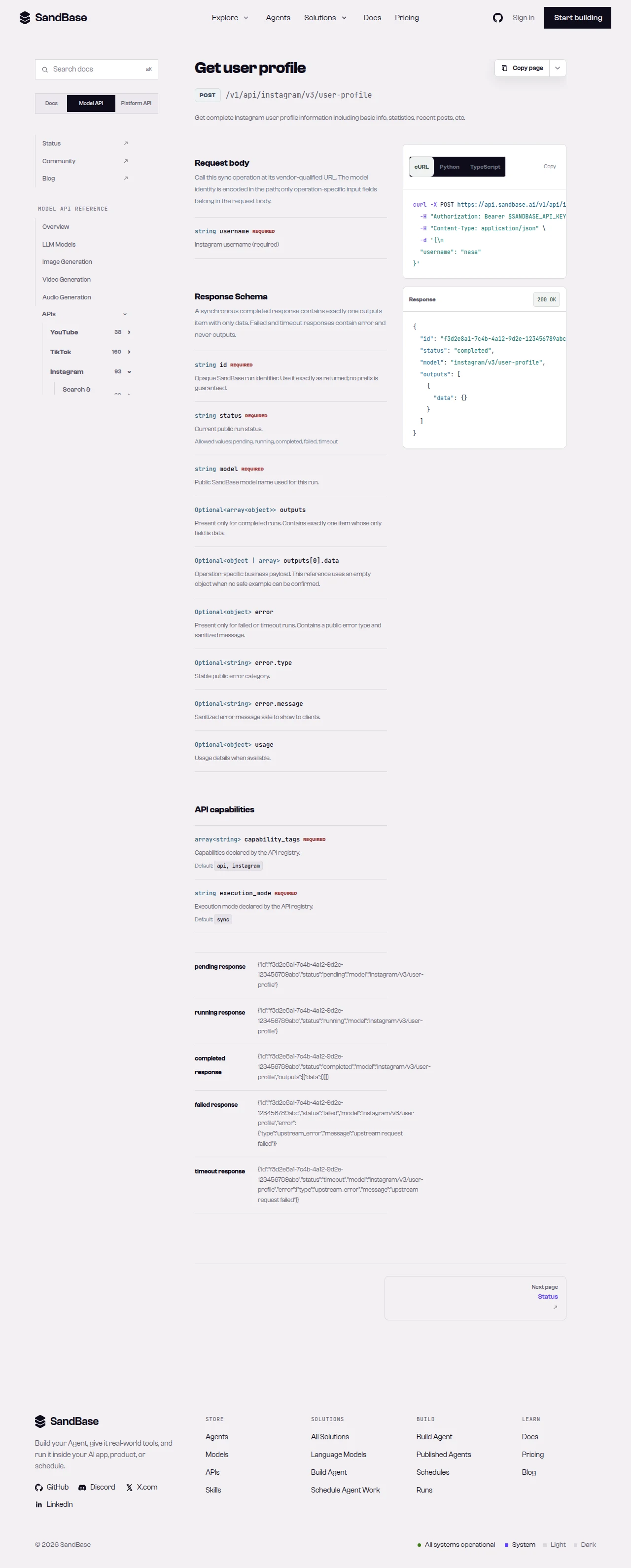 user-profile 参考——
username 参数和响应路径的事实来源。
第 2 步:拉近期帖子
feed = call("instagram/v3/user-posts", {"username": "nasa"})
posts = feed.get("items", []) or feed.get("data", [])
next_max_id = feed.get("next_max_id")
for p in posts[:5]:
    print(p.get("like_count"), "赞,", p.get("comment_count"), "评论 -", p.get("shortcode"))
在我这次运行里(user-posts run id 4e058e6d-1e9e-4dd1-8f08-412258df9a7a),负载带 items(每条含 caption_text、like_count、comment_count、view_count、is_video、shortcode、taken_at)、一个 count 和一个用于翻页的 next_max_id。翻页时,用返回的 next_max_id 重发 user-posts——确切参数名对照参考核对。
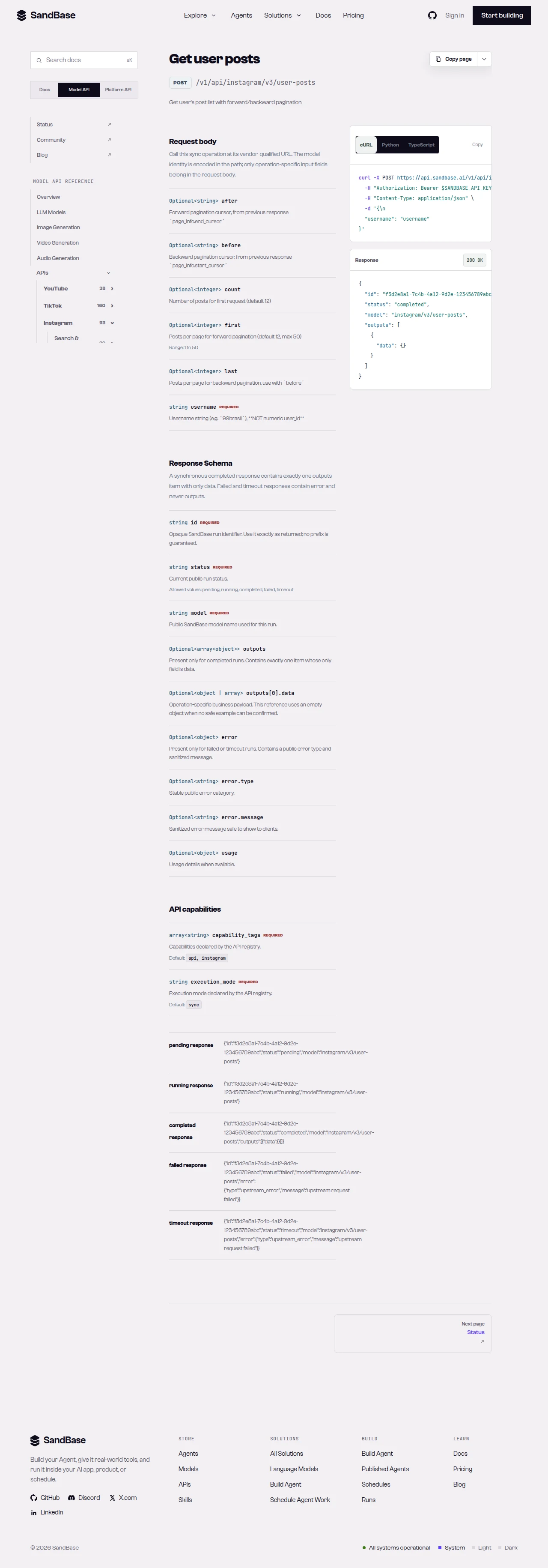 user-posts 参考——传一个
 username;用返回的 next_max_id 翻页。
串起来
def research(username: str):
    profile = call("instagram/v3/user-profile", {"username": username})
    feed = call("instagram/v3/user-posts", {"username": username})
    posts = feed.get("items", []) or feed.get("data", [])
    engagement = [
        {"shortcode": p.get("shortcode"), "likes": p.get("like_count"), "comments": p.get("comment_count")}
        for p in posts if isinstance(p, dict)
    ]
    return {
        "followers": profile.get("follower_count"),
        "media_count": profile.get("media_count"),
        "recent": engagement,
    }
因为两个端点共享同一个信封和同一个 username,循环保持扁平:call(...) 里一次 status 检查、profile 和 posts 用一套 .get() 模式。
常见用例
创作者甄别
读一个创作者的主页拿粉丝数和类目,再拉近期帖子,用真实互动(赞和评论)而非光看粉丝数来衡量。输入:一个 username。输出:主页信号加一份近期帖子互动样本。端点:user-profile、user-posts。
竞品内容追踪
按计划轮询一个竞品的 user-posts,按 shortcode 做 diff 以捕捉新帖并追踪它们随时间的互动。输入:一个 username。输出:连续的帖子页。端点:user-posts。
受众与垂类研究
对比若干主页的 category、follower_count 和发帖节奏,画出谁在领跑一个垂类。输入:一组 username。输出:可比的主页信号。端点:user-profile。
互动率估算
把两个端点组合起来近似一个互动率:拉近期帖子,对它们的 like_count 和 comment_count 取平均,再除以主页的 follower_count。这给出一个跨创作者可比、光看粉丝数会掩盖的粗略信号——一个高互动的小号可能跑赢一个大号。防御式读每个字段,并把结果当作估算,因为观测字段和帖子样本会变。输入:一个 username。输出:一个互动率估算。端点:user-profile、user-posts。
实操要点
- 信封可能不同。 参考记录的是
outputs[0].data;两种结构都读(优先output,回退outputs[0].data)。 - 用
next_max_id翻页。 在还有更多帖子时用返回值重发user-posts。 - 业务字段仅供观测。 把
follower_count、like_count、caption_text之类当作观测到的、以真实响应核对。 - 仅公开、只读数据。 不发帖、不涉及私有/仅账号可见数据。用 SandBase API 密钥鉴权。
- 做个好客户端。 遇到 HTTP 429 等瞬时错误按退避重试;翻页而不是猛打。
常见问题
我需要 Instagram/Facebook 开发者应用或登录吗?
不需要。你用自己的 SANDBASE_API_KEY 向 SandBase 鉴权。这些读取端点不需要你这边有 Instagram 账号或 OAuth。
什么标识一个主页?
一个 username。user-profile 和 user-posts 都接同一个 username。
怎么翻更多帖子?
user-posts 负载带一个 next_max_id;用它重发 user-posts。确切参数对照参考核对。
我能读私密账号吗? 不能。这套 API 只返回公开数据。私有和账号授权内容不在范围内。
小结
两个端点、一个信封、一个 username——这就是整个主页研究循环。完整端点目录见 Instagram 公开数据 API 汇总页。准备好后: