Doubao Xiaodou vs Apple Intelligence and Siri AI (2026)
Doubao Xiaodou is an invite-only Doubao-ecosystem assistant. Apple Intelligence and Siri AI are a system-level assistant on compatible Apple devices. Official claims only, not a bake-off.
Doubao Xiaodou and Apple Intelligence sit in the same broad category — personal help that is supposed to come back to you — but official pages put them in different places. Xiaodou is an invite-only personal assistant in the Doubao family, confirmed on a China App Store iOS listing. Apple Intelligence is officially described as helpful AI centered around you, with Siri AI available in English, and it is built into compatible Apple devices rather than offered as a separately invited third-party app.
This is not a review of who “knows you better.” Official Xiaodou copy talks about memory in Doubao and authorized app connections. Official Apple copy talks about personal context, on-device processing, and Private Cloud Compute. Those are two privacy and context stories, not a scored comparison. The pinyin Xiaodou is a pronunciation aid, not a confirmed official English brand name. For Xiaodou’s official definition, see What Is Doubao Xiaodou?.
Key takeaway
- Official Xiaodou positioning, from the product page and Doubao’s 24 November 2026 announcement: a Doubao that understands you and can take the initiative to get things done. Public beta is invite-only. The confirmed client is the China App Store listing for iOS and iPadOS 15.0 or later.
- Official Apple positioning, from Apple Intelligence: truly helpful AI that is centered around you. Siri AI is officially described as available in English. The page also describes on-device processing plus Private Cloud Compute.
- Official “getting things done” lists are not interchangeable. Xiaodou names proactive messages, follow-up reminders, and connections such as Douyin, Feishu, Calendar, Health, and Location. Apple names in-app actions in apps such as Messages, Music, and Reminders, plus Safari Notify Me and Call Context. “Describe a shortcut” is officially labeled as coming in a future software update and is not treated here as already shipped.
- Platforms differ in kind. Xiaodou is a separately installed, invite-only app whose confirmed floor is iOS and iPadOS 15.0 or later. Apple Intelligence is limited to the compatible-device list on Apple’s own page, not to every device that can install a 15.0 app.
- Not compared: quality, latency, reminder accuracy, who knows you better, or Xiaodou Android details. Xiaodou prices stay in Doubao Xiaodou Pricing in 2026, as two official number sets, not one tariff.
Official positioning
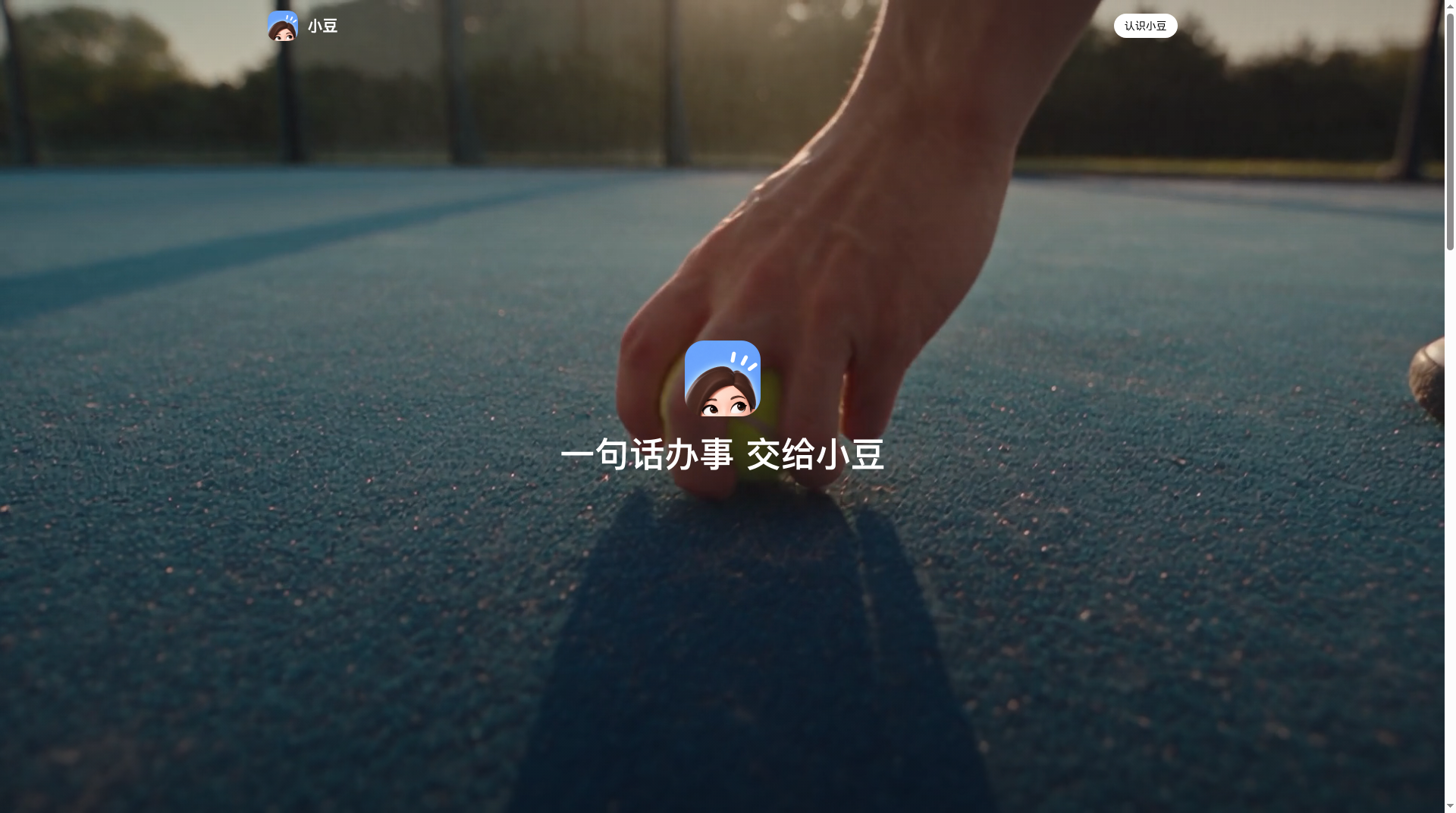
Xiaodou product page, captured 26 November 2026. The hero reads 一句话办事 交给小豆.
The Xiaodou product page presents an independent Doubao assistant: it understands you, and it can take the initiative to get things done. Invite-page metadata, recorded in the definition article, calls it a personal AI assistant that remembers preferences, connects commonly used apps, and helps proactively with work and life. Doubao’s official account, on 24 November 2026 at 10:21:53 Asia/Shanghai, said public beta is invite-only, that an invite code opens the trial with a free quota of unpublished size, and that Xiaodou’s capabilities and experience will gradually go live in the Doubao app. Xiaodou is therefore a product you join, not a system setting that arrives with a device. Its relationship with the main Doubao app is covered in Xiaodou vs the Doubao App.
Apple’s official Apple Intelligence page describes truly helpful AI that is centered around you. Siri AI is available in English, and it is written as an assistant that uses personal context and can take actions in apps. The same page describes a privacy architecture: processing on device, with Private Cloud Compute when a request needs more compute, rather than a conventional cloud-assistant story. That official language matters because it is how Apple frames the product. It is not used here as a verdict that Xiaodou is less private, or that Apple is more personal.
The practical difference in official framing is simpler than a privacy debate. Xiaodou is a Doubao-ecosystem assistant you install and, for now, enter with an invite. Apple Intelligence and Siri AI are a system-level layer on compatible iPhone, iPad, and Mac hardware, according to Apple’s own compatible-device list.
Proactive help and getting things done
Official Xiaodou behaviors are proactive messages, “guess what you want,” and task follow-up. Proactive messages use what you have already discussed and the apps you have connected, then remind you when needed. “Guess what you want” uses your interests and some of your memory in Doubao. Follow-up examples include a daily brief, a price-drop reminder, and an exercise goal, handed over in one sentence and changeable or stoppable later. Named connections are Douyin, Feishu, Calendar, Health, and Location, plus “other apps,” under your authorization. Closing examples include placing a reservation by phone, organizing Feishu to-dos, and following long-term goals.
Apple’s official page describes a different action surface. Siri can take actions in apps, with named examples that include Messages, Music, and Reminders. Safari Notify Me is described as a way to be told about a price change or a restock. Call Context is described as proactive help around a call. Those are official Apple features, and they are the ones this article will quote. They are not Xiaodou features, and Xiaodou’s Feishu or Douyin examples are not Apple features.
One official Apple item must stay in the future tense. “Describe a shortcut” is labeled on the Apple Intelligence page as coming in a future software update. This article does not treat it as already shipping, and it does not put it in a table cell as a current Siri capability.
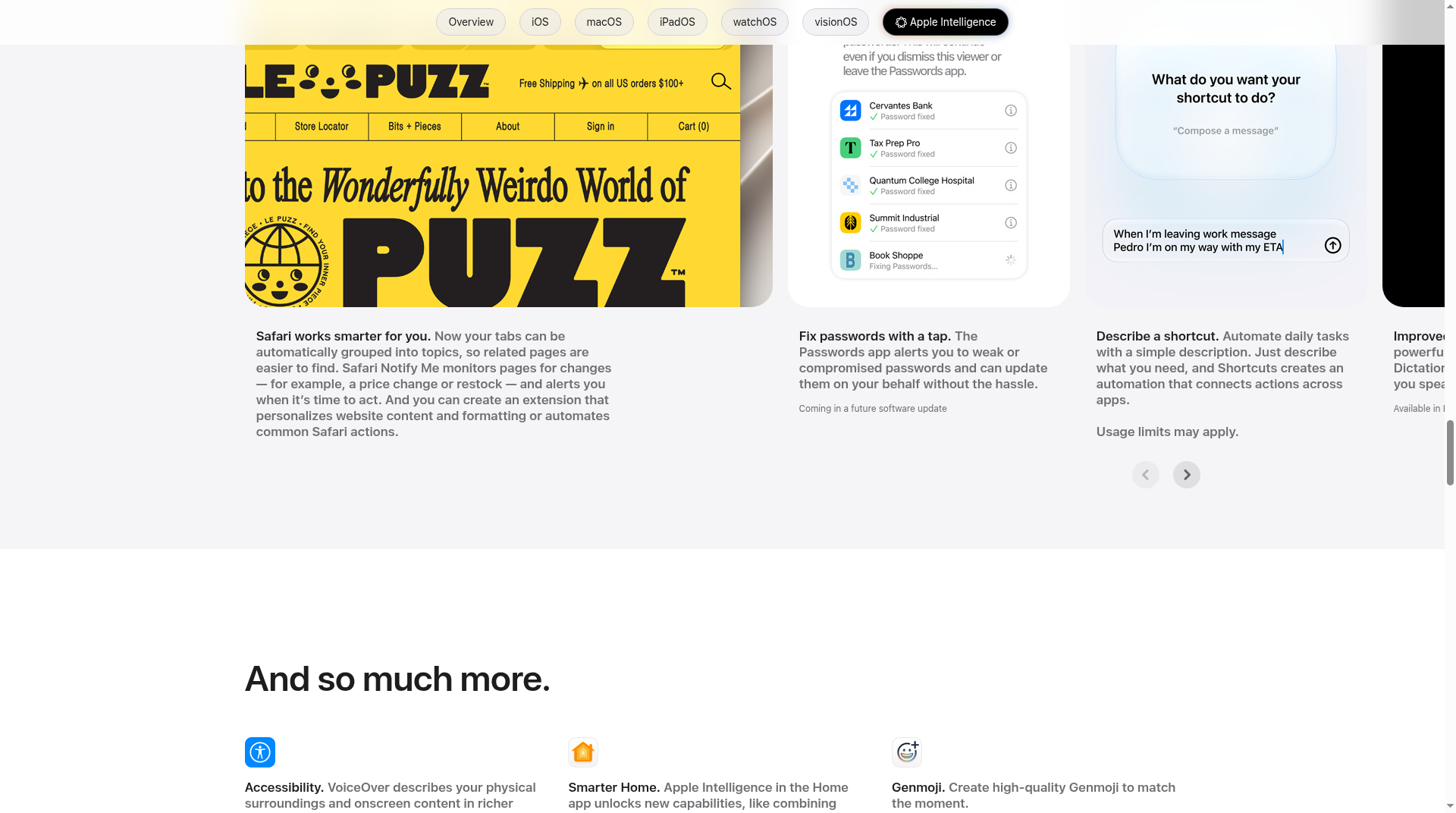
Apple Intelligence page, captured 26 November 2026. Safari Notify Me is described as alerting you when it is time to act. The “Describe a shortcut” card is labeled “Coming in a future software update.”
The two official follow-up stories therefore only partly overlap. Both talk about coming back to you: Xiaodou with proactive messages and timed reminders, Apple with Notify Me and Call Context. The named destinations differ. Xiaodou’s examples sit in Doubao memory, ByteDance-adjacent apps, and tasks you hand over in one sentence. Apple’s examples sit in first-party apps and in the system itself. For a wider official-language look at this axis, see Assistants That Follow Up for You in 2026.
Language and privacy, as official pages write them
Siri AI is officially available in English. That is a product fact on Apple’s page, not a judgment about other languages later. Xiaodou’s confirmed App Store listing is in Simplified Chinese, with an 18+ age rating on that store page. This article does not infer that Xiaodou has no English UI, or that Siri AI has a Chinese product page that was not opened. It only records what the checked pages say.
Apple’s official privacy story is on-device processing plus Private Cloud Compute. Xiaodou does not publish an equivalent architecture page in the materials checked for this article. What the App Store listing does publish is Apple’s privacy nutrition labels: the listing states that the app may use location even when it is not open; the labels also list tracking of identifiers, and data linked to the user that includes health and fitness, location, contact information, contacts, user content, identifiers, usage data, and diagnostics. Those labels are described here, not reviewed, and they are not turned into a comparison score against Private Cloud Compute. A legal or security audit would need the actual policies, not a blog table.
Platforms
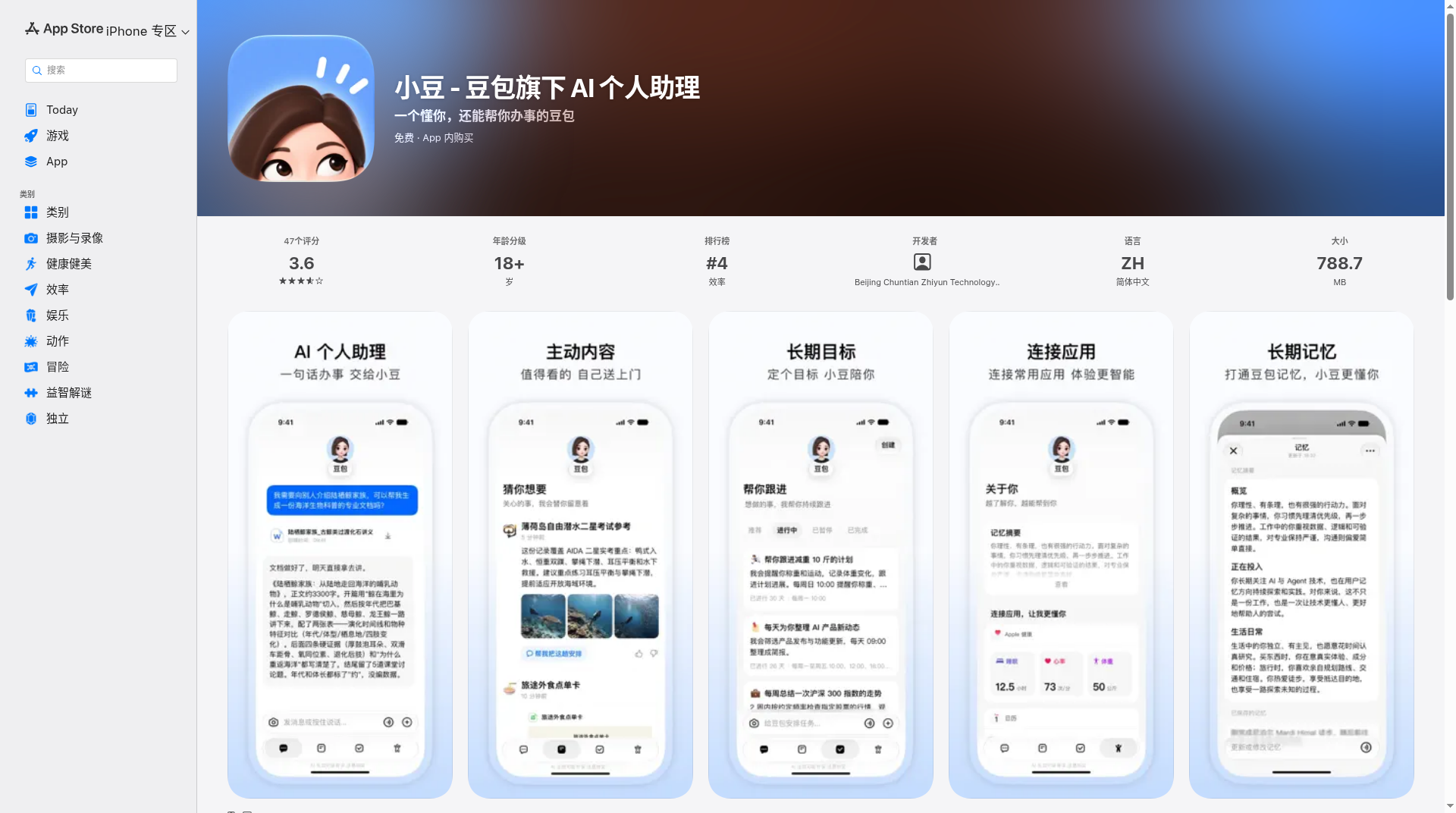
Xiaodou China App Store listing id 6815582077, captured 26 November 2026. A separately installed app, titled 小豆 - 豆包旗下 AI 个人助理.
Xiaodou’s confirmed floor is iOS and iPadOS 15.0 or later, on the China App Store listing cited above. That is a store requirement, not a list of every Apple device that can usefully run the assistant, and it is not an Apple Intelligence compatibility list. Official Xiaodou access remains invite-only. An official Android store listing was not opened.
Apple Intelligence is limited to the compatible-device list on Apple’s own page. That list is narrower than “any device that can install an iOS 15 app,” and this article will not flatten the two requirements into one. If a reader’s device is not on Apple’s list, Apple Intelligence is not the official option, regardless of whether that device could install Xiaodou after an invite. If a reader cannot obtain a Xiaodou invite, the inverse is also true.
Pricing is not a clean comparison either. Xiaodou has two official number sets on the App Store page that still do not fully match; they are documented, not merged, in the pricing article. Apple Intelligence is not priced on the Apple Intelligence page as a standalone Xiaodou-style membership. This article will not invent a subscription comparison.
What cannot be compared yet
- Which assistant is more accurate, faster, or better at following up.
- Who “knows you better,” or which memory system is more complete.
- Whether a Xiaodou reservation call or an Apple in-app action actually completes as advertised.
- Official Android details for Xiaodou.
- Whether “Describe a shortcut” has shipped after this check; on 26 November 2026 it was still labeled as coming later.
- A privacy verdict, a legal comparison, or a merged price table.
How to choose, with the information that exists
If you can obtain a Xiaodou invite and want a Doubao-family assistant whose own page emphasizes proactive messages, follow-up reminders, and authorized connections to Douyin, Feishu, Calendar, Health, and Location, Xiaodou is the official product for that framing. The confirmed download path in this check is the China App Store listing.
If you want a system-level assistant on a compatible Apple device, with official English Siri AI, in-app actions, Safari Notify Me, Call Context, and Apple’s on-device plus Private Cloud Compute story, the official page is Apple Intelligence. You do not need a Xiaodou invite for that path, but you do need a device Apple lists as compatible.
The two can also sit on the same iPhone in principle — Xiaodou as a third-party app, Apple Intelligence as a system layer — but official pages do not describe how they share context, and this article will not invent that integration. An iOS-only map of both, still unscored, is in iOS Personal AI Assistants in 2026. Nearby official-claim comparisons include Xiaodou vs ChatGPT and Xiaodou vs Microsoft Copilot.
If you are building your own assistant rather than choosing a consumer or system assistant, that is a different job. SandBase has no Xiaodou card. The live model-family card is Seed 2.1 Pro (bytedance/seed-2.1-pro), listed at $0.89 input, $4.45 output, and $0.18 cache read per million tokens, with a 1M context window, and described as Doubao-Seed-2.1-Pro through Doubao and Volcano Engine. Related catalogs: ByteDance models and Chinese LLM APIs. Those links are for the model family. They are not a way to call Xiaodou, and they are not an Apple Intelligence API.
Sources
- Official Xiaodou product page: doubao.com/xiaodou. Checked 26 November 2026, Asia/Shanghai.
- China App Store listing for Xiaodou, id 6815582077, same day, including privacy nutrition labels and the listing’s iOS 15.0 requirement.
- Doubao official announcement, 24 November 2026, 10:21:53 Asia/Shanghai, as cited in What Is Doubao Xiaodou?.
- Apple Intelligence, checked the same day, including the English availability line for Siri AI, Notify Me, Call Context, in-app actions, the later-update label on “Describe a shortcut,” and the compatible-device list.
- SandBase cards linked above, confirmed live the same day. There is still no Xiaodou catalog card.
Found this useful? Share it