Doubao Xiaodou vs ChatGPT: Official Claims, Not a Bake-Off (2026)
Doubao Xiaodou and ChatGPT differ in ecosystem and access, not in a quality score. Official claims on connections, platforms, and plans — and what a bake-off has not shown.
Doubao Xiaodou and ChatGPT are both officially described as assistants that can go beyond a single reply. That does not make them interchangeable, and it does not license a quality ranking. The useful difference, on official pages checked on 26 November 2026, Asia/Shanghai, is ecosystem and access: Xiaodou is an invite-only personal assistant in the Doubao family, confirmed on a China App Store iOS listing; ChatGPT is a publicly offered product with chat, work, and coding modes, and official plans for personal use as well as business and enterprise.
This article compares only what those official pages actually say. It is not a bake-off. There was no side-by-side hands-on test, so there are no quality, latency, or “which is better at getting things done” scores. The pinyin Xiaodou is a pronunciation aid, not a confirmed official English brand name. For the definition of Xiaodou, start with What Is Doubao Xiaodou?. For a wider, still unscored view of the category, see Personal AI Assistants in 2026.
Key takeaway
- Official Xiaodou positioning, from the product page and Doubao’s 24 November 2026 announcement: a Doubao that understands you and can take the initiative to get things done. Public beta is invite-only. The confirmed client in this check is the China App Store listing for iOS and iPadOS 15.0 or later.
- Official ChatGPT positioning, from the ChatGPT overview: chat, work, and code in one place. ChatGPT Work can create and edit deliverables using tools, context, and apps you already use, with named examples including Gmail and Slack.
- Official connections are not the same list. Xiaodou names Douyin, Feishu, Calendar, Health, Location, and “other apps,” under your authorization. ChatGPT’s overview names internal work files and apps such as Gmail and Slack for Work. Neither page is used here to invent the other product’s connectors.
- Access differs in a way official pages already make clear. Xiaodou’s public beta requires an invite code. ChatGPT’s overview says it is available in various plans for personal use and for business and enterprise, and a footnote on that page mentions macOS and Windows desktop, plus web and mobile for some plans.
- Not compared here: quality, latency, quota amounts, Android availability for Xiaodou, or a merged price table. Xiaodou’s App Store description and in-app purchase list still do not fully match; that disagreement stays in Doubao Xiaodou Pricing in 2026.
Official positioning
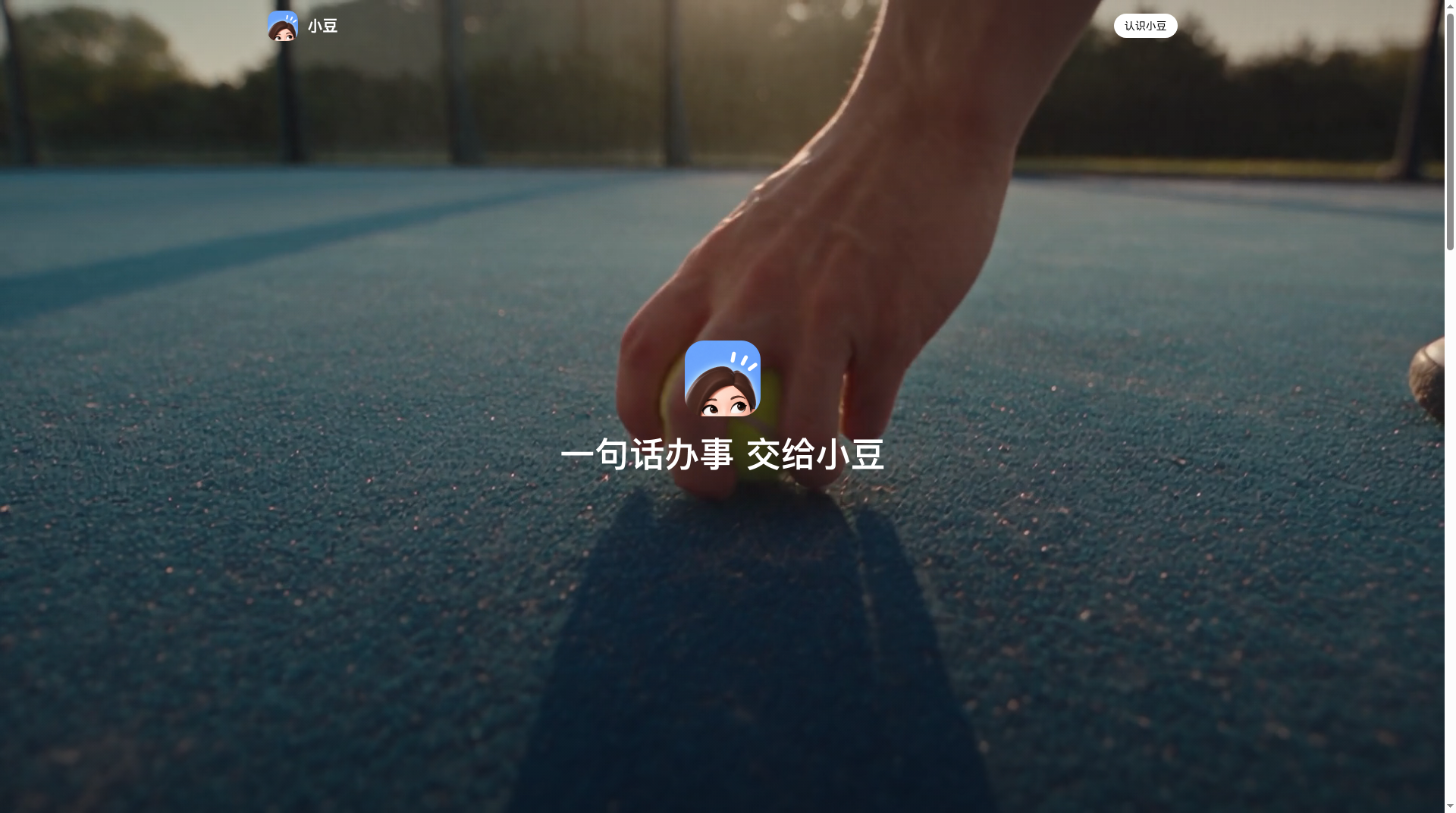
Xiaodou product page, captured 26 November 2026. The hero reads 一句话办事 交给小豆.
The Xiaodou product page headlines the assistant as a Doubao that understands you and can take the initiative to get things done. Official invite-page metadata, recorded in the earlier definition piece, calls it a personal AI assistant that remembers preferences, connects commonly used apps, and helps proactively with work and life. Doubao’s official account, on 24 November 2026 at 10:21:53 Asia/Shanghai, said Xiaodou is Doubao’s AI personal assistant product, that public beta is invite-only, that an invite code opens the trial with a free quota of unpublished size, and that Xiaodou’s capabilities and experience will gradually go live in the Doubao app. The relationship with that main app is a separate comparison: Xiaodou vs the Doubao App.
ChatGPT’s official overview puts three modes in one place. Chat is for questions, learning, and everyday help, including explaining concepts, drafting messages, searching the web, generating an image, comparing options, or thinking through a decision. Work is for completing work tasks from start to finish: ChatGPT Work can create and edit documents, slide decks, spreadsheets, charts, PDFs, images, and other deliverables. Codex is described as the same coding agent, alongside ChatGPT, from understanding and planning through writing, testing, reviewing, and shipping code. Other official sections on that page include writing, images, voice, health, and finance, including a line about securely linking financial accounts for personalized insights.
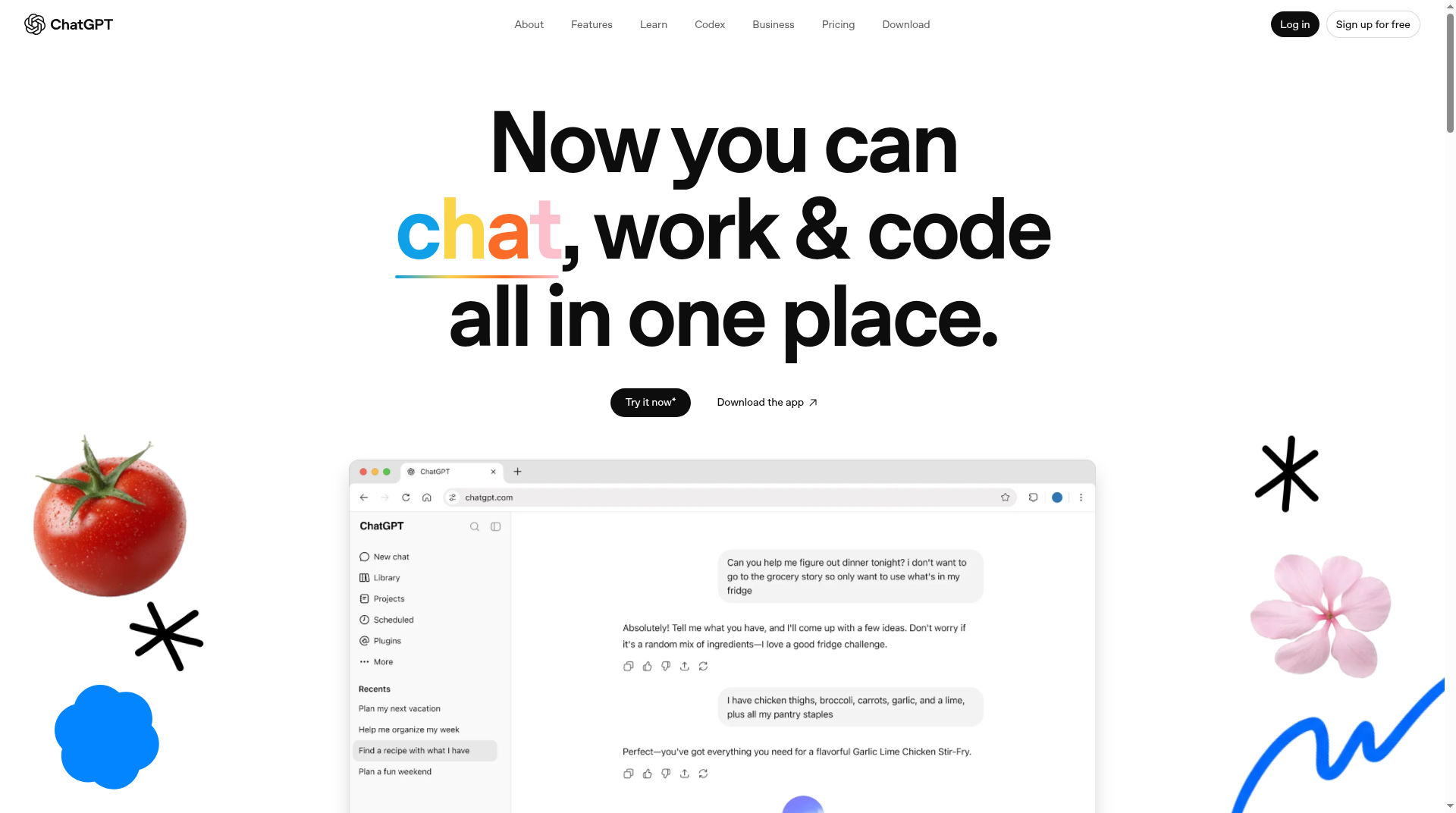
ChatGPT overview, https://openai.com/chatgpt/overview/, captured 26 November 2026. The headline is “Now you can chat, work & code all in one place.”
Those are two official product sentences, not a verdict about which assistant is “more complete.” Xiaodou’s official emphasis is initiative and authorized consumer-app connections inside the Doubao family. ChatGPT’s official emphasis, on the overview, is a single place to chat, finish work artifacts, and code, with named workplace connectors in the Work section.
Connections and getting things done
Official Xiaodou behaviors, from the product page, are proactive messages, “guess what you want,” and task follow-up. Proactive messages use what you have already discussed and the apps you have connected, then remind you when needed. “Guess what you want” uses your interests and some of your memory in Doubao, then lets you ask Xiaodou to act on a recommendation. Follow-up examples are a daily brief, a price-drop reminder, and an exercise goal, handed over in one sentence, run on your rhythm, and changeable or stoppable at any time. Named connections are Douyin, Feishu, Calendar, Health, and Location, plus “other apps,” with the user deciding what to connect or disconnect. Closing examples include placing a reservation by phone, organizing Feishu to-dos, and following long-term goals.
The Xiaodou App Store listing adds a catalog used under explicit instructions and authorization: information queries, calendars and to-dos by text or voice, daily services such as package tracking and nearby search, shopping after-sales, health reminders, and office writing. That listing is not a test log, and it is not a ChatGPT feature list.
ChatGPT’s overview, in the Work section, says you can connect to internal work files and apps like Gmail and Slack to create polished, finished deliverables and automate tasks. The same page describes ChatGPT Work as using the tools, context, and apps you are already using to finish work from start to finish. That is the official connector and deliverable language this article will repeat. It does not say that ChatGPT places a restaurant reservation by phone, or that it connects to Douyin or Feishu. Those Xiaodou examples stay attached to the Xiaodou page.
The two official “getting things done” stories therefore point at different rooms. Xiaodou’s named examples sit in daily life and ByteDance-adjacent apps: a reservation call, a Feishu document, a calendar reminder to leave, a price-drop follow-up. ChatGPT’s named Work examples sit in documents, decks, spreadsheets, and workplace apps such as Gmail and Slack, plus a separate Codex path for code. A reader who needs one of those rooms should start from the official list that actually names it. A reader who wants to know which product finishes a given task more reliably will not find that answer here.
A related, still official, slice of this difference is who comes back to you later. Xiaodou’s product page is explicit about proactive messages and reminders at an agreed time. ChatGPT’s overview describes automating tasks and finishing work, but this check of that page did not yield an equivalent “proactive message” or scheduled-reminder paragraph to quote. That cell stays thinner on the ChatGPT side in this article. For a wider look at official follow-up language across products, see Assistants That Follow Up for You in 2026.
Platform and access
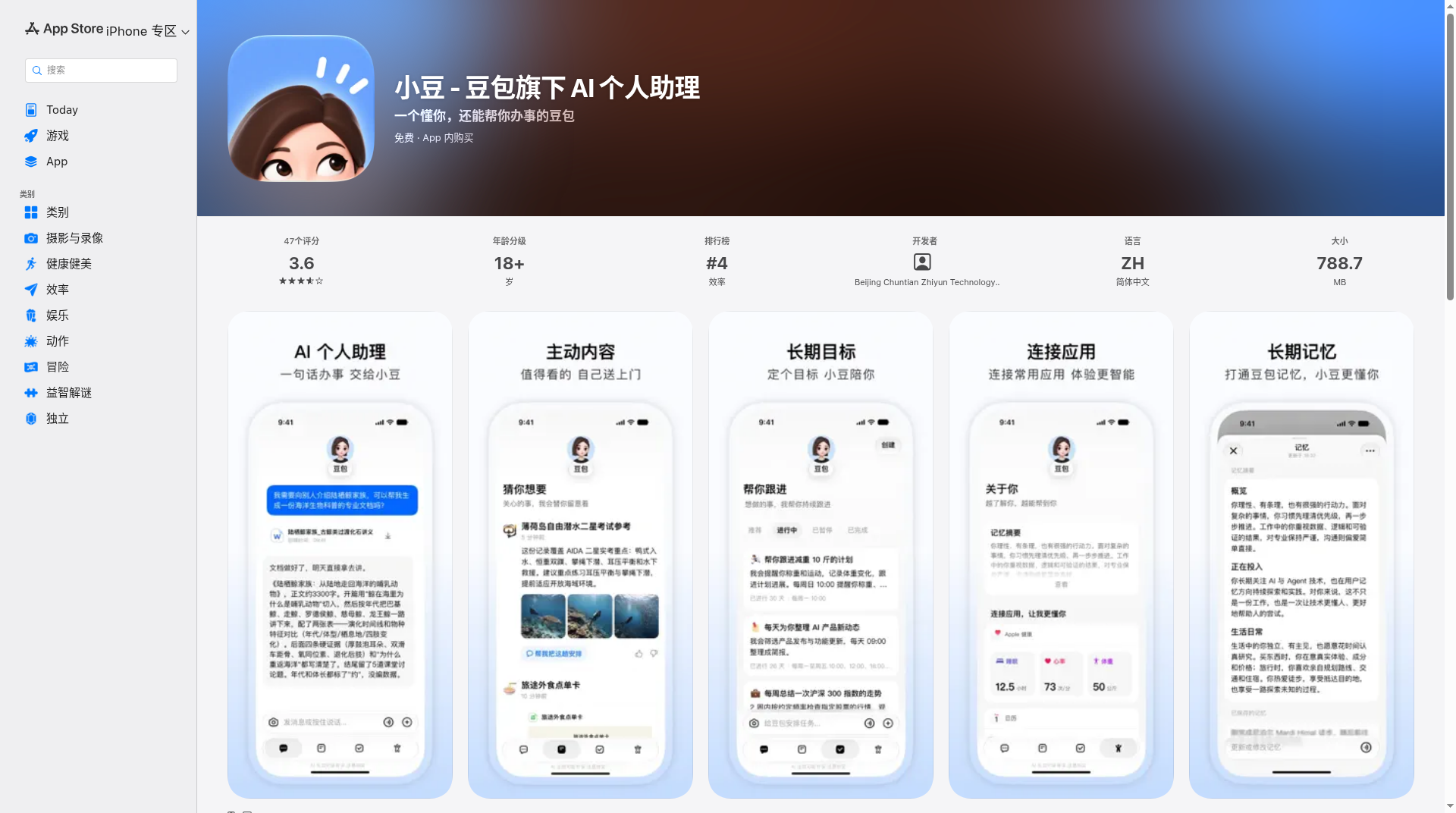
Xiaodou China App Store listing id 6815582077, captured 26 November 2026. Confirmed iOS client, titled 小豆 - 豆包旗下 AI 个人助理.
Xiaodou’s confirmed client in this check is the China App Store app, listed as 小豆 - 豆包旗下 AI 个人助理, free with in-app purchases, in Simplified Chinese, with an 18+ age rating on the store page, requiring iOS or iPadOS 15.0 or later. Official announcement copy still requires an invite code for public beta. A logged-in Xiaodou web app was not confirmed. An official Android store listing was not opened, so Android stays unknown.
ChatGPT’s overview says the product is available in various plans for personal use and for business and enterprise. It does not, on that page, print a complete dollar tariff, and this article will not invent one. A footnote on the same overview says the described capability is available to all plans on macOS and Windows desktop, and to Plus, Pro, Business, Enterprise, and Edu on web and mobile. That is official platform language. It is also more open, on its face, than an invite-only iOS beta. “More open” is an access fact, not a quality fact.
Pricing for Xiaodou should not be collapsed into a single official tariff. The App Store description still names a free plan plus recurring 标准, 加强, and 高级 monthly and annual prices (68/688, 200/2,048, and 500/5,088 yuan). The in-app purchase module on the same page, in HTML recovered on 26 November 2026, still showed ten SKUs, including higher “1 month” and “1 year” amounts, and still did not include the description’s recurring annual 加强 and 高级 rows. Those two sets remain side by side in the pricing article. ChatGPT’s overview only says that various plans exist. Pointing at that official plans heading is enough here.
What cannot be compared yet
The following stay blank, because official pages do not fill them and this article did not run a test.
- Which assistant is more accurate, faster, or more reliable on a shared task list.
- Whether a reservation call, a Feishu cleanup, or a Gmail-connected deliverable actually completes as the marketing examples suggest.
- The size of Xiaodou’s public-beta free quota, or a like-for-like ChatGPT quota comparison.
- Official Android details for Xiaodou.
- Whether Xiaodou and ChatGPT can be used in the same country, on the same account, or under the same data rules. Official privacy sentences exist on both sides — ChatGPT’s overview says you choose how your data is used — but this is not a legal review.
- A merged price table, or a “which plan is better value” conclusion.
How to choose, with the information that exists
If you already live in Doubao, can obtain an invite, and want the assistant whose own page emphasizes proactive messages, follow-up reminders, and authorized connections to Douyin, Feishu, Calendar, Health, and Location, Xiaodou is the official product for that framing. The confirmed download path in this check is the China App Store listing cited above.
If you want a publicly offered assistant whose official overview emphasizes chat plus finished work files and coding, with named connections such as Gmail and Slack, ChatGPT’s overview is the page that documents that job. You do not need a Xiaodou invite to read that page or to use ChatGPT under its own official plans.
If your question is “which one is better,” official pages do not answer it. If your question is which official ecosystem you are actually in — ByteDance consumer apps and a Doubao memory qualifier, or OpenAI’s work-and-code overview — the two lists already diverge.
A China-only or iOS-only view of the same choice is in Personal AI Assistants Available in China and iOS Personal AI Assistants in 2026. Nearby official-claim comparisons include Xiaodou vs Qianwen and Xiaodou vs Apple Intelligence and Siri AI.
If you are building your own assistant rather than choosing a consumer app, that is a different job. SandBase has no Xiaodou card. The live model-family card is Seed 2.1 Pro (bytedance/seed-2.1-pro), listed at $0.89 input, $4.45 output, and $0.18 cache read per million tokens, with a 1M context window, and described as Doubao-Seed-2.1-Pro through Doubao and Volcano Engine. Related catalogs: ByteDance models and Chinese LLM APIs. Those links are for the model family. They are not a way to call Xiaodou.
Sources
- Official Xiaodou product page: doubao.com/xiaodou. Checked 26 November 2026, Asia/Shanghai.
- China App Store listing for Xiaodou, id 6815582077, same day, including the listing description and the ten visible in-app purchase rows.
- Doubao official announcement, 24 November 2026, 10:21:53 Asia/Shanghai, as cited in What Is Doubao Xiaodou?.
- ChatGPT overview, checked the same day.
- SandBase cards linked above, confirmed live the same day. There is still no Xiaodou catalog card.
Found this useful? Share it