AI Agent Stack 2026: Claude, OpenAI, Gemini, MCP, and the Runtime Layer
A practical map of the 2026 AI agent stack: model providers, tool protocols, Skills, orchestration, and runtimes, with a clear guide to where each layer belongs.
AI Agent Stack 2026: Claude, OpenAI, Gemini, MCP, and the Runtime Layer
The AI ecosystem is getting harder to explain because the model is no longer the whole product. Claude, OpenAI, and Gemini can all power an agent, but the model alone does not define how tools are discovered, how permissions are granted, or how a long-running task is resumed after a failure.
The useful question is not “which model is best?” It is which layer owns which responsibility? This guide maps the stack so you can choose a provider without accidentally asking an SDK, an MCP server, or a runtime to do a job it was never designed to own.
Key takeaway
- Models provide reasoning; gateways handle credentials, routing, and budgets.
- MCP and function calling describe tools, but neither grants authorization.
- Skills package repeatable procedure; runtimes govern execution, sessions, and audit.
- Choose the smallest layer that solves the task, then add governance when side effects appear.
The five-layer map
| Layer | Responsibility | Typical choices |
|---|---|---|
| Model | Reasoning, generation, vision, tool-call decisions | Claude, OpenAI, Gemini, open-weight models |
| API gateway | Authentication, routing, budgets, provider normalization | SandBase, provider-native APIs, self-hosted gateways |
| Tool contract | Describe callable capabilities and inputs | Function calling, MCP, HTTP APIs |
| Workflow layer | Plans, retries, state, approvals, handoffs | Agent SDKs, Skills, custom orchestration |
| Runtime | Sandboxing, sessions, scheduling, audit, deployment | Local-first Harnesses, managed agent runtimes |
The layers compose, but they are not interchangeable. MCP can describe a tool; it does not automatically provide a durable runtime. A model can choose a tool; it does not own your approval policy. An API gateway can normalize requests; it does not know whether a file write is safe for a particular task.
1. Model providers: Claude, OpenAI, and Gemini
Start with the work your agent must do: coding, long-context synthesis, multimodal interpretation, structured extraction, or high-volume classification. Then test the provider behavior that matters to that workload: tool-call shape, streaming events, structured output, context handling, latency, and price.
Provider names are not architecture. A production system should keep the model choice behind a small adapter or gateway so that changing a model does not rewrite the rest of the agent. “OpenAI-compatible” can reduce migration effort, but it does not guarantee identical reasoning, safety behavior, private parameters, or every streaming and tool feature.
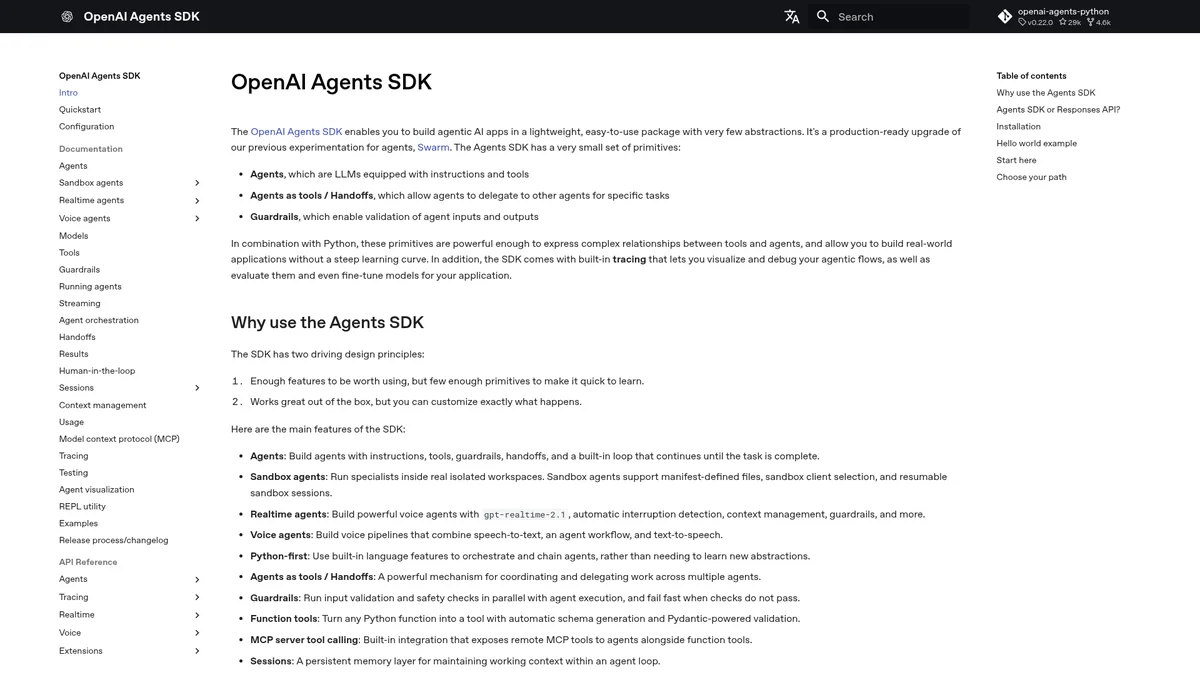
Figure 2. An Agents SDK is a workflow building surface; it does not replace provider routing or execution governance.
2. The gateway layer
The gateway owns concerns that should not be repeated in every Agent:
- one place for API authentication and key rotation;
- model routing and fallbacks;
- per-request budgets and rate limits;
- usage records and provider error normalization;
- a boundary between browser code and secret credentials.
SandBase is most useful here when an application needs LLMs next to image, video, embedding, search, social, or other real-world APIs. The gateway gives those capabilities a shared operational surface, while each modality keeps its own request and lifecycle semantics.
3. Tool contracts: function calling and MCP
Function calling is an application-level contract: your code defines a schema, the model requests a function, and your application executes it. MCP is a protocol for discovering and connecting tools and resources across clients and servers. They can coexist.
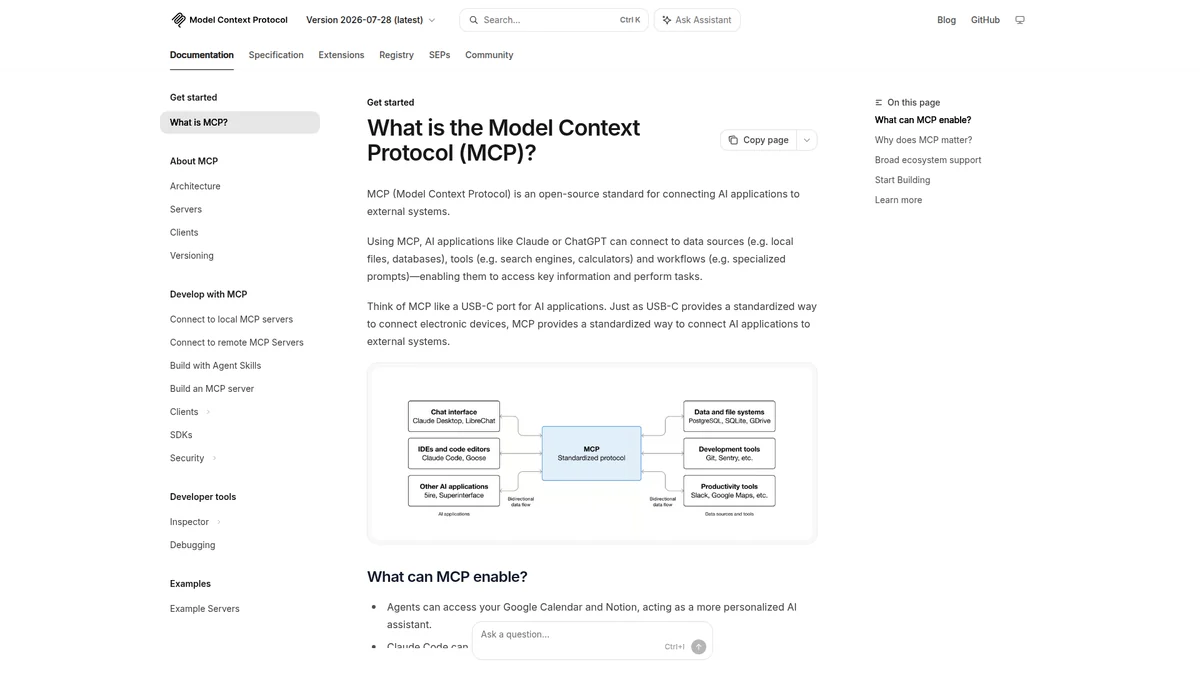
Figure 1. MCP is a tool and resource connection protocol; the runtime and authorization policy still sit elsewhere.
Choose a direct function when the capability is private, narrow, and owned by one application. Choose MCP when the same capability should be portable across compatible Agent clients. In both cases, validate arguments at the execution boundary and return bounded, typed results. A natural-language tool description is not authorization.
4. Skills and orchestration
Skills package repeatable procedure: research steps, source rules, output format, and checks. They are a useful distribution unit for workflows that should travel between compatible clients. An orchestration layer still needs to decide when a Skill runs, what state it receives, and which side effects require approval.
This is where many “agent frameworks” blur two different jobs. A loop that calls a model is not automatically a production workflow. Add explicit state, retry policy, idempotency keys, human checkpoints, and an evidence record before allowing the loop to touch customer systems.
5. Runtime: the missing layer
The runtime answers questions the model cannot answer:
- Where does code execute?
- Which files, network targets, and credentials are available?
- How is a session resumed after a worker restarts?
- Who can approve a write or deployment?
- What evidence can an operator replay later?
Use a local-first or self-owned Harness when execution boundaries, data ownership, and auditability matter. Use a managed runtime when you want an operated control plane and accept its tenancy and platform constraints. SandBase Harness, CLI/MCP, Skills, and API surfaces are complementary: the Harness governs execution, the CLI/MCP bridge connects clients, Skills package procedure, and APIs supply capabilities.
A reference architecture
Agent client
  -> Skill / workflow policy
  -> model gateway (routing, auth, budget)
  -> Claude / OpenAI / Gemini / open-weight model
  -> function tools or MCP servers
  -> governed runtime (sandbox, session, audit)
Keep the arrows explicit. A request that only summarizes a document may stop at the model and a retrieval tool. A coding Agent needs a runtime, filesystem policy, and approval boundary. A social research Agent may call the X API and an LLM but should not inherit a posting tool.
How to choose without buying the wrong layer
- Write down the task and the side effects it may create.
- Pick two or three models and test the actual tool and streaming contract.
- Add a gateway if you need provider choice, shared credentials, or budgets.
- Pick function calling or MCP based on portability, not fashion.
- Add Skills for repeatable procedure and a runtime for execution governance.
- Measure success with task completion, error recovery, cost, and operator review time—not model brand alone.
Where SandBase fits
SandBase is not a replacement name for every layer. It is a composable surface: APIs for capabilities, Skills for repeatable workflows, CLI/MCP for client connection, and Harness for governed execution. That separation lets a team start with one API call and add a durable Agent only when the task requires it.
For implementation, start with SandBase Docs, explore Models and APIs, then choose the CLI/MCP bridge or Harness when local execution and audit become part of the requirement.
If the lightweight bridge is the layer you need, star SandBase CLI on GitHub so other agent builders can discover and evaluate it.
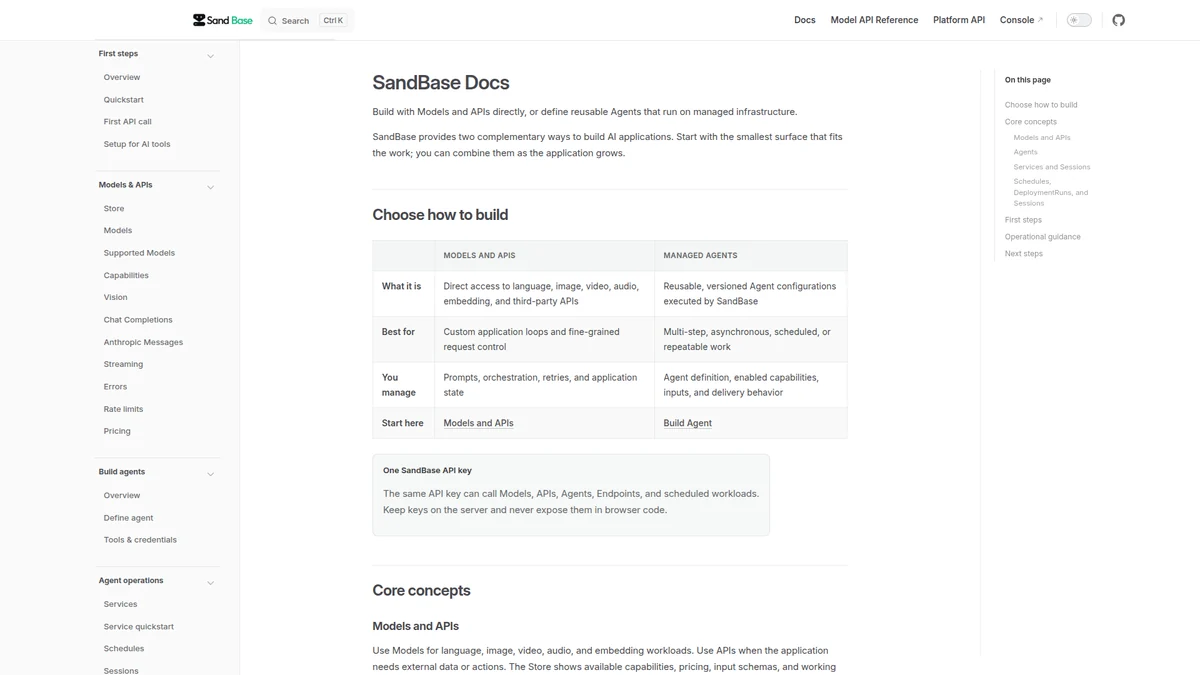
Figure 3. The Docs quickstart is the handoff from architecture decisions to a first working API call.