Qwen 3.8 Max: Alibaba's 2.4T Multimodal Flagship
Qwen 3.8 Max is Alibaba's 2.4 trillion parameter multimodal flagship with 1M context, MoE architecture, and top Arena.AI rankings. Specs, pricing, and how to access it on SandBase.
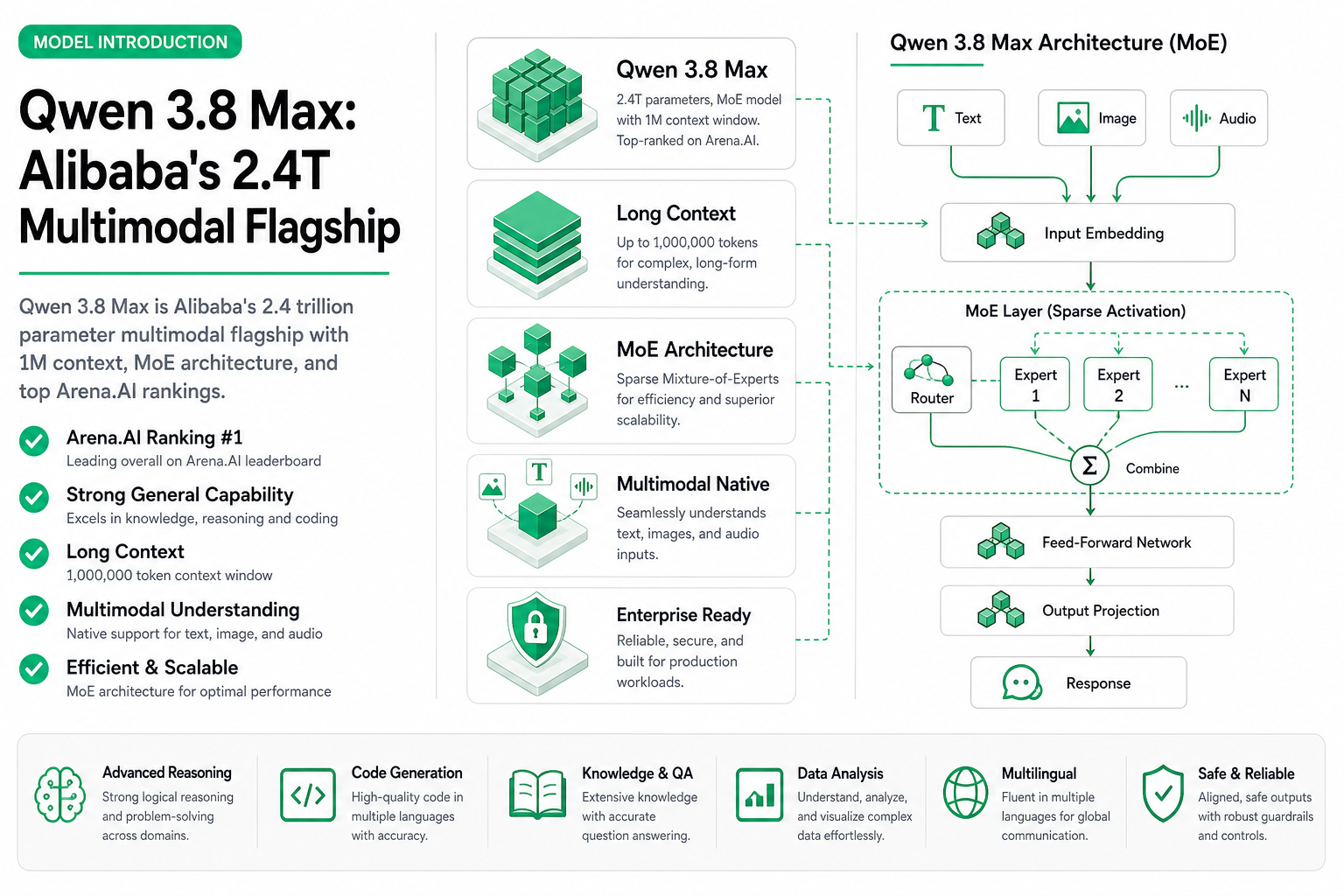
TL;DR — Qwen 3.8 Max: 2.4T parameters (95B active), multimodal (text + image + video + docs), 1M context, Arena.AI #2 overall. Open weights next week. Pricing around $2.0/$6.0 per million tokens. Coming to SandBase soon.
I Wasn’t Going to Write This Today
The plan was to finish the Qwen 3.7 article (which I did — it’s here) and move on. Then Alibaba dropped Qwen 3.8 Max this morning.
Not a preview announcement. Not a “coming soon” blog post. The model is live on chat.qwen.ai right now, the API is accessible through DashScope, and — this is the part that made me stop — it immediately ranked #2 on Arena.AI’s text leaderboard. Above Opus 4.8. Above GPT-5.5. Only Fable 5 sits higher.
Two things make this release different from the 3.7 launch three months ago. First: it’s multimodal. Qwen 3.7 Max was text-only — great for coding agents, but if your workflow involved screenshots or documents, you needed a separate vision model in the loop. Qwen 3.8 handles text, images, video, and documents natively. Second: Alibaba says they’ll open-source the weights next week. That would make it the largest openly available model — 2.4 trillion parameters — and the first time Alibaba has opened a Max-tier model.
I haven’t stress-tested it yet. The benchmark data is incomplete (more on that below). But the Arena ranking is crowd-verified and blind, which makes it harder to dismiss than vendor self-reports. This article documents what’s confirmed today and flags what’s still missing.
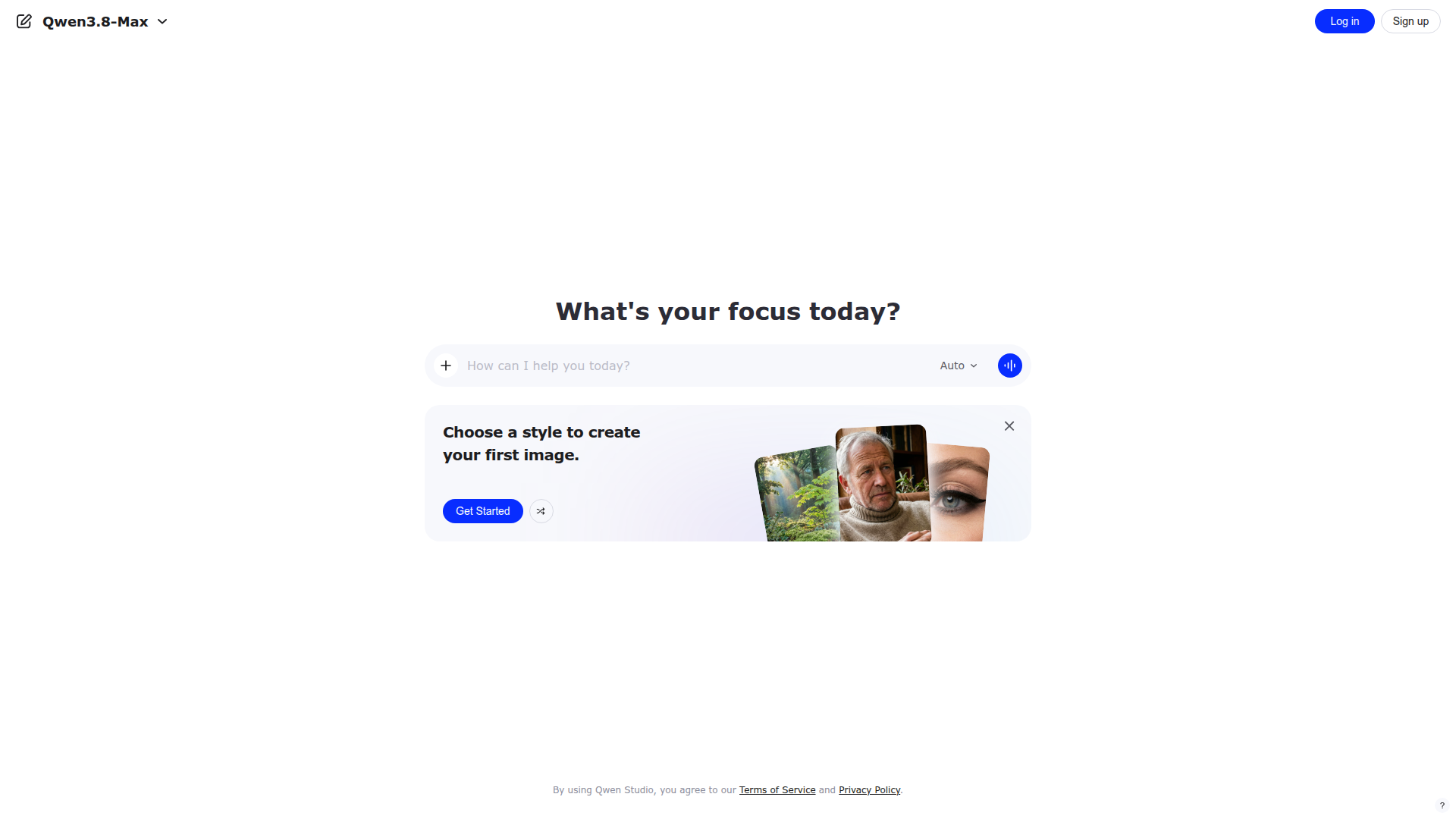 chat.qwen.ai right now — Qwen3.8-Max is already the default model in the selector.
Architecture and Specifications
Qwen 3.8 Max uses a Mixture-of-Experts (MoE) architecture that routes each token through 95 billion active parameters drawn from a total pool of 2.4 trillion. This gives it the reasoning density of a ~95B model at inference time while drawing on the broader knowledge capacity of its full parameter set during training.
| Dimension | Qwen 3.8 Max | Qwen 3.7 Max | Change |
|---|---|---|---|
| Total Parameters | 2.4T (MoE) | Not disclosed | New architecture |
| Active Parameters | 95B | Not disclosed | — |
| Architecture | Mixture-of-Experts | Dense (assumed) | MoE transition |
| Context Window | 1,000,000 tokens | 1,000,000 tokens | Same |
| Max Output | 65,536 tokens | 65,536 tokens | Same |
| Multimodal Input | Text, Image, Video, Document | Text only | Added |
| Extended Thinking | Yes | Yes | Same |
| Function Calling | Yes | Yes | Same |
| Structured Output | Yes | Yes | Same |
| Open Weights | Next week (announced) | No | First Max open release |
| Execution Mode | Sync + Stream | Sync + Stream | Same |
The jump from text-only to full multimodal at the Max tier is the headline change. Previously, if you wanted Alibaba’s strongest reasoning and vision, you had to route between Qwen 3.7 Max (text) and Qwen 3.7 Plus (multimodal) — splitting your agent pipeline across two models with different capabilities and pricing. Qwen 3.8 Max eliminates that split.
Arena Rankings and Benchmark Status
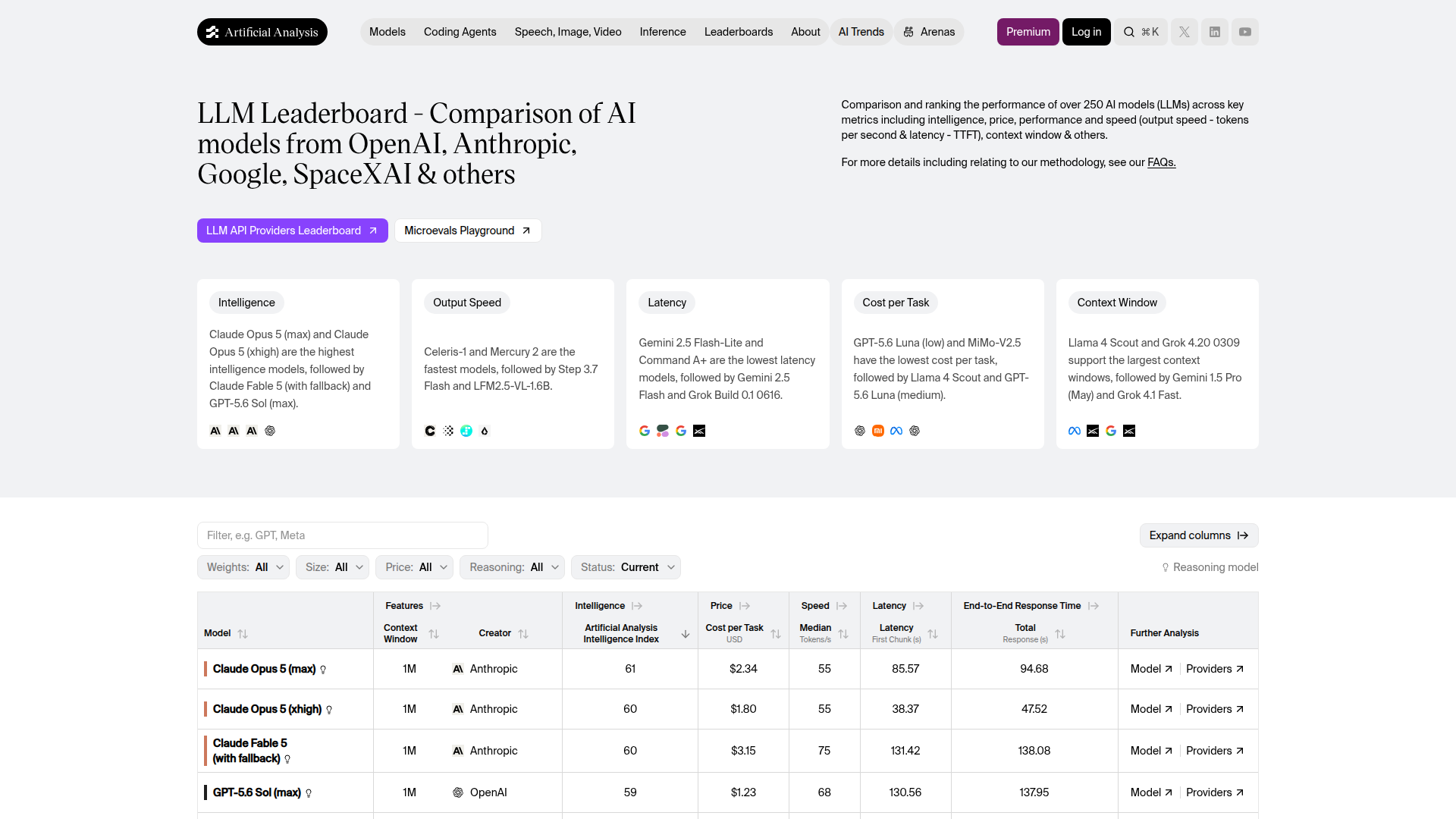 Artificial Analysis Intelligence Index (August 2026) — Claude Opus 5 leads at 61, followed by Fable 5, GPT-5.6 Sol at 59. Qwen 3.7 Max scored 56.6 (#5 globally); Qwen 3.8 Max is expected to rank higher.
Let’s be transparent: as of launch day, Alibaba has not published a complete independent benchmark scorecard for Qwen 3.8 Max. There is no SWE-Pro, Terminal-Bench, or GPQA Diamond number to cite with confidence.
What is available is the Arena.AI ranking — a crowdsourced, blind-evaluation leaderboard where users compare model outputs head-to-head without knowing which model they’re judging. On Arena.AI’s text category, Qwen 3.8 Max ranks as:
- #2 among all models (behind only Anthropic Fable 5)
- #1 among Chinese-lab models (ahead of Kimi K3, DeepSeek V4 Pro)
- Above Claude Opus 4.8, GPT-5.5 on Arena Elo
This is meaningful independent validation. Arena.AI’s methodology is well-respected because it measures real-world preference rather than benchmark gaming. However, we’ll update this article with structured benchmark comparisons once Alibaba or third-party evaluators publish them.
Competitive Context (Arena.AI Text, August 2026)
| Rank | Model | Lab | Notes |
|---|---|---|---|
| #1 | Fable 5 | Anthropic | Most capable overall; premium pricing |
| #2 | Qwen 3.8 Max | Alibaba | Today’s release |
| #3 | GPT-5.5 | OpenAI | Terminal-Bench #1 |
| #4 | Kimi K3 | Moonshot AI | $3/$15 per 1M |
| #5 | Claude Opus 4.8 | Anthropic | SWE-bench Pro 69.2% |
The positioning is significant: Qwen 3.8 Max sits between the most expensive Western frontier models (Fable 5, Opus 4.8) and the Chinese competition (Kimi K3) at a substantially lower price point than the models it outranks on Arena.
Pricing Comparison
| Model | Input (per 1M) | Output (per 1M) | Cache Read | Multimodal |
|---|---|---|---|---|
| Qwen 3.8 Max | $2.00 | $6.00 | $0.25/M (implicit) | ✅ Text, Image, Video, Doc |
| Qwen 3.7 Max | $1.25 | $3.75 | $0.25/M | ❌ Text only |
| Claude Opus 4.8 | $15.00 | $75.00 | $1.50/M | ✅ |
| Kimi K3 | $3.00 | $15.00 | Not disclosed | ✅ |
| GPT-5.5 | $5.00 | $15.00 | $2.50/M | ✅ |
| Fable 5 | $20.00 | $100.00 | $2.00/M | ✅ |
The value math: Qwen 3.8 Max delivers Arena-#2 quality at 10% the output cost of Fable 5 and 8% of Opus 4.8’s output cost. Compared to Kimi K3 (the closest Chinese competitor on Arena), it’s cheaper on both input ($2 vs $3) and output ($6 vs $15) while ranking higher.
Compared to its predecessor Qwen 3.7 Max: you pay 60% more on input ($2.0 vs $1.25) and 60% more on output ($6.0 vs $3.75), but you gain multimodal capability, a 2.4T MoE architecture, and a meaningful leap in Arena ranking. For workloads that required routing between 3.7 Max (text) and 3.7 Plus (vision), consolidating into 3.8 Max likely saves money overall by eliminating pipeline complexity.
Implicit Caching
Qwen 3.8 Max uses implicit caching at $0.25 per million tokens — the system automatically caches repeated prefixes without requiring explicit cache-control headers. For long-running agent sessions where context grows iteratively, this means:
- First turn: full $2.00/M input cost
- Subsequent turns: only new tokens cost $2.00/M; the repeated prefix drops to $0.25/M
- A 500K-token context that’s 80% cached costs ~$0.30 per turn instead of $1.00
Key Capabilities
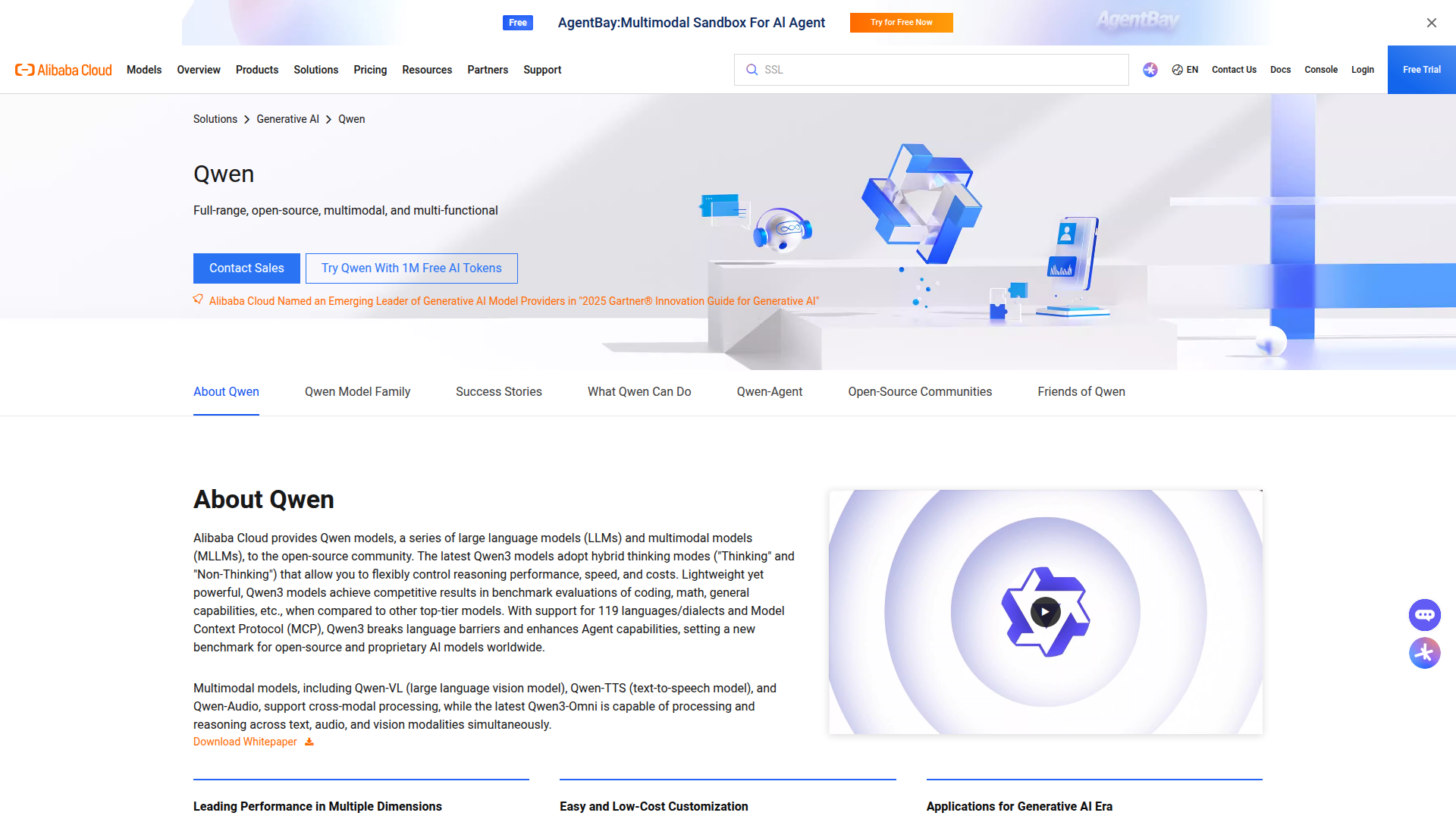 Alibaba Cloud’s Qwen platform — highlighting the full-range, open-source, multimodal model family with 119 language support and MCP integration.
Long-Duration Autonomous Coding
Like its predecessor, Qwen 3.8 Max excels at sustained coding agent workloads — multi-file refactors, full-repository bug hunts, and architectural migrations that take hours of continuous operation. The 1M context window means it can hold an entire medium-sized codebase in memory while making sequential changes across files.
Multimodal Agent Workflows
The addition of native image, video, and document understanding unlocks agent patterns that previously required model-switching:
- Screenshot-driven UI testing: The agent sees the rendered page, identifies visual regressions, and writes fixes
- Document extraction pipelines: PDFs, invoices, and scanned documents processed end-to-end without OCR preprocessing
- Video analysis for QA: Short screen recordings parsed for UI flow verification
- Chart and diagram understanding: Architecture diagrams or data visualizations interpreted directly
Complex Office Task Execution
Qwen 3.8 Max is positioned for end-to-end office automation — tasks like “read this contract PDF, extract key terms, draft a comparison table, and email the summary” as a single agent invocation with multimodal input and tool-calling output.
Using Qwen 3.8 Max (Coming Soon on SandBase)
Qwen 3.8 Max will be available on SandBase through the standard OpenAI-compatible endpoint. Pricing is expected to match Alibaba’s official rates. Here’s how you’ll use it once it’s live:
from openai import OpenAI

client = OpenAI(
    base_url="https://api.sandbase.ai/v1",
    api_key="your-sandbase-key"
)

# Text-only reasoning task
response = client.chat.completions.create(
    model="alibaba/qwen3.8-max",
    messages=[
        {"role": "system", "content": "You are a senior engineer. Analyze the full codebase, identify the root cause, and propose a minimal fix."},
        {"role": "user", "content": "Users report intermittent 403 errors on the /api/projects endpoint after our last deployment. Here's the full codebase: ..."}
    ],
    tools=[{
        "type": "function",
        "function": {
            "name": "edit_file",
            "description": "Edit a file at the given path",
            "parameters": {
                "type": "object",
                "properties": {
                    "path": {"type": "string"},
                    "content": {"type": "string"}
                },
                "required": ["path", "content"]
            }
        }
    }],
    max_tokens=16384,
    stream=True
)

for chunk in response:
    if chunk.choices[0].delta.content:
        print(chunk.choices[0].delta.content, end="")
Multimodal Input Example
# Process a document with visual elements
response = client.chat.completions.create(
    model="alibaba/qwen3.8-max",
    messages=[
        {"role": "user", "content": [
            {"type": "text", "text": "Extract all tables from this PDF page. Return structured JSON with column headers and row data."},
            {"type": "image_url", "image_url": {"url": "https://example.com/contract-page-3.png"}}
        ]}
    ],
    max_tokens=8192
)

print(response.choices[0].message.content)
Video Input for Agent QA
# Analyze a screen recording for UI issues
response = client.chat.completions.create(
    model="alibaba/qwen3.8-max",
    messages=[
        {"role": "user", "content": [
            {"type": "text", "text": "Watch this screen recording of a user completing the checkout flow. Identify any UX issues, broken interactions, or visual glitches. Report each with a timestamp."},
            {"type": "video_url", "video_url": {"url": "https://example.com/checkout-recording.mp4"}}
        ]}
    ],
    max_tokens=4096
)
Note: SandBase access to Qwen 3.8 Max is coming soon. The code examples above reflect the expected API contract based on Alibaba’s published specifications. We’ll update this section once the model is live on our platform.
Open-Source Release (Next Week)
Alibaba has announced that Qwen 3.8 Max weights will be open-sourced next week — making it the first Max-tier model in the Qwen family to receive an open release. Previous Max models (3.5 Max, 3.6 Max, 3.7 Max) remained API-only.
This is significant for several reasons:
- Self-hosting at scale: Organizations with the infrastructure (likely requiring multi-node GPU clusters for a 2.4T model) can run it on-premise with full data sovereignty
- Fine-tuning potential: Open weights enable domain-specific adaptation that API-only access cannot provide
- Community research: The MoE architecture with 2.4T parameters will be the largest open model available for study
- Competitive pressure: This pushes other labs toward openness at the frontier tier
We’ll publish a dedicated guide on self-hosting options and quantized variants once the weights are released.
When to Pick Qwen 3.8 Max
Pick it when:
- You need top-tier reasoning and multimodal input in the same model — no more routing between text and vision variants
- Your agent workflows process documents, screenshots, or video alongside code and text
- You want Arena-#2 performance at a fraction of the cost of Fable 5 or Opus 4.8
- Long-horizon autonomous agents are your primary use case and you need 1M context with aggressive caching
- You’re building end-to-end office automation agents that handle diverse input types
Pick something else when:
- You only need text reasoning and cost is paramount — Qwen 3.7 Max at $1.25/$3.75 remains cheaper for text-only workloads
- You need verified benchmark scores before committing (wait for independent evaluations to publish)
- Data residency in US/EU is a hard requirement
- You need the absolute strongest model regardless of cost (Fable 5 still holds Arena #1)
- You want the strongest open-source model today — weights arrive next week, not now
Qwen 3.8 Max vs. Qwen 3.7 Max: Upgrade Decision
| Factor | Qwen 3.7 Max | Qwen 3.8 Max | Verdict |
|---|---|---|---|
| Price (input) | $1.25/M | $2.00/M | 3.7 cheaper |
| Price (output) | $3.75/M | $6.00/M | 3.7 cheaper |
| Multimodal | ❌ | ✅ | 3.8 wins |
| Architecture | Dense (smaller) | 2.4T MoE (95B active) | 3.8 larger |
| Arena Rank | Lower | #2 overall | 3.8 wins |
| Open Weights | No | Next week | 3.8 wins |
| Benchmark Data | Published (SWE-Pro 60.6) | Arena only (for now) | 3.7 more transparent |
Upgrade if: You need multimodal input, want the strongest available reasoning, or plan to self-host once weights drop.
Stay on 3.7 if: Your workload is text-only, you’re cost-sensitive, and the published benchmarks give you confidence that 3.7 meets your quality bar.
Search Interest and Keyword Data
Data sourced via SandBase’s DataForSEO integration (August 2026):
| Keyword | Monthly Search Volume | Trend | Notes |
|---|---|---|---|
| qwen 3.8 max | 10 (avg) / 70 (Jun 2026) | 🚀 Just launched | Expect 5,000+ in Aug based on 3.7 pattern |
| qwen 3.7 max | 590 (avg) / 4,400 peak (May) | 📈 Predecessor peak | Baseline for 3.8 projection |
| qwen model | 5,400 (Jun 2026) | 📈 Growing | Category demand growing monthly |
| qwen api | 1,600–1,900 | 📊 Stable | High commercial intent (CPC $10.53) |
| alibaba qwen | 1,000 | 📊 Stable | Brand-level searches |
The search pattern from Qwen 3.7 is instructive: searches spiked to 4,400 within the launch month and maintained ~2,900 the month after. Given that Qwen 3.8 is a larger release (multimodal, open weights promised, 2.4T parameters), expect August 2026 search volume to exceed the 3.7 peak significantly.
FAQ
How does Qwen 3.8 Max compare to Claude Fable 5?
Fable 5 holds Arena #1 and is widely considered the strongest model available in August 2026. Qwen 3.8 Max sits at #2 — meaningfully close but not quite matching Fable 5 on the hardest reasoning tasks. The key differentiator is price: Fable 5 costs $20/$100 per million tokens vs Qwen 3.8 Max at $2/$6. For the vast majority of agent workloads, the quality gap doesn’t justify a 10-17x price premium.
Are there independent benchmark scores available?
Not yet in a complete form. As of launch day (August 3, 2026), the primary independent validation is Arena.AI’s crowdsourced ranking, where Qwen 3.8 Max achieves #2 overall in the text category. We expect Alibaba and third-party evaluators to publish structured benchmark results (SWE-Pro, Terminal-Bench, GPQA, etc.) in the coming days. We’ll update this article when they do.
When will Qwen 3.8 Max be available on SandBase?
SandBase is finalizing integration for Qwen 3.8 Max. We expect availability within days of the official release. The model will be served as alibaba/qwen3.8-max through the standard OpenAI-compatible endpoint at pricing comparable to Alibaba’s official rates.
Can I self-host Qwen 3.8 Max?
Not today, but next week. Alibaba has committed to open-sourcing the weights — making it the first Max-tier Qwen model available for self-hosting. Given the 2.4T total parameter count, expect to need substantial infrastructure (multi-node setups with high-memory GPUs). Quantized variants will likely follow from the community within days of the weight release.
What modalities does it support for input?
Qwen 3.8 Max natively accepts text, images, video, and documents (PDFs rendered as images). Output remains text-only (including structured JSON, code, and function calls). This makes it suitable for agent workflows that need to see and read diverse inputs while producing actionable text or code outputs.