What is Hy4 preview's 1M context actually good for?
A practical test plan for Hy4 preview on long documents, code repositories, and multi-step agent work.
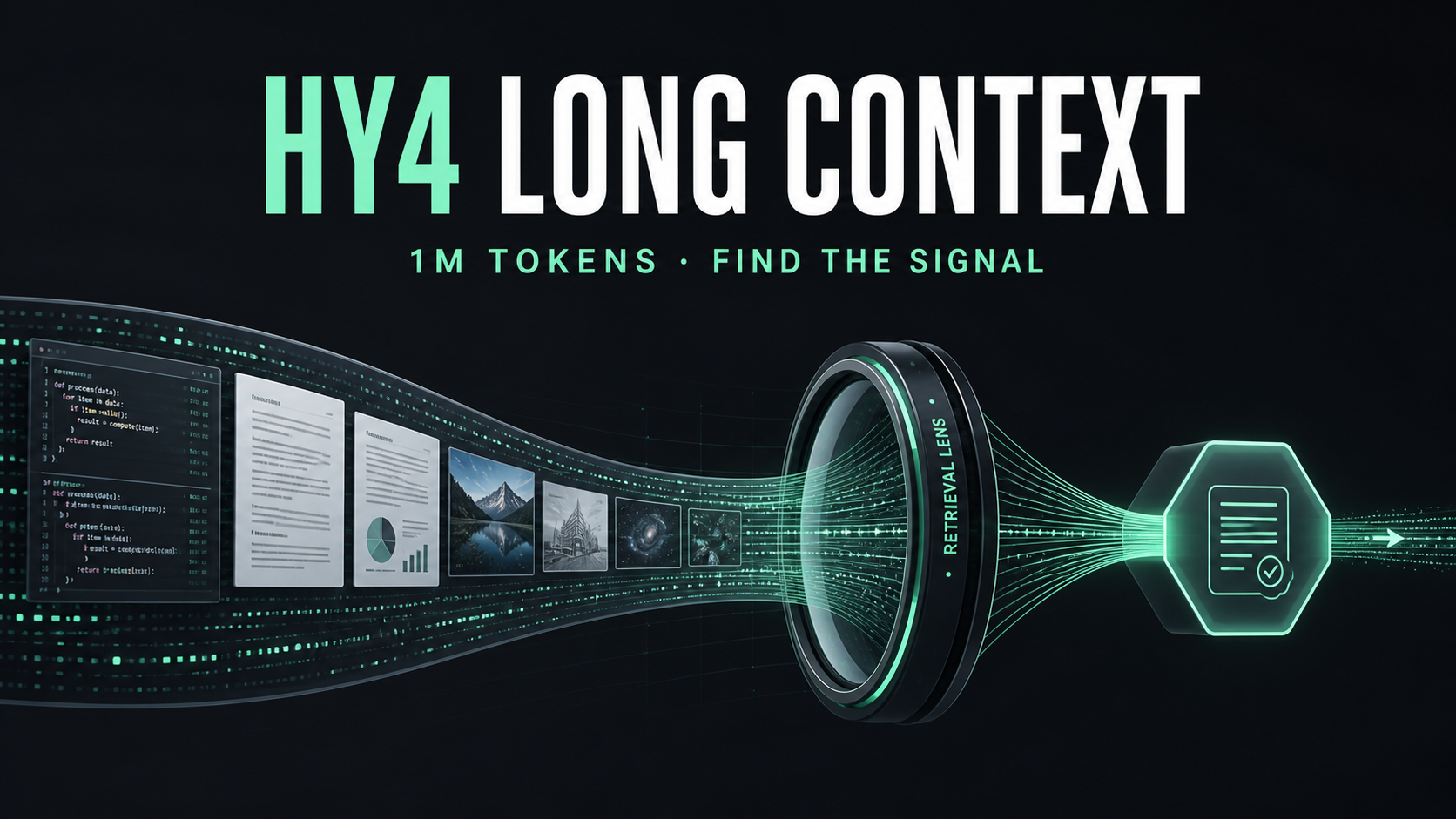
“More than 1M tokens” is an impressive launch number, but it is not a guarantee of useful long-context reasoning. The window matters when a model can find the right evidence, ignore irrelevant material, and turn that evidence into a checkable action.
Tencent presents Hy4 preview’s context length alongside coding, office, and science workflows. That combination makes sense: real projects span repositories, policy files, historical versions, and logs. The open question is whether retrieval and verification remain reliable as the input grows.
Key takeaway
- Measure retrieval, citation completeness, and completed work—not window size alone.
- Cross-file code, contradictory documents, and long-running delivery expose different failure modes.
- Cache stable context and budget changing context; a larger window can increase cost and looping.
- Set timeouts, retry limits, and human hand-off rules because preview behavior can overthink long tasks.
Three tasks worth measuring
Start with cross-file bug tracing. Distribute the clues across implementation, tests, issues, and an older version, then ask for a minimal fix. Check whether the model cites the current logic, avoids stale files, and passes the tests.
Next, test long-document question answering with conflicting policy versions. Require filename, page, and effective-date citations. A larger window is useful only if the model can identify which rule is still valid.
Finally, test long-horizon delivery: planning, tool calls, code changes, checks, and a final artifact. Save every state transition and human intervention. Reading a million tokens is not the same as maintaining a coherent task state.
Avoid fake long-context tests
Do not dump unrelated text into the prompt just to make it large. Increase noise gradually, move the key evidence between the beginning, middle, and end, and measure retrieval precision, citation completeness, latency, and cost. Save the raw input, model version, and complete tool trace; a lucky final answer can hide a wrong process.
Context and economics
Sending the full history every time is rarely optimal. Cache stable background material, isolate the changing task input, or use a cheaper model to select relevant passages before asking Hy4 preview to reason over the long context. Log provider, model, request ID, input/output tokens, cache hits, retries, and latency through a gateway such as SandBase when the model is available in its live catalog.
Tencent lists overthinking and excessive self-verification as preview issues. Set a maximum runtime, retry count, and human hand-off condition before putting a long-context task into a business workflow.
Initial assessment
Hy4 preview’s 1M context can reduce manual chunking, but its value must be proven by finding the right evidence and completing a replayable workflow—not by the window size alone.
A practical context budget
Treat one million tokens as a ceiling, not a default prompt size. Start with the smallest context that contains the evidence and add material in measured increments. Track retrieval precision, citation coverage, answer latency, and spend at each increment. If performance falls as noise increases, add a retrieval or summarization stage rather than assuming the model will ignore irrelevant text.
For agent workflows, separate durable instructions, task-specific files, and tool output. Give each source a stable identifier so the model can cite it and the reviewer can locate the original bytes. When the context contains multiple versions of a document, require an explicit effective-date decision and fail the run if the answer cites a superseded rule.
The strongest long-context result is not a long answer. It is a short, correct decision with an auditable path back to the relevant evidence, completed within a predictable budget.
Replay and failure handling
Save a frozen copy of every source document and the exact ordering used in the prompt. Run the fixture again after changing only the model or retrieval stage. When the answer changes, compare citations and tool traces before deciding which run is better. A production system should return an explicit “not found” or “conflicting sources” state instead of filling a gap with a plausible inference.
Long-context agents also need a compaction policy. Summarize completed work into a signed checkpoint, retain links to the original evidence, and discard stale tool output. This controls cost without losing the ability to audit what the model saw at each decision point.
A release gate for long-context features
Before enabling a larger window for users, define a fail-closed result for missing or conflicting evidence. The service should be able to say “not found,” “sources disagree,” or “context budget exceeded” without silently turning the gap into a confident paragraph. Review a sample of these negative outcomes, because false certainty is usually more expensive than a visible refusal.
Also test interruption. Cancel a run during retrieval, during a tool call, and after a checkpoint has been written. The next attempt should know what was completed, avoid repeating side effects, and expose the checkpoint used for its decision. This is where long context meets real agent operations: a large input window cannot compensate for a missing state model.
Bottom line: use Hy4 preview’s 1M context when it removes a measured bottleneck, and keep a smaller, bounded path available when retrieval, cost, or replay quality deteriorates.
Evidence screenshots
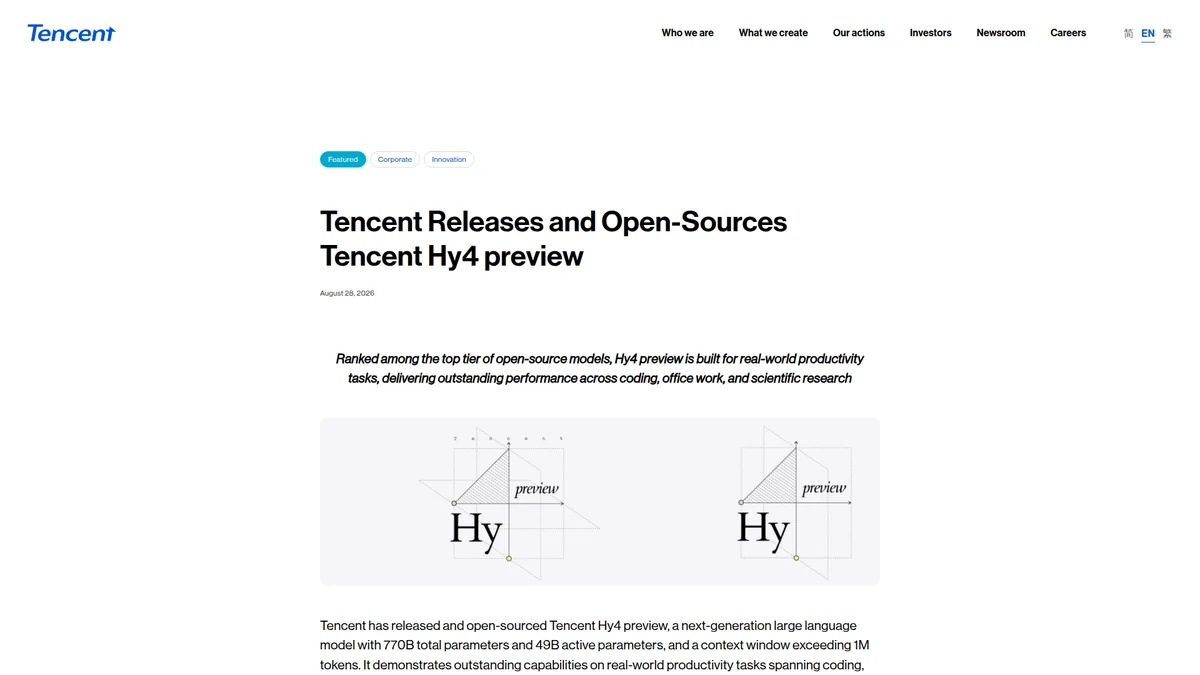
Figure 1. The announcement states the 1M-token context claim and related workflows.
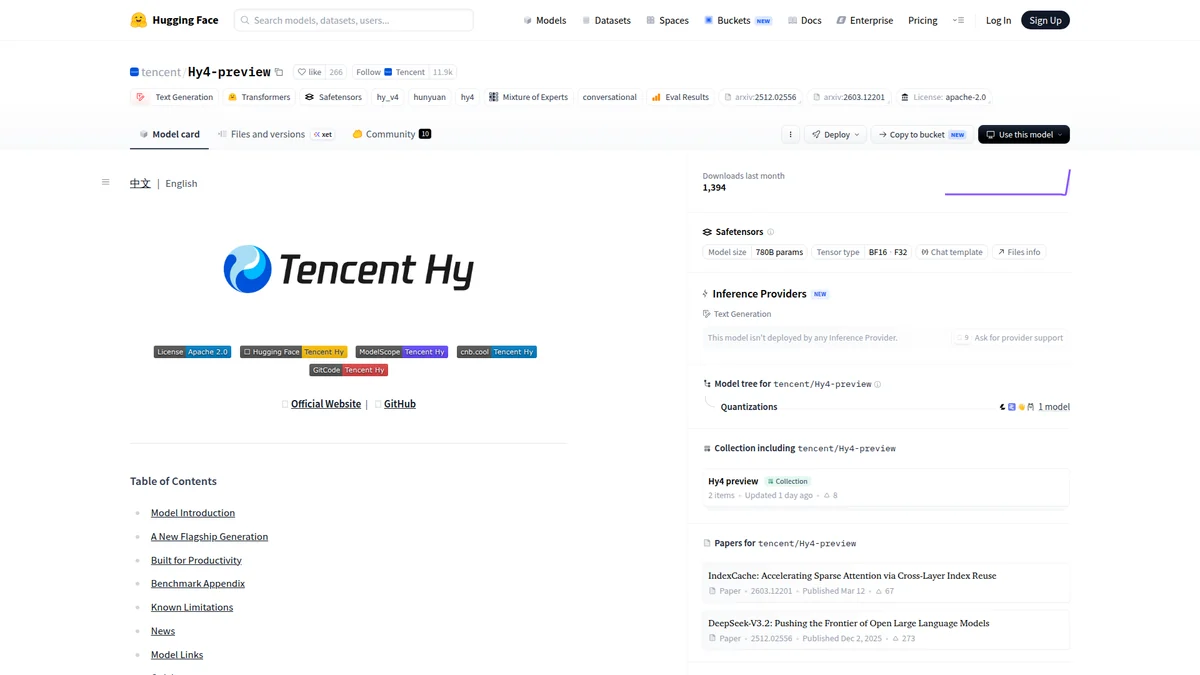
Figure 2. The model card is the reference point for implementation and availability details.
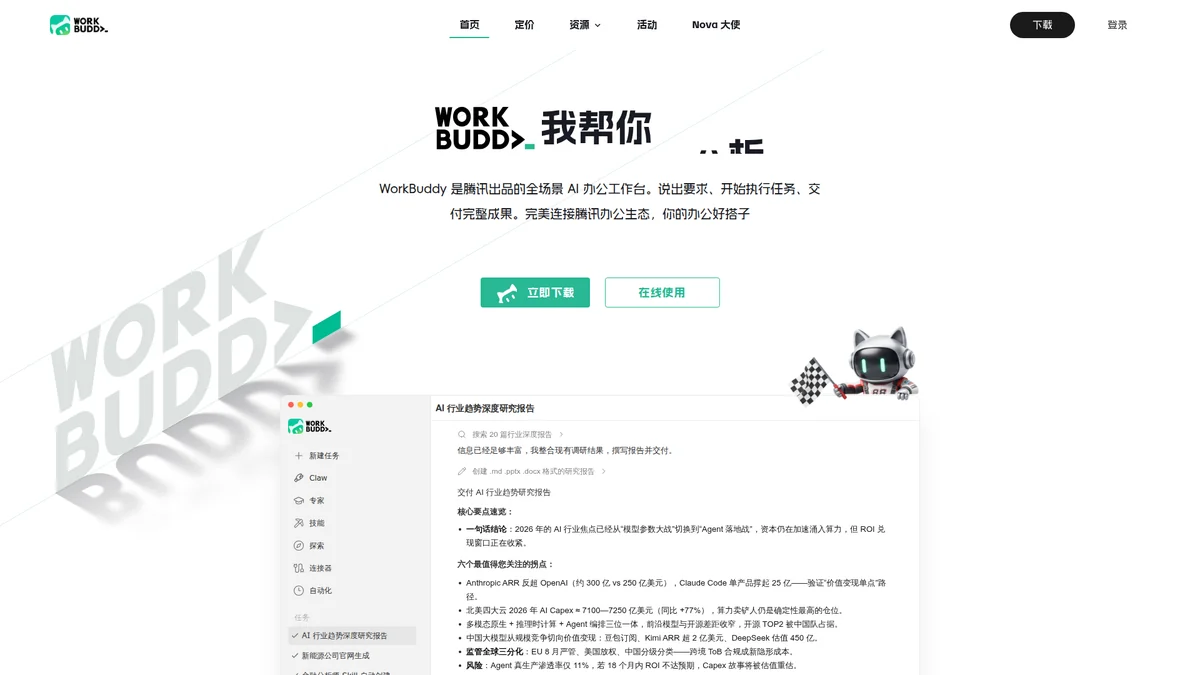
Figure 3. WorkBuddy provides a practical hosted surface for long-context trials.