Hy4 preview vs GLM-5.3 vs Kimi K3: how to compare them fairly
A reproducible comparison plan based on Tencent's internal Hy4 preview results, not a universal leaderboard claim.
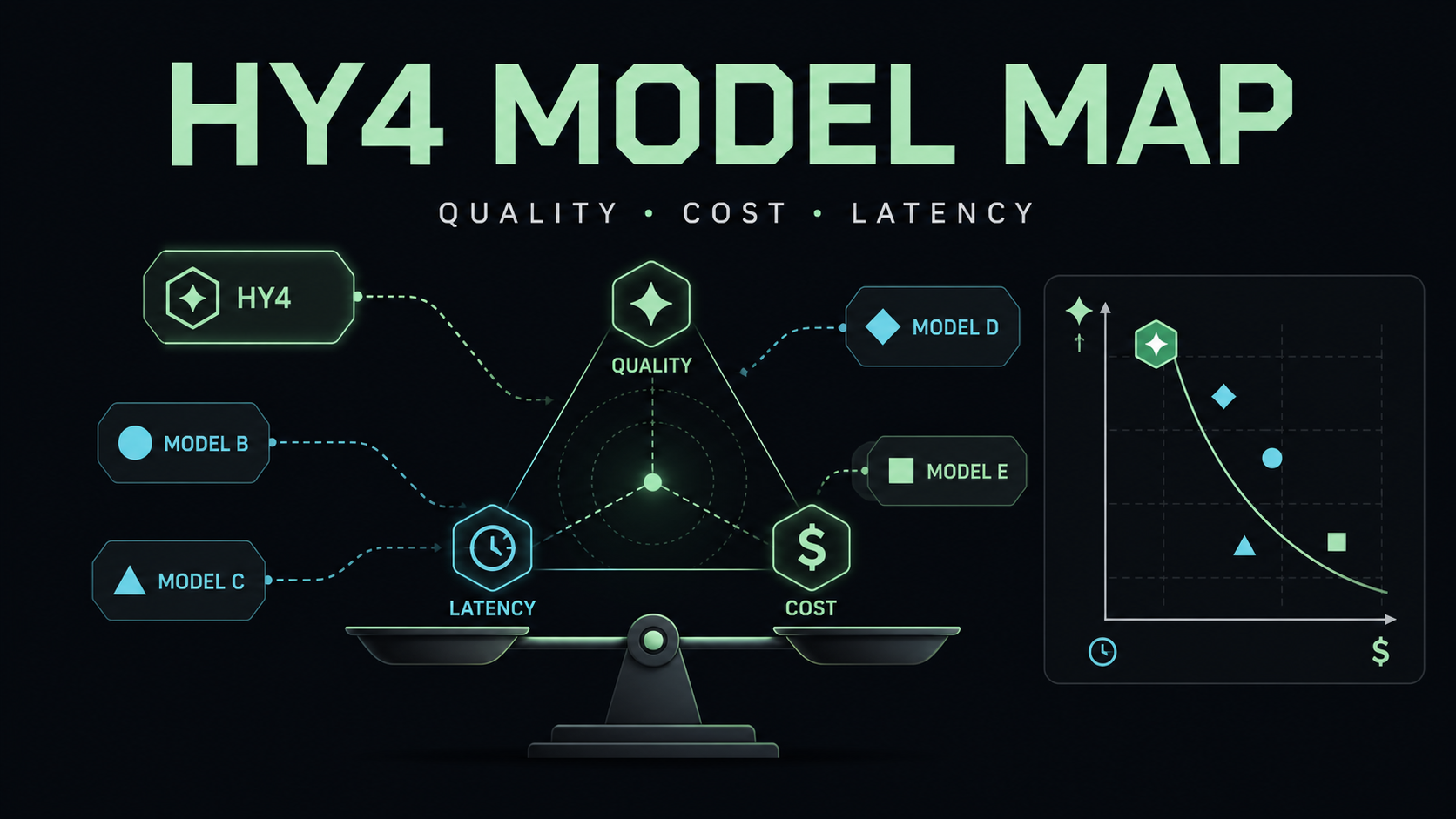
Tencent reports an internal blind test of 163 experts and 203 engineering tasks: Hy4 preview averaged 2.99/4.00, versus 2.92 for GLM-5.3 and 2.94 for Kimi K3. That is useful release evidence, but it is a starting point for comparison rather than a universal ranking.
Key takeaway
- Tencent’s blind test is directional evidence, not an independent universal ranking.
- Freeze prompts, tools, versions, budgets, and rubrics before comparing models.
- Score tool traces, recovery, latency, and successful-workflow cost alongside final text.
- Choose a model from the task mix and failure profile your team actually operates.
Model scores depend on task mix, prompts, tools, context, sampling, and rubric. Tencent reports Hy4 preview winning 46.8% of comparisons against GLM-5.3 (12.8% ties, 40.4% losses) and 51.2% against Kimi K3 (7.9% ties, 40.9% losses). The advantage is real in that test set, but not overwhelming.
For a fair reproduction, freeze model versions, system prompts, token budgets, tools, and acceptance criteria. Include cross-file code repair, frontend changes, structured analysis, and tool-mediated tasks. Score the tool trace and failure recovery as well as the final text.
Compare economics too: input and output tokens, cache hits, retries, human intervention, latency, and successful workflow cost. A provider gateway such as SandBase can standardize request IDs and usage logs when the model is present in its live catalog.
Hy4 preview’s distinctive test surface is its 770B/49B MoE design, 1M-plus context, and productivity focus across coding, office, games, and science. It should be evaluated inside long workflows, not only in one-shot chat. Tencent also lists overthinking and excessive self-verification as preview issues, so stability and recovery belong in the scorecard.
Turn scores into a selection decision
After the first matrix, do not average every result into one winner. Set minimum thresholds for the work that matters most: a patch must pass tests, a financial extraction must cite every decision, and a tool workflow must leave the workspace in a known state. Then show trade-offs by task family. This lets a team choose Hy4 for long-context repair while retaining another model for a narrower, faster interaction.
Repeat the test when a provider changes a preview model quickly. Record the exact model identifier, endpoint, region, system prompt, sampling settings, and SDK commit. A result that cannot be reproduced later is still a dated observation, but it should not be presented as a stable capability. Keep a changelog when the model, prompt, tool schema, or evaluator changes so a regression is attributable.
The final report should include the fixture, a compact result table, representative wins and failures, successful-workflow cost, and a recommendation with an explicit “do not use for” boundary. Ask a second reviewer to inspect raw traces before publishing.
Bottom line: the defensible claim today is that Hy4 preview scored slightly higher in Tencent’s reported internal task set. Run the same tasks with the same tools before choosing a model for production.
Build a comparison that can survive review
Start by separating capability from preference. Capability asks whether the model completed the task within the stated constraints. Preference asks which result a reviewer would choose. Record both, along with a binary success flag and a short reason for every failure. A model that writes elegant prose but misses a required file edit should not receive partial credit simply because the answer sounds confident.
Use a small matrix of task families: multi-file code repair, frontend interaction, spreadsheet or document analysis, tool-mediated planning, and long-context retrieval. Give every model the same files, tools, time limit, and retry policy. Keep prompts in version control and run them in a fresh session so hidden conversation state does not change the result.
Measure the work, not the demo
For each run, capture first-token latency, total wall time, input and output tokens, cache hits, tool calls, retries, human interventions, and whether the final artifact passed its checks. Convert those fields into successful-workflow cost. This avoids a common mistake: declaring a cheaper model better because its token price is lower while ignoring extra retries or manual repair.
The reported 2.99 versus 2.92 and 2.94 averages are useful evidence for selecting follow-up tests. They are not a substitute for a public, controlled benchmark. Treat the result as a prior, publish the task fixture, and update the conclusion when independent runs disagree.
One practical scoring rule is to require an artifact and an explanation. For a code task, the artifact is the tested patch; for an office task, it is the completed workbook with traceable source cells; for a tool task, it is the final state plus an execution trace. Reviewers can then distinguish a correct answer from a plausible paragraph. If a model stops to ask for clarification, record that as an interaction cost, not an automatic failure: in production, a safe question may be preferable to an irreversible guess.
Evidence screenshots
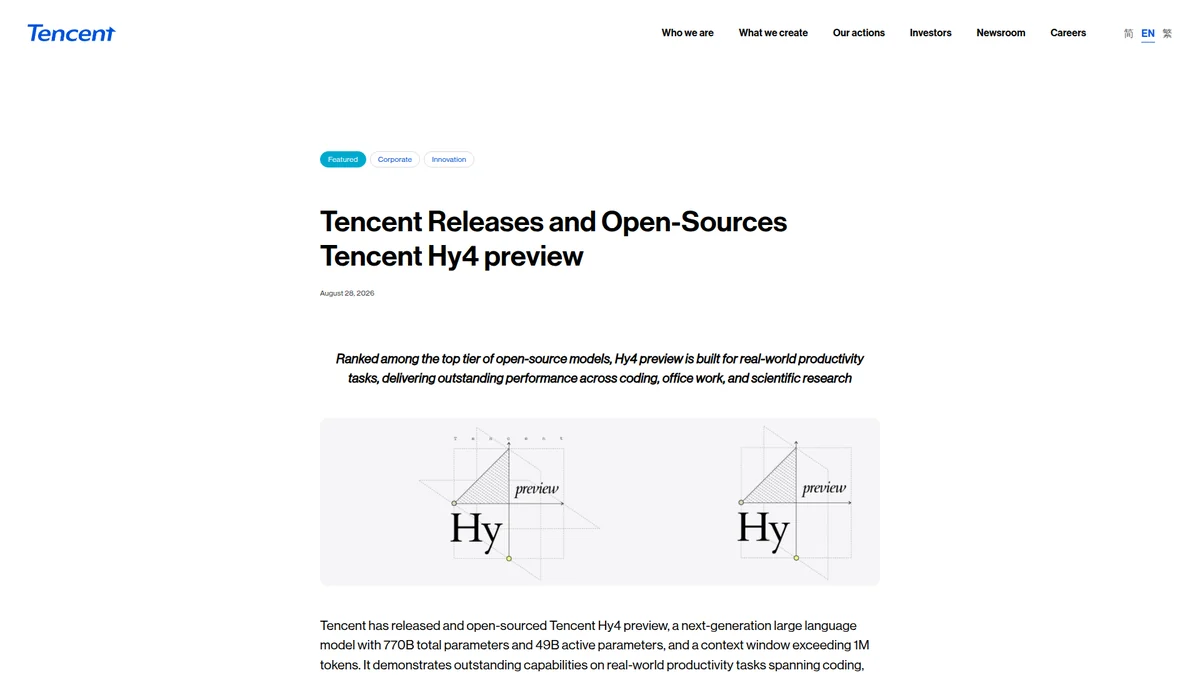
Figure 1. Tencent’s reported internal comparison is described in the official announcement.
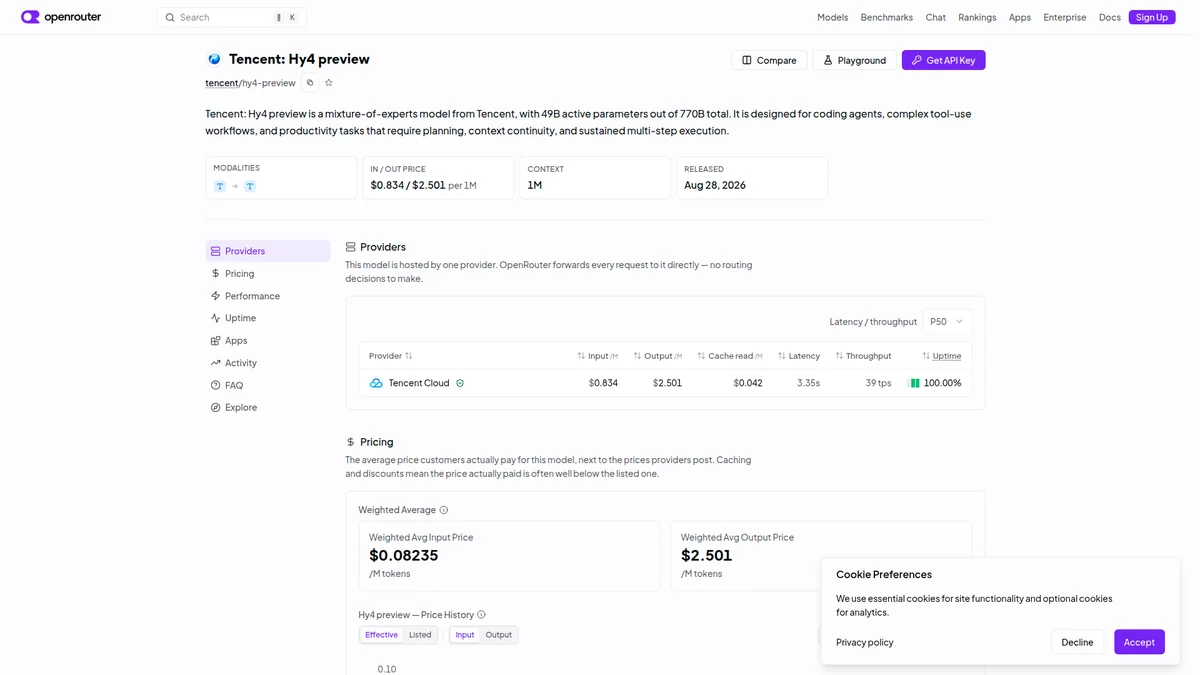
Figure 2. A live provider catalog is useful for checking model availability before a test.
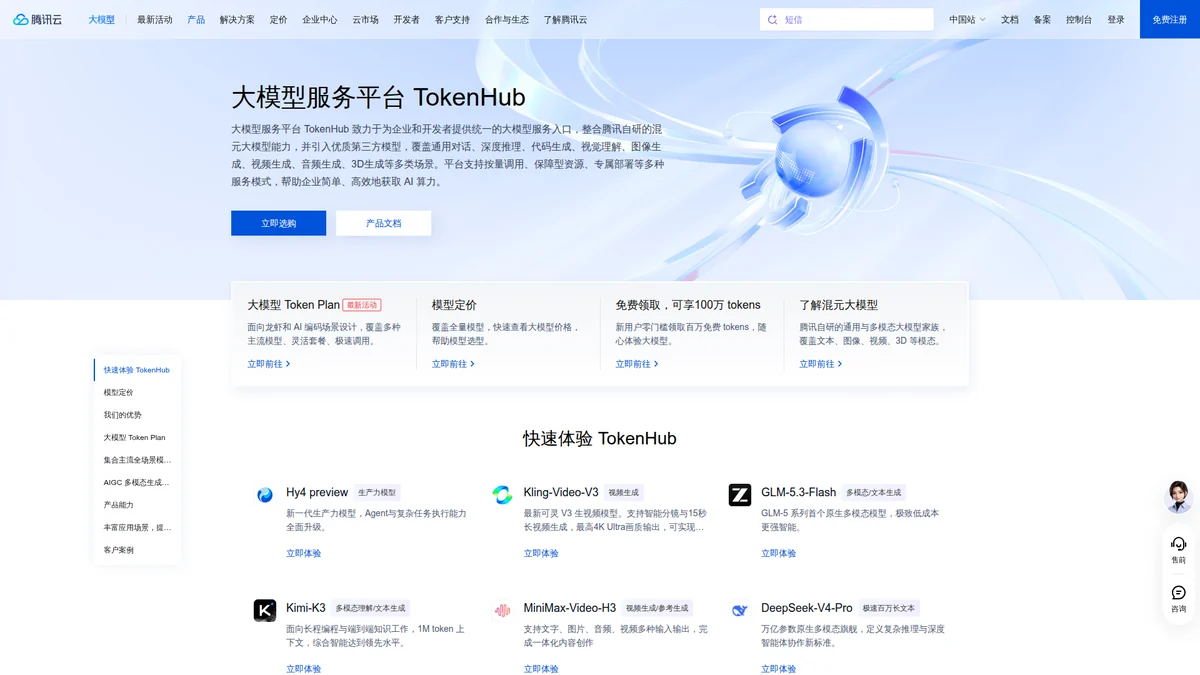
Figure 3. TokenHub is a separate hosted access path for controlled comparisons.