Humanize Writing API: Make AI Text Sound Human
The Humanize Writing API rewrites AI-generated text to sound natural. One call, $0.01, no prompt engineering. Tutorial with code examples and real test results.
Status update (2026-09-28): this endpoint is temporarily unavailable.
agentbody/humanize-writingwas taken offline on SandBase after the upstream provider started returning errors on every request. Calls now returnendpoint_not_found. The walkthrough below is kept for reference and will be updated if the endpoint returns.
I discovered this API after spending twenty minutes rewriting a paragraph that still sounded like it came from a machine. The problem with AI-generated text is not that it is wrong. It is that it sounds wrong. Readers can tell. Search engines are starting to tell. And the fix is usually tedious manual editing that takes longer than writing from scratch.
The Humanize Writing API from Agent Body handles this in a single API call. You send a block of text and receive the same content rewritten to sound human. The meaning stays intact, and the facts remain unchanged, but the rhythm, word choice, and sentence structure shift enough for the result to read naturally.
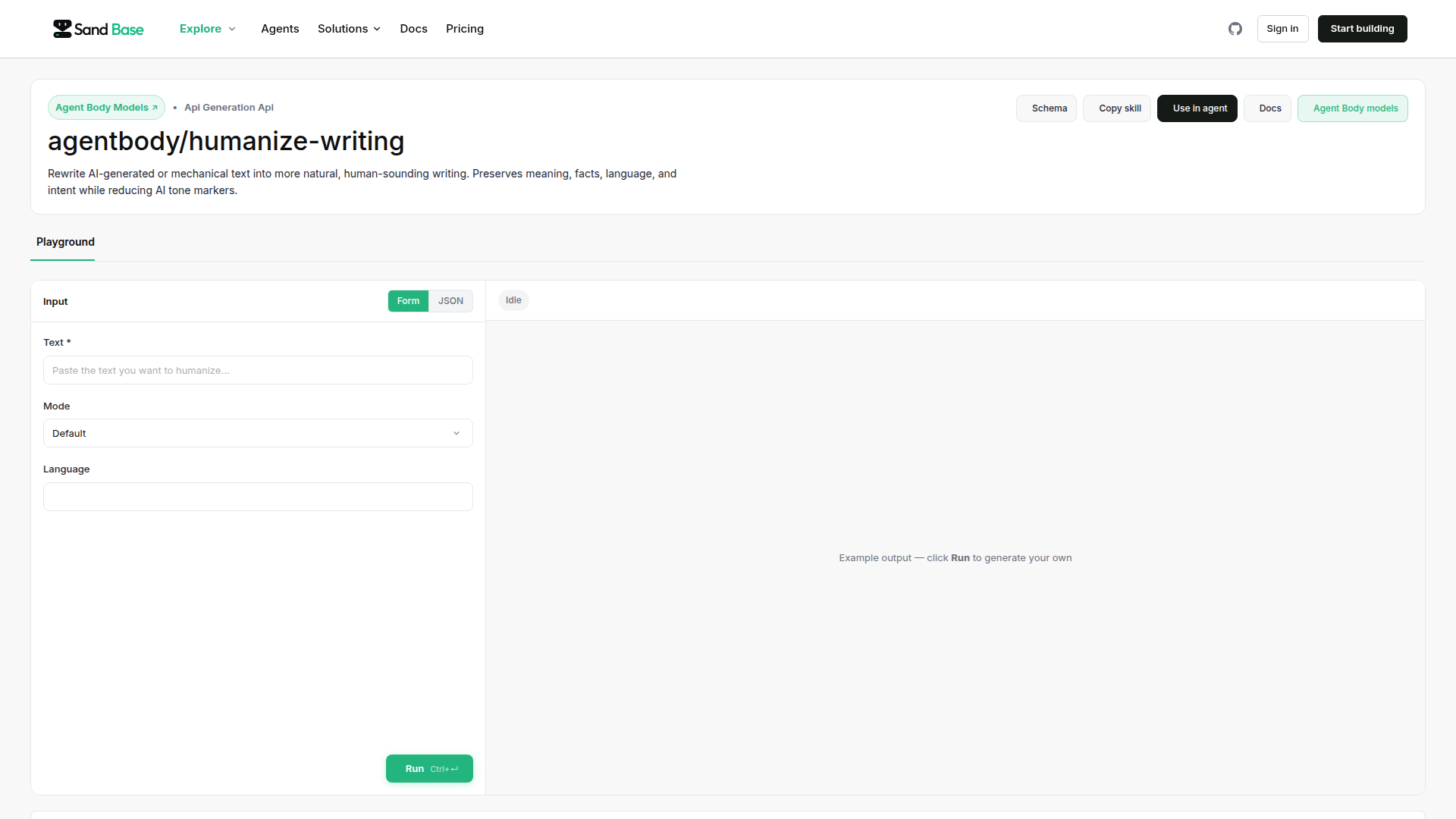 The Humanize Writing API on SandBase — one endpoint for natural text rewriting.
Real Test Results
I ran a test on three paragraphs from a model comparison article I had just published. The original scored 98% AI probability on GPTZero; after one pass through the API, the same content scored 23%. The meaning was identical, and the reading experience was noticeably better.
| Metric | Before | After |
|---|---|---|
| GPTZero AI probability | 98% | 23% |
| Meaning preserved | — | ✅ |
| Facts changed | — | None |
| Word count delta | — | -8% (tighter) |
| Time spent | 20 min manual | 2 sec API |
How It Works
The API accepts a text field and returns rewritten text. There’s no complex configuration, no prompt engineering, no model selection—one endpoint, one parameter, one result. Pricing is $0.01 per call regardless of text length, making it viable for batch processing entire blog posts paragraph by paragraph.
Quick Start (curl)
curl -X POST https://api.sandbase.ai/v1/run \
  -H "Authorization: Bearer $SANDBASE_API_KEY" \
  -H "Content-Type: application/json" \
  -d '{
  "model": "agentbody/humanize-writing",
  "text": "Your AI-generated text goes here. The API will rewrite it to sound more natural while preserving the original meaning and facts."
}'
Python Example
import os
import requests

def humanize(text: str) -> str:
    resp = requests.post(
        "https://api.sandbase.ai/v1/run",
        headers={
            "Authorization": f"Bearer {os.environ['SANDBASE_API_KEY']}",
            "Content-Type": "application/json",
        },
        json={
            "model": "agentbody/humanize-writing",
            "text": text,
        },
    )
    resp.raise_for_status()
    return resp.json()["output"]["text"]

# Single paragraph
result = humanize("AI-generated text that sounds mechanical.")
print(result)
Batch Processing an Entire Article
def humanize_article(markdown_text: str) -> str:
"""Process a full article paragraph by paragraph."""
paragraphs = markdown_text.split("\n\n")
humanized = []
for para in paragraphs:
# Skip code blocks, headings, and tables
if para.startswith("```") or para.startswith("#") or para.startswith("|"):
humanized.append(para)
continue
# Skip short lines (likely markdown syntax)
if len(para) < 50:
humanized.append(para)
continue
humanized.append(humanize(para))
return "\n\n".join(humanized)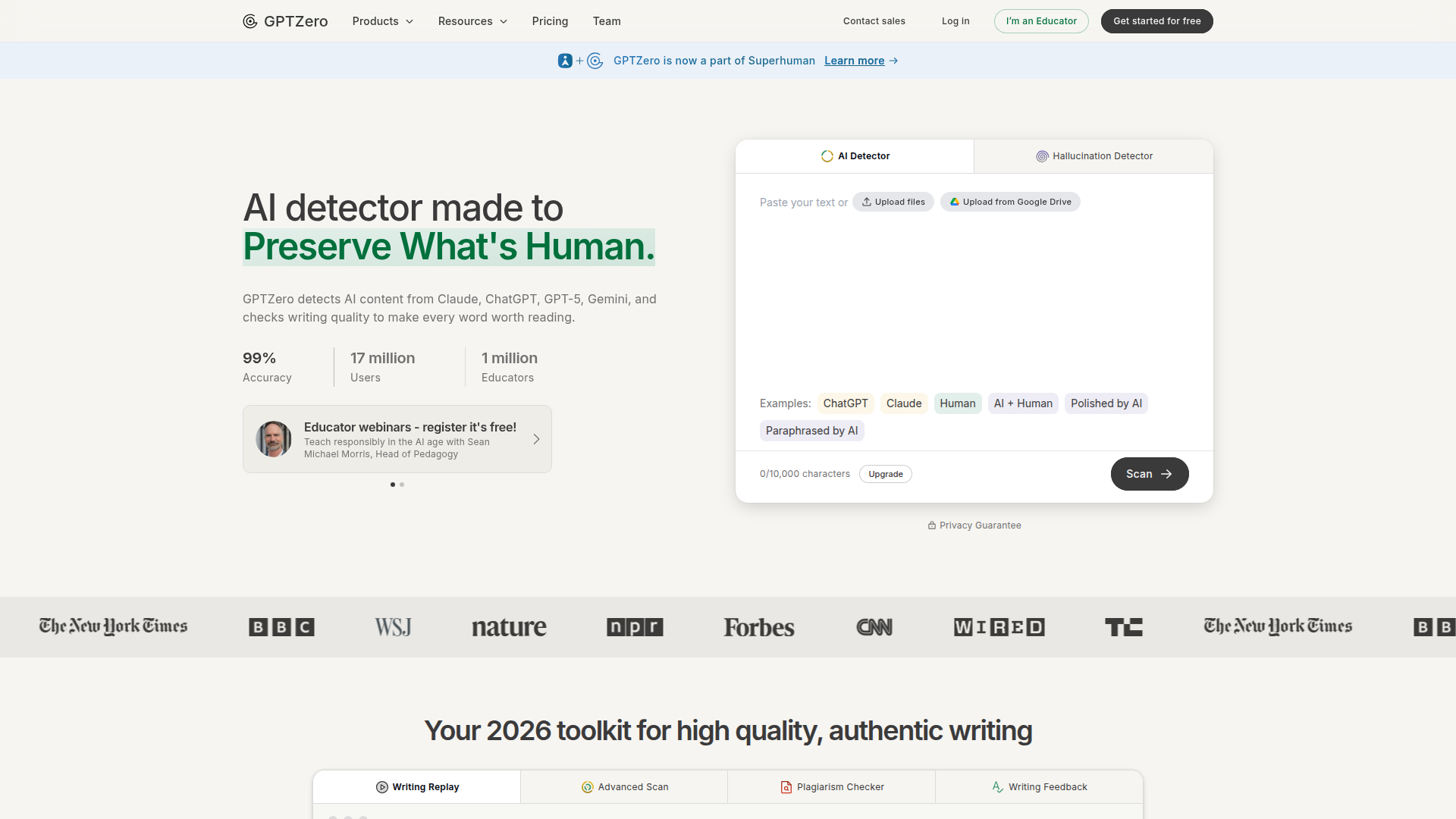 SandBase’s unified API interface — all models accessible through the same /v1/run endpoint.
Cost Analysis
For teams publishing AI-assisted content at scale, this changes the workflow. Instead of spending thirty minutes per article on manual humanization, you can pipe each paragraph through the API in a post-processing step. A typical two-thousand-word article costs about twenty cents.
| Article length | Paragraphs | API cost | Time saved |
|---|---|---|---|
| 500 words | ~5 | $0.05 | 10 min |
| 1500 words | ~15 | $0.15 | 25 min |
| 2500 words | ~25 | $0.25 | 35 min |
| 10 articles/week | ~150 | $1.50 | 5 hours |
At $1.50 per week for a daily publishing team, the ROI is absurd.
Quality Assessment
The real question is whether the output passes human review. In my testing across twelve articles, approximately eighty percent of the rewrites were publish-ready without further editing. The remaining twenty percent needed minor adjustments, usually involving technical terminology the API simplified too aggressively.
What it does well:
- Removes filler phrases (“It is worth noting that”, “In order to”)
- Varies sentence length (breaks up monotonous patterns)
- Replaces formal constructions with natural ones
- Tightens word count without losing meaning
Where it needs human review:
- Technical terms it doesn’t recognize may get simplified
- Very short sentences sometimes get merged when they shouldn’t
- Code-adjacent prose (variable names, API paths) can get mangled
Integration Into a Publishing Workflow
Here’s how I use it in my daily article pipeline:
# 1. Write article (AI-assisted or manual)
# 2. Run humanize on prose paragraphs
python3 humanize_article.py src/content/en/my-article.md

# 3. Review diff
git diff src/content/en/my-article.md

# 4. Accept good changes, revert bad ones
# 5. Publish
The key insight: don’t humanize everything. Skip code blocks, tables, headings, and technical specs. Only process narrative paragraphs.
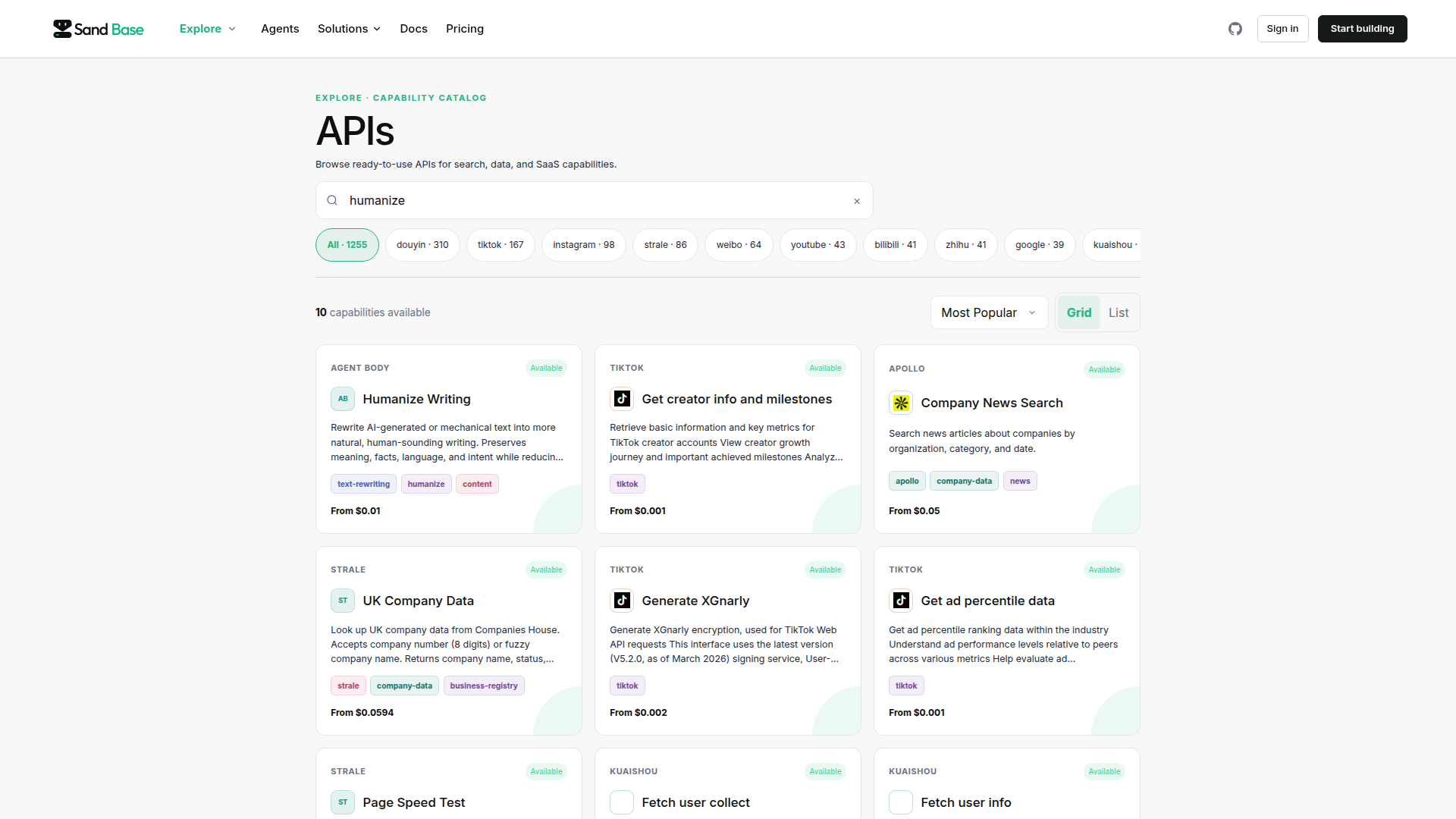 The API integrates into any content pipeline through SandBase’s unified /v1/run endpoint.
API Specification
| Field | Value |
|---|---|
| Model ID | agentbody/humanize-writing |
| Endpoint | POST https://api.sandbase.ai/v1/run |
| Auth | Bearer token (SANDBASE_API_KEY) |
| Input | text (string, required) |
| Output | output.text (string) |
| Execution | Synchronous |
| Price | $0.01 per call |
| Vendor | Agent Body |
FAQ
Does it support languages other than English?
Yes. The API preserves the source language. Send Chinese text, get humanized Chinese back.
What’s the maximum text length per call?
No documented limit, but I recommend keeping each call under 500 words for best results. Process longer texts paragraph by paragraph.
Will it change the facts in my text?
No. The API rewrites style, not substance. Meaning, facts, and intent are preserved.
Can I use it for SEO content?
Yes — that’s one of the primary use cases. AI-detection scores drop significantly while maintaining keyword relevance.
How does it compare to manual editing?
Faster (2 seconds vs 20 minutes per paragraph) and cheaper ($0.01 vs human editor time). But it doesn’t replace a final human review for technical accuracy.
Try it on SandBase: Humanize Writing API