Images 2.5 vs Nano Banana 2: Flare and Sunburst in Four Creative Tests
Images 2.5 vs Nano Banana 2: SandBase API samples compare Flare, Sunburst and Nano Banana 2 on surreal scenes, visual humor and a shared-reference edit.
“Make only the station roof red” produced a red roof in all three images. In one, it also produced a red station façade. That extra change is the most useful difference in this Images 2.5 vs Nano Banana 2 comparison: an attractive revision can still change something the artist wanted to keep.
For illustrators, storyboard artists and creators making unusual editorial images, these models turn text and reference pictures into generated or edited artwork. The difficult choice is not simply which picture looks expensive. It is which interpretation communicates your idea, and how much repair the next revision might need.
SandBase ran four cases through its API on September 10, 2026: three text-to-image prompts and one shared-reference edit. Images 2.5 Flare, Images 2.5 Sunburst and Nano Banana 2 are three separate columns throughout. There are 12 retained outputs, not a pooled “Images 2.5” result or a statistical ranking.
Key takeaway
- Flare’s Sunday scene makes approaching work explicit with a gray commuter doorway; Sunburst offers a more ambiguous dream, while Nano Banana 2 surrounds a seated figure with drifting office objects.
- The whale-city samples all make different compromises. Flare places towers above the whale, Sunburst adds an external city, and Nano Banana 2 uses an angled, exposed-rib composition.
- In the shared edit, all three add a red central roof and a yellow umbrella. Nano Banana 2 also colors much of the station façade red; Flare and Sunburst keep the visible red more concentrated on the roof.
- These 12 successful generations cost $2.00 in SandBase’s reconciled billing records. One retained result per case cannot establish average quality, speed or reliability.
Images 2.5 vs Nano Banana 2: what was actually held constant?
Each model received the same complete Chinese prompt for a given case. The first three cases used no reference image. For the fourth, all received the same uploaded file, checked byte-for-byte against the local reference. API means the software interface used to submit these requests; this comparison does not use ChatGPT or Gemini browser outputs as substitutes for API variants.
| Setting | Images 2.5 Flare | Images 2.5 Sunburst | Nano Banana 2 |
|---|---|---|---|
| SandBase generation route | openai/gpt-image-2.5-flare | openai/gpt-image-2.5-sunburst | google/nano-banana-2 |
| Editing route | Same route plus /edit | Same route plus /edit | Same route plus /edit |
| Requested frame / output | 16:9, 2K, PNG | 16:9, 2K, PNG | 16:9, 2K, PNG |
| Other submitted controls | quality: high | quality: high | Web search and image search off |
| Returned dimensions | 2720 × 1536 | 2720 × 1536 | 2752 × 1536 |
| Billed per successful sample in this run | $0.20 | $0.20 | $0.10 |
The Flare and Sunburst receipts use internal names MM-H3-sft-Mlogic-High-25-image and MM-H3-sft-Mlogic-Max-25-image, respectively. SandBase’s operator confirmed these as internal mapping aliases on September 10. The labels follow that confirmation and the requested routes; this is not an independent audit of the upstream service. Nano Banana 2 receipts report gemini-3.1-flash-image, the name paired with Nano Banana 2 in Google’s image-generation documentation.
The controls are comparable, not identical. No common seed—the random starting value used in generation—was available. “2K” did not return identical pixel dimensions, and neither returned frame is mathematically exact 16:9. Nano Banana 2’s whale image arrived as JPEG despite the PNG request; its original bytes are preserved. These differences rule out calling this an equal-compute or pixel-matched benchmark.
1. Sunday dread without a clock or calendar
The first prompt asks for a feeling that is easy to label and harder to draw. This is the complete Chinese text submitted to all three:
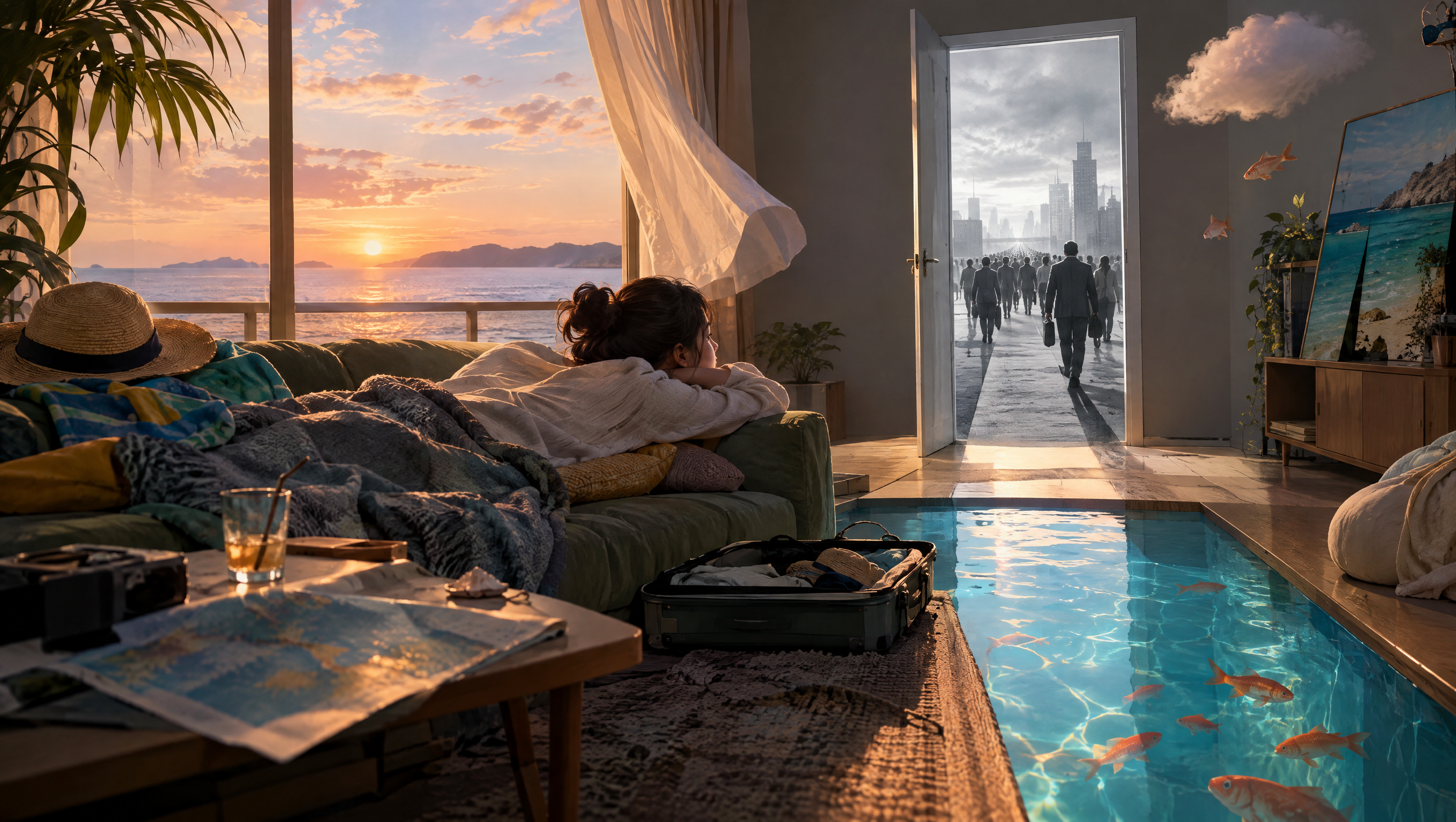
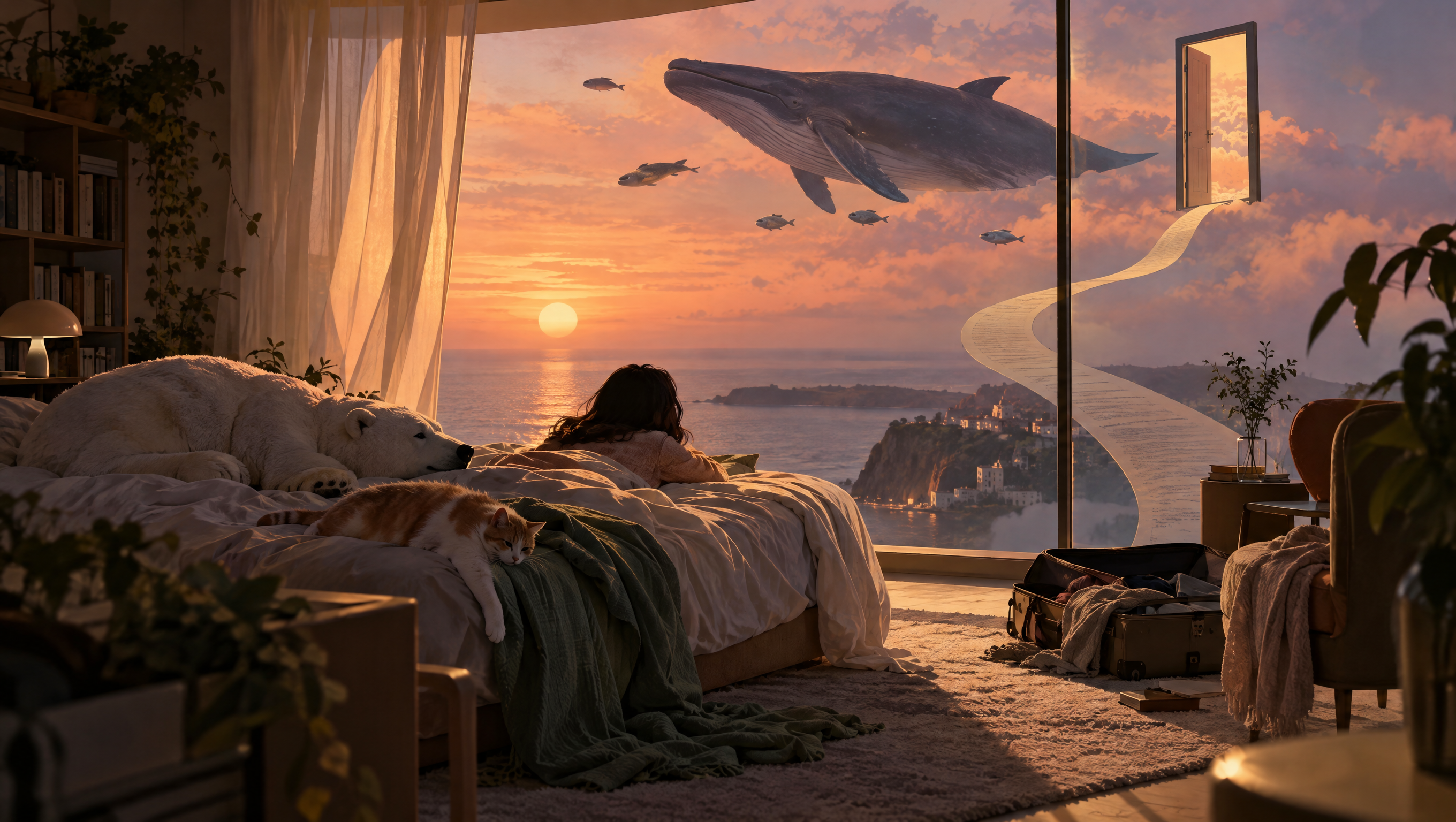
请直接生成一张图片,横向 16:9。画出星期天下午五点的感觉:假期还没结束,人已经开始想逃离周一。不要文字,不要钟表,不要日历,也不要画一个抱头哭泣的人。画面安静,带一点荒诞。采用超现实叙事插画,让空间、光线和物件关系表达情绪,不要附加解释。In English: depict Sunday at five, with the weekend still present and Monday already unwelcome. No writing, clocks, calendars or crying head-in-hands portrait; use quiet, slightly absurd spatial relationships instead.
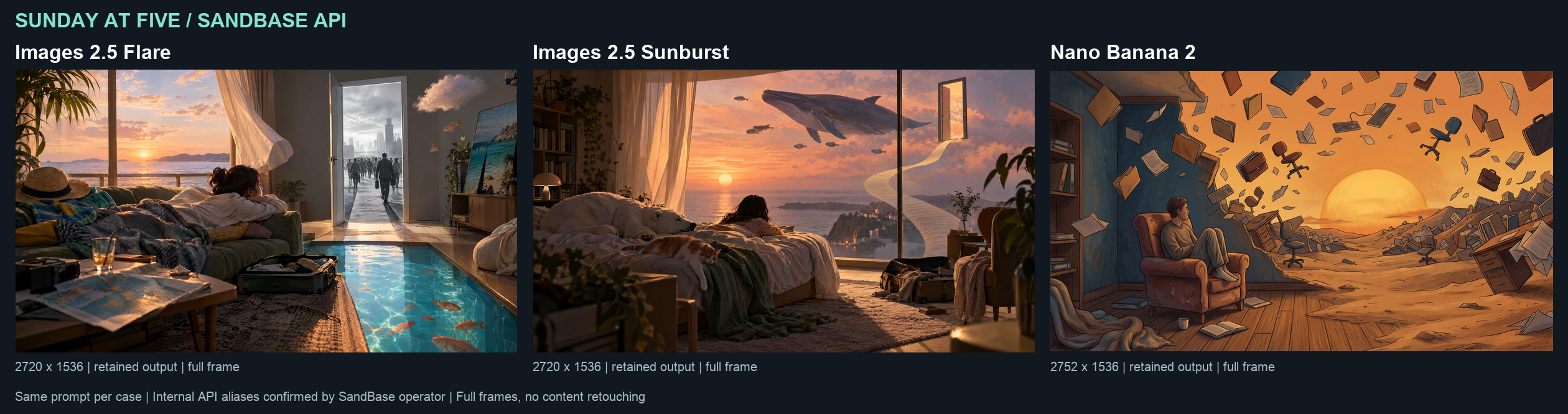 Left: Flare; middle: Sunburst; right: Nano Banana 2. SandBase API, September 10. Complete frames scaled down equally, with labels outside the generated content; no content retouching.
Flare places a reclining figure in a warm seaside room. A fish-filled channel cuts through the floor, while an open doorway leads into a gray crowd of commuters. The contrast gives the feeling a specific cause: there is somewhere pleasant to stay and somewhere less inviting to go.
Sunburst puts a person, a cat and a polar bear on a bed overlooking a sunset. A whale floats outside, and a suspended path rises toward a glowing doorway. It is an appealing dream scene, but the doorway does not clearly identify work. Without the prompt, a reader could interpret it as escape or wonder rather than the dread of Monday.
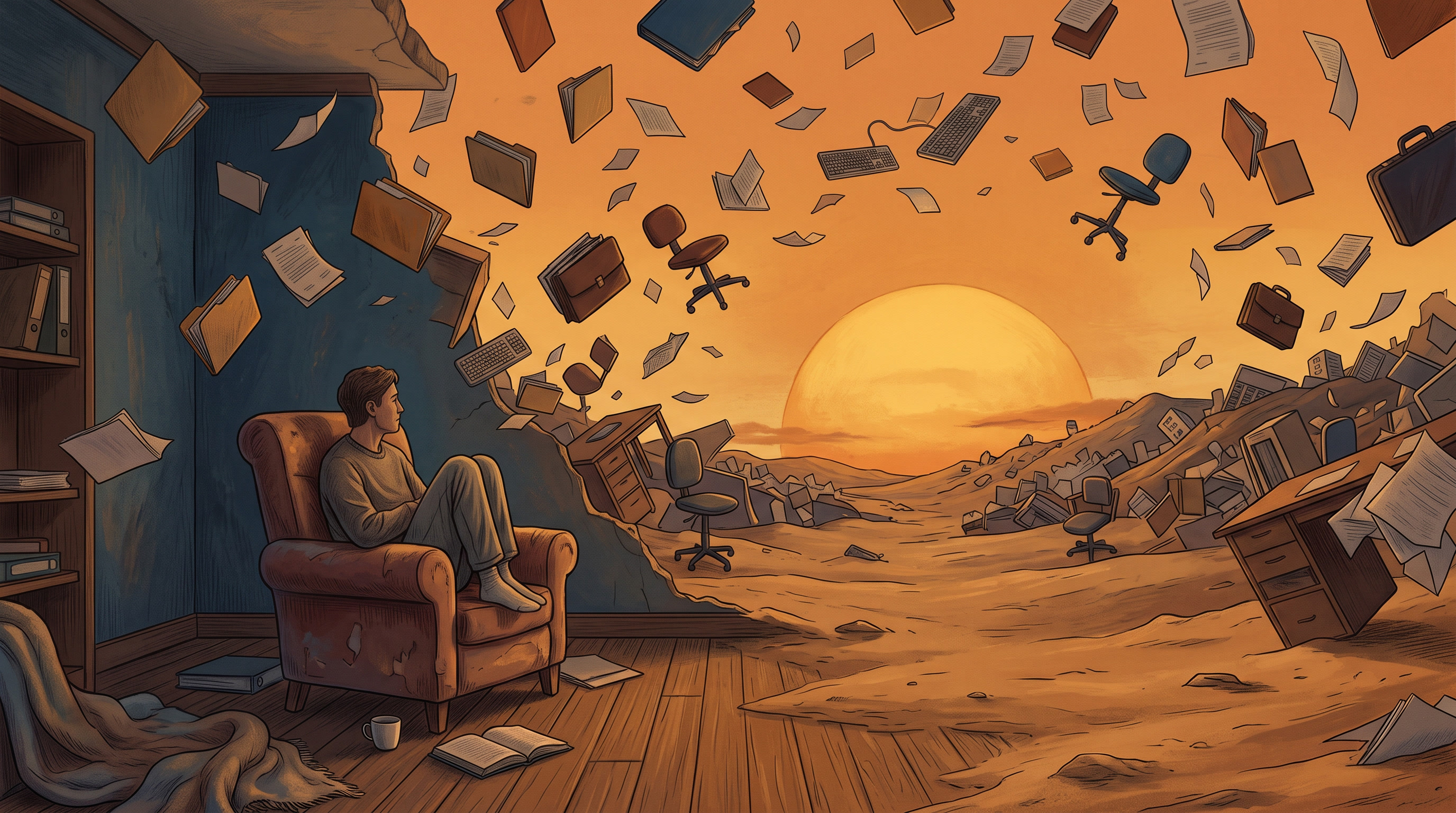
Nano Banana 2 uses a drawn illustration rather than the other samples’ more photographic rendering. A seated figure faces an orange landscape filled with floating papers, desks and office chairs. Work intrudes through objects instead of a commuter scene. The figure remains still while the surroundings become absurd.
For an editorial assignment specifically about returning to work, Flare is the most direct starting image here. For an open-ended dream sequence, Sunburst’s ambiguity may be useful. Nano Banana 2 offers a stronger hand-drawn vocabulary for the same mood. Those are choices between these pictures, not measured audience reactions.
Original files: Flare, Sunburst, Nano Banana 2.
2. A city inside a whale still needs a readable railway
This case tests relationships, not just an unusual subject:
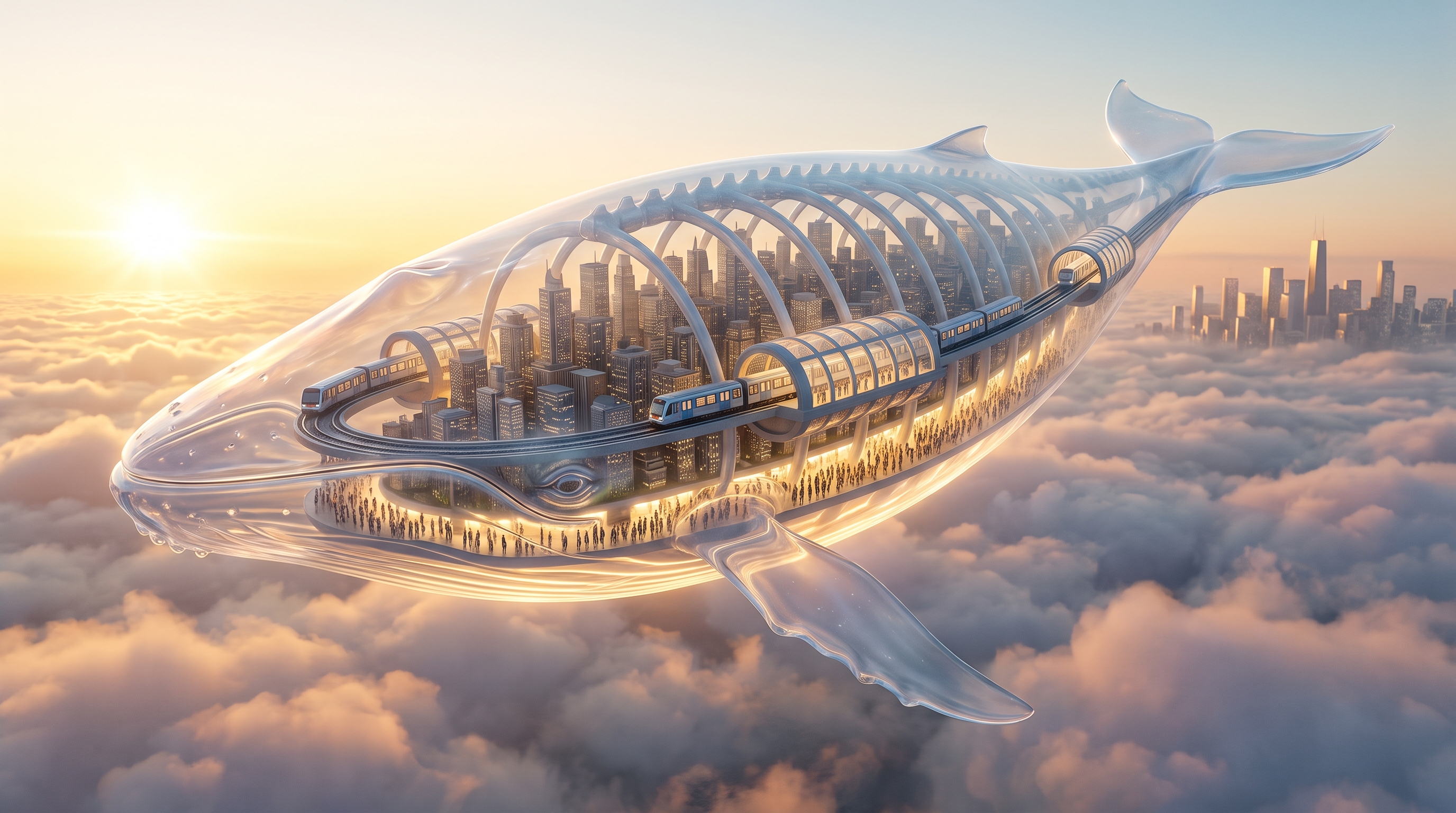
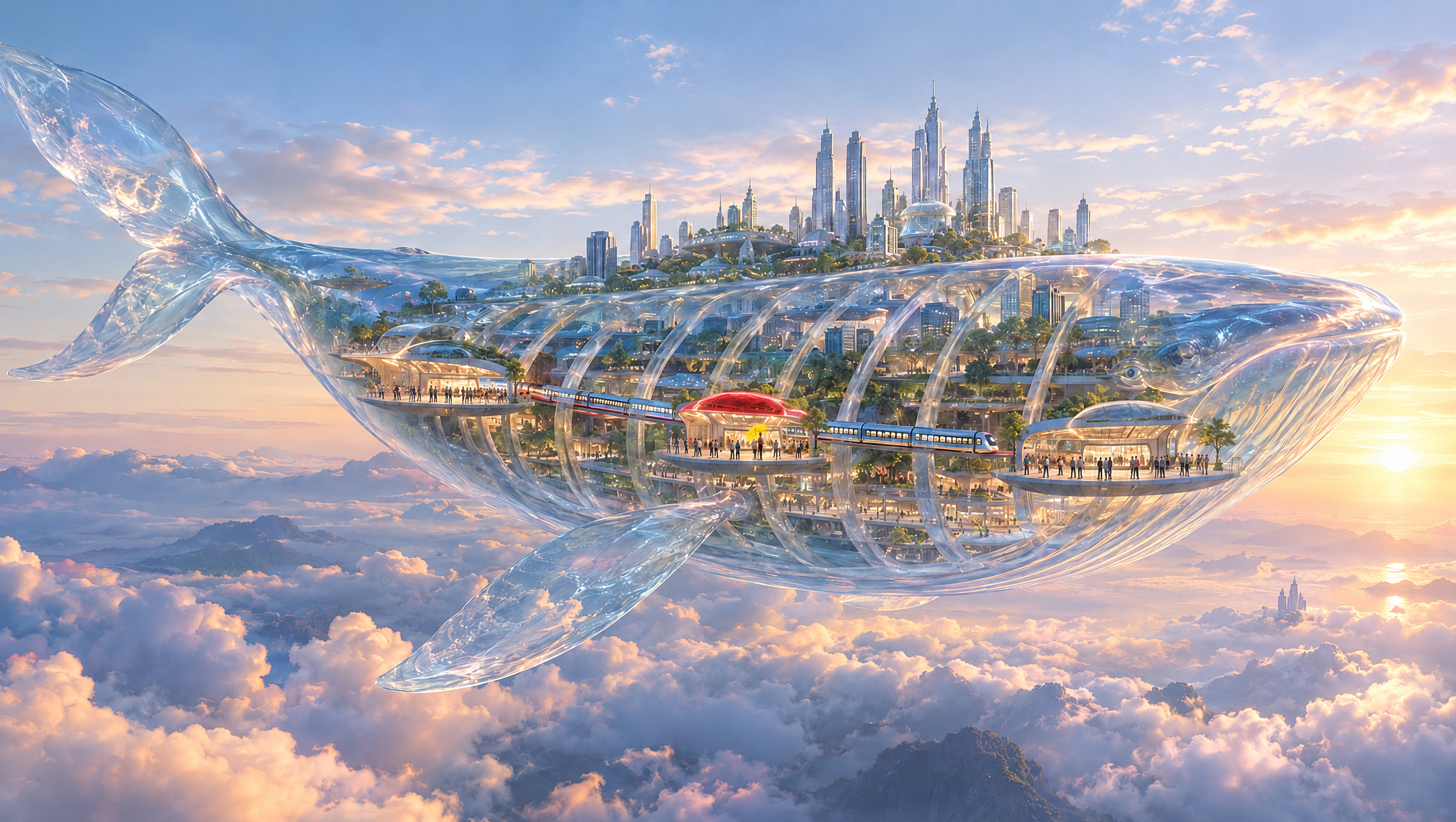
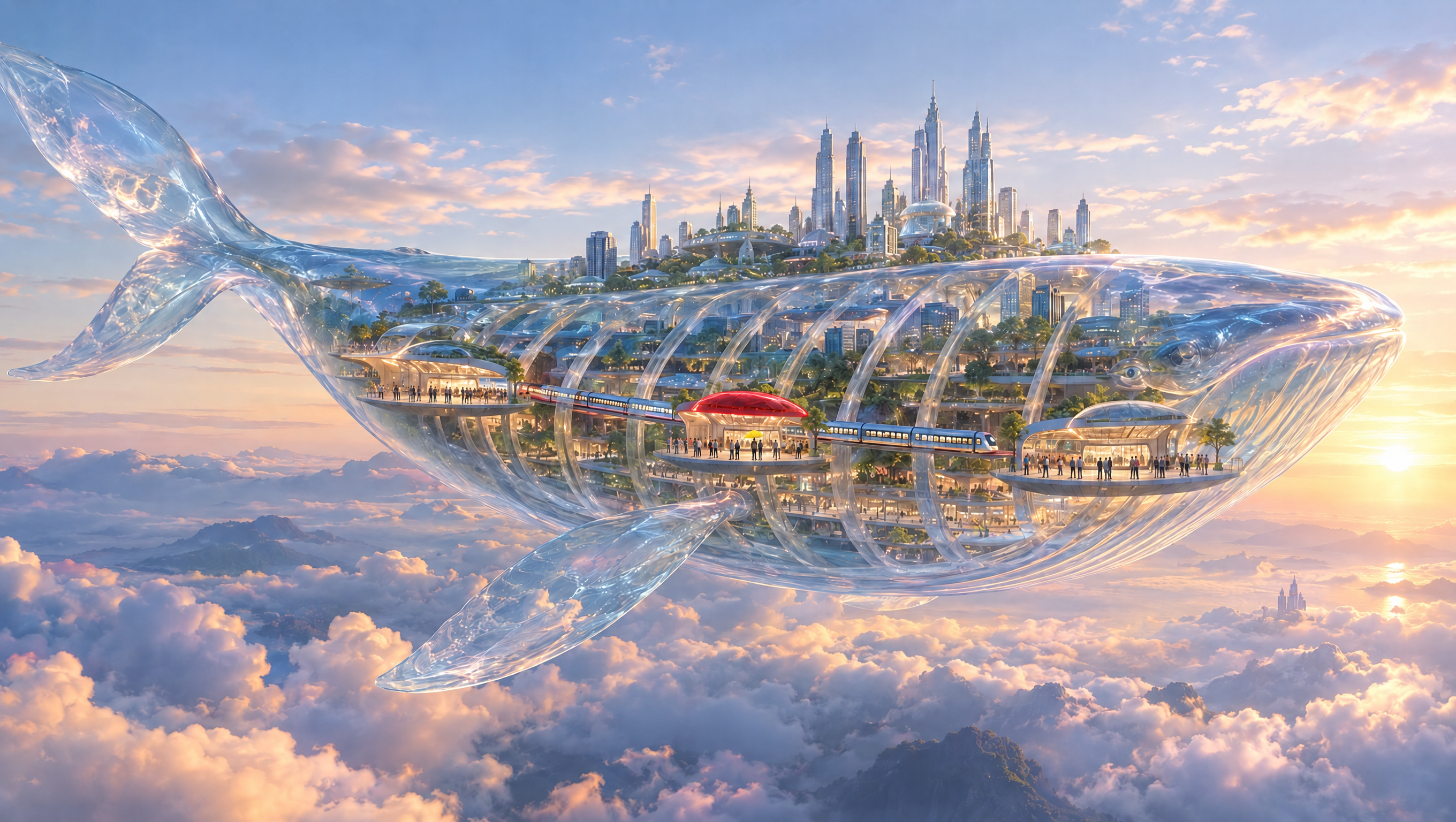
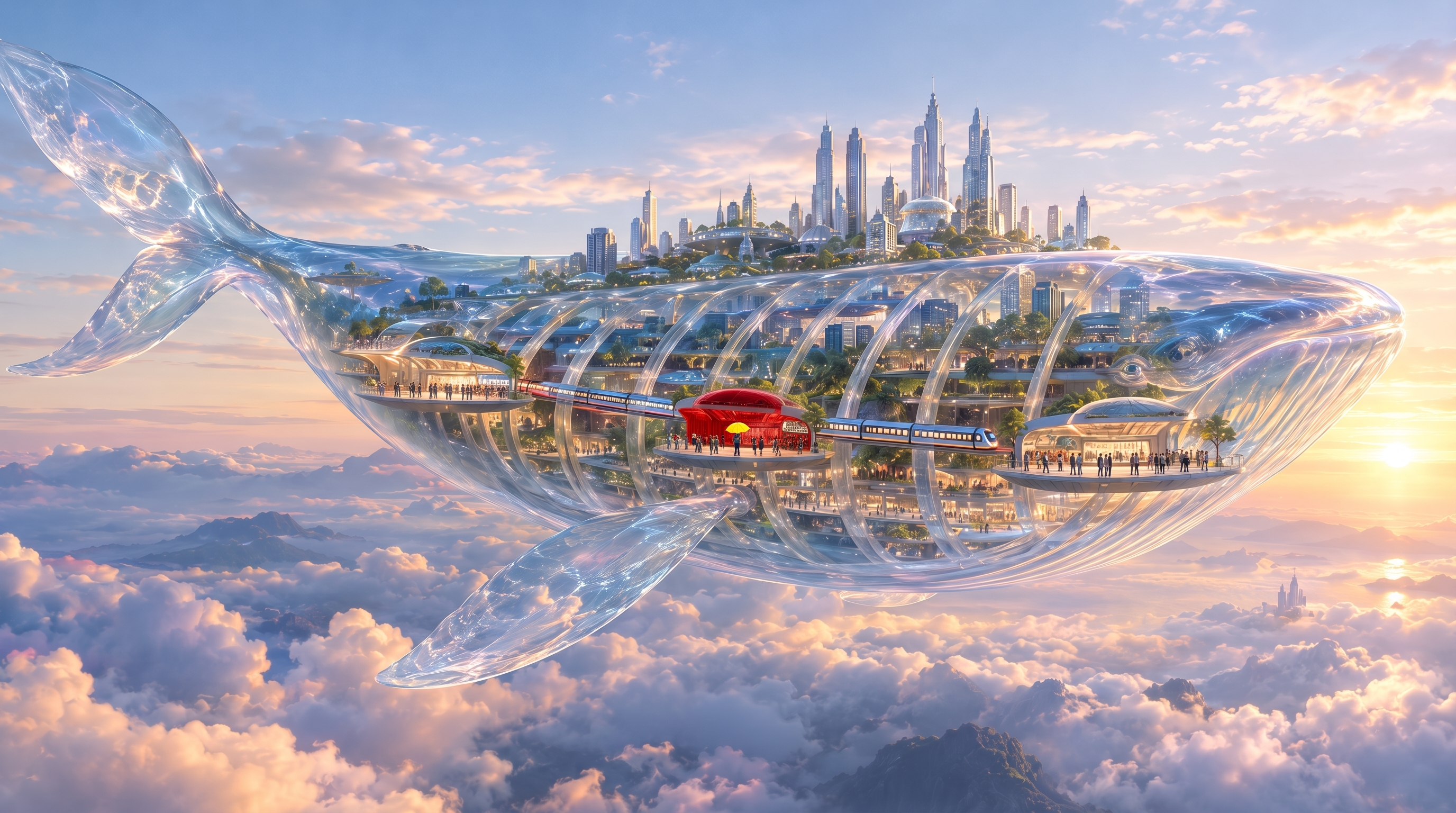
请直接生成一张图片,横向 16:9。一条透明的巨鲸漂浮在云层上方,城市建在它的体内。地铁沿肋骨之间的轨道穿行,沿线有三个清楚可辨的主要车站,居民在腹部的平台上等车。清晨,侧面广角视角,建筑与居民的尺度统一。超现实电影概念插画,画面中不要文字、字母、数字或标志。The brief specifies an internal city, three distinguishable stations, waiting residents and a wide side view. An impressive whale silhouette alone cannot satisfy those relationships.
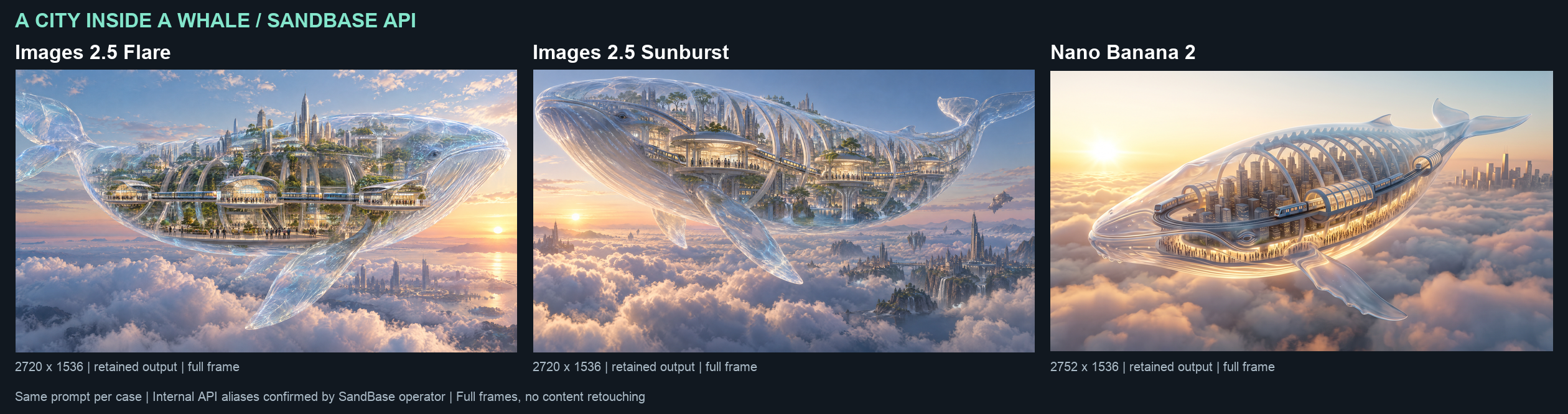 The same text-only prompt produced these three complete frames. The comparison layout does not crop away buildings or external scenery that depart from the brief.
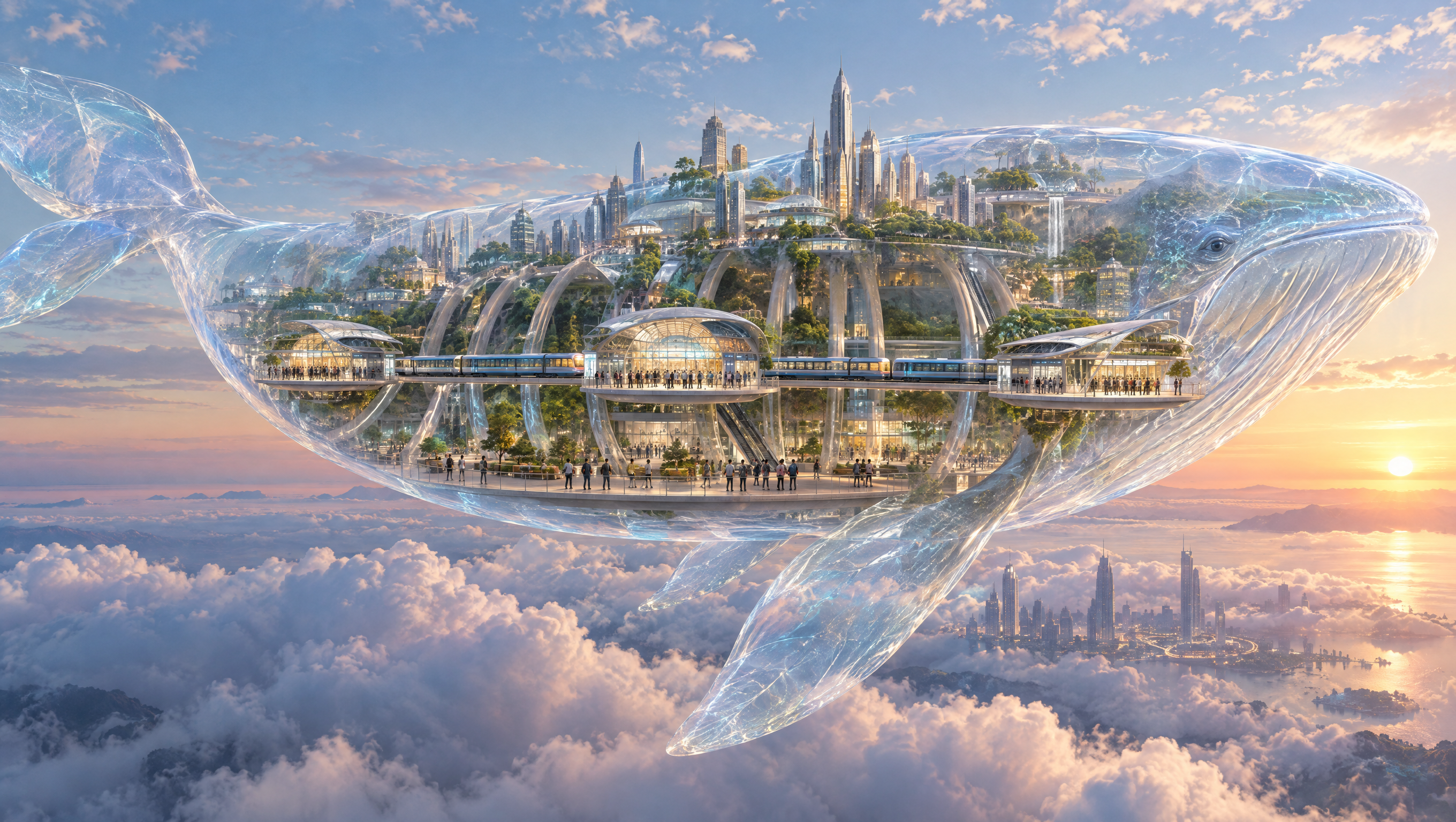
Flare shows three prominent station structures along the belly. The horizontal railway makes the commute easy to read, but tall buildings rise above the whale’s back. If the brief requires the entire city to fit inside the animal, those towers need another pass.
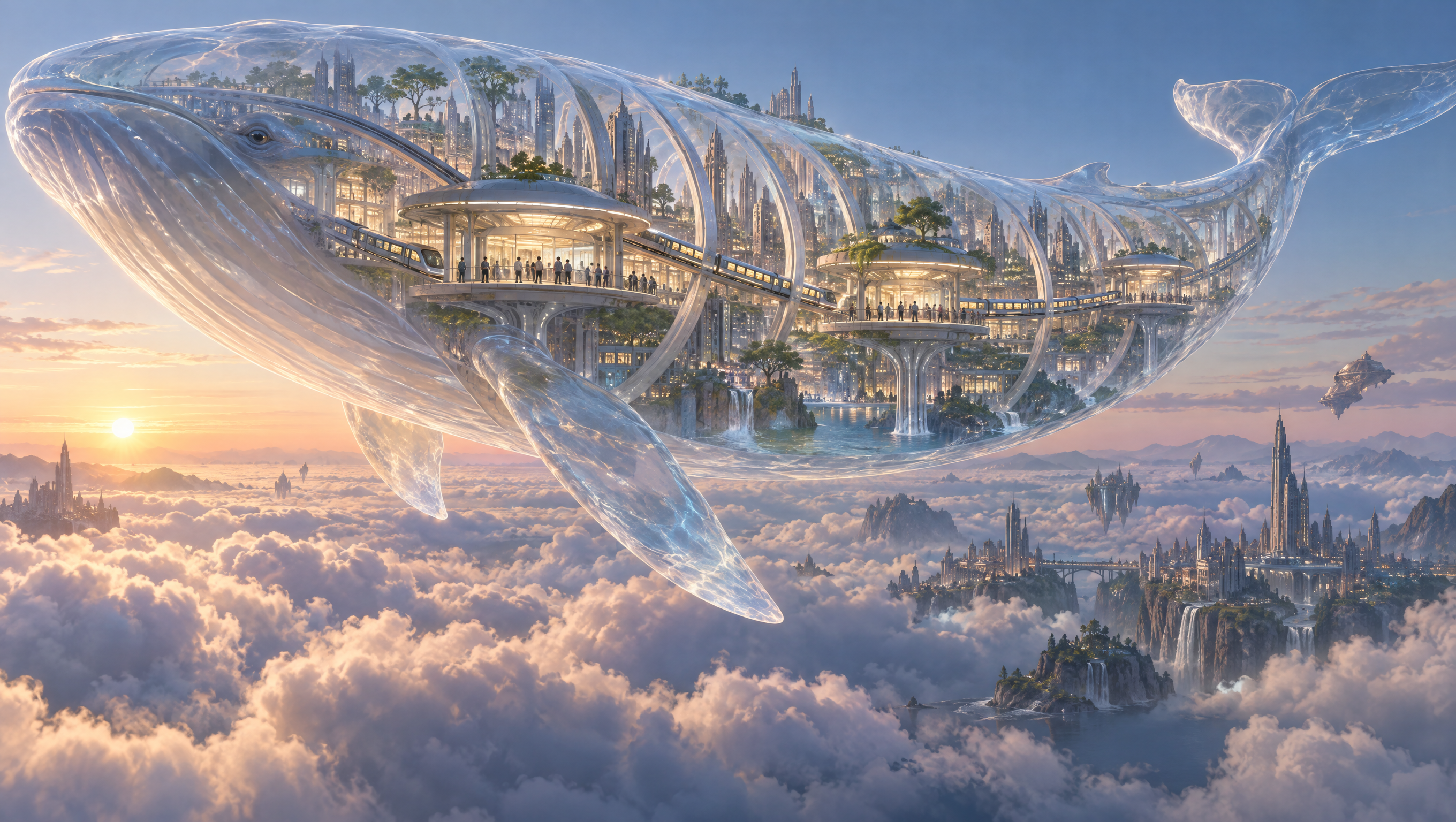
Sunburst reverses the whale’s direction and places substantial station architecture within its body. It also adds a large city outside, among the clouds below. That expands the imagined world, but it introduces a second location the prompt did not ask for. A storyboard could use it; a strict internal-city illustration might not.
Nano Banana 2 turns the whale into a more exposed, ribbed structure and takes an angled view. The curving track draws attention toward the front of the animal, with people visible along its lower platform. The approach is useful for an establishing shot, but it departs from the requested side view; three separate main stations are also less immediately legible than in Flare’s arrangement.
This is where visual preference and instruction-following separate. A dramatic angle can improve a poster while making an explanatory diagram worse. None of the three deserves a blanket “followed every detail” label, and this sample does not establish consistent scale at every point in the city.
Original files: Flare, Sunburst, Nano Banana 2.
3. A black hole goes to therapy: who stays professional?
The joke is supplied in the prompt, so the models should be judged on staging it, not on inventing it:
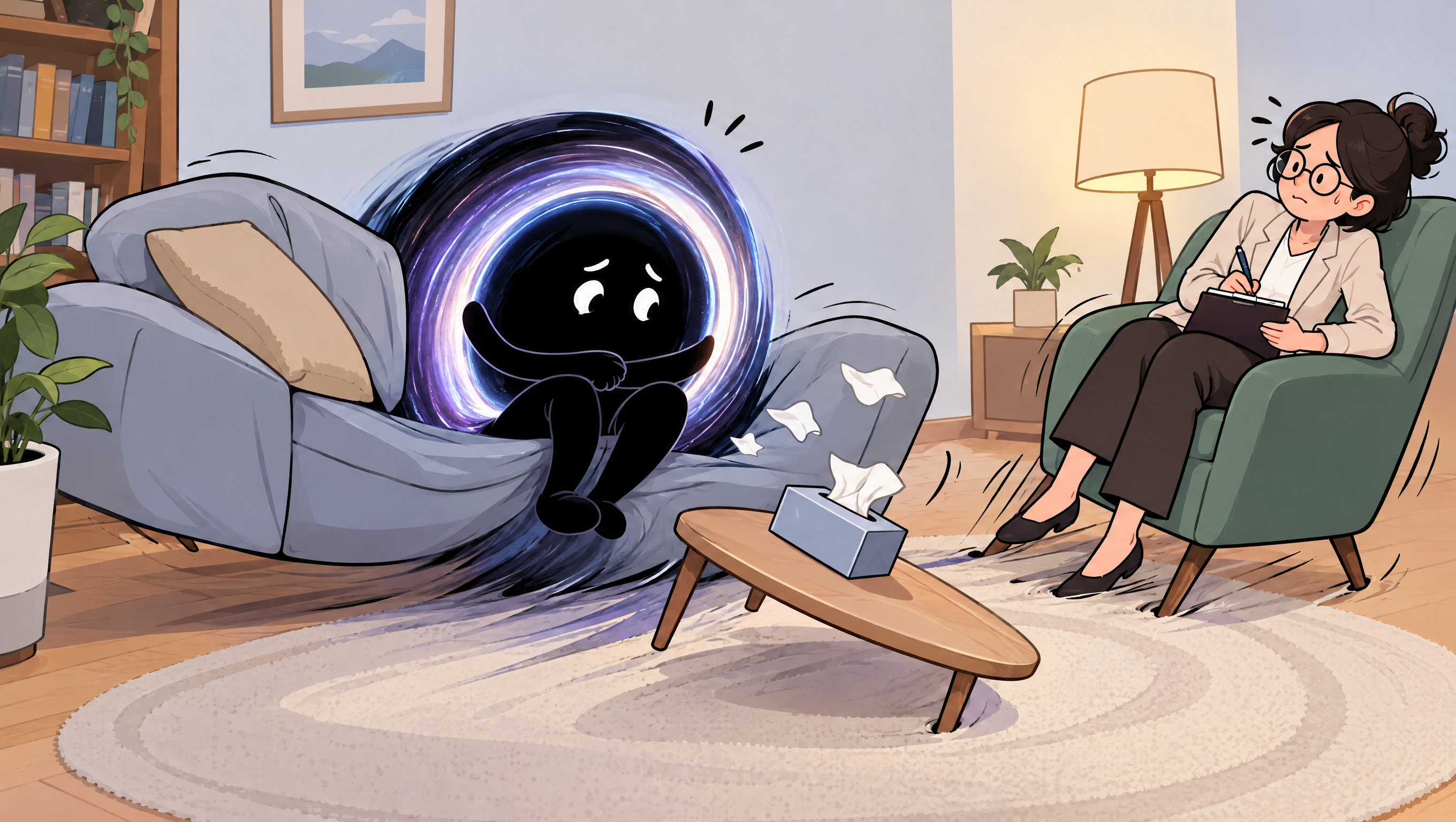
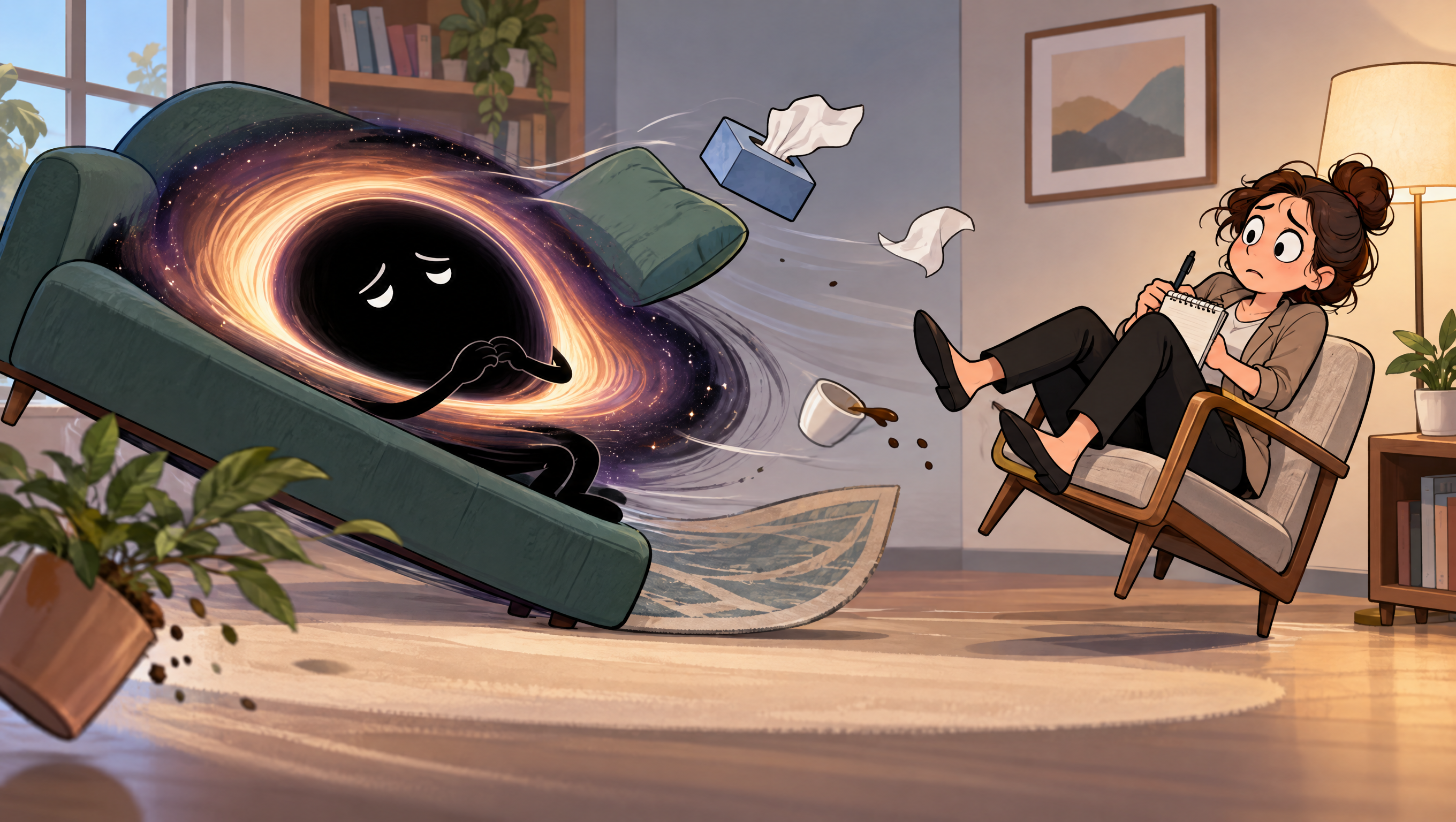
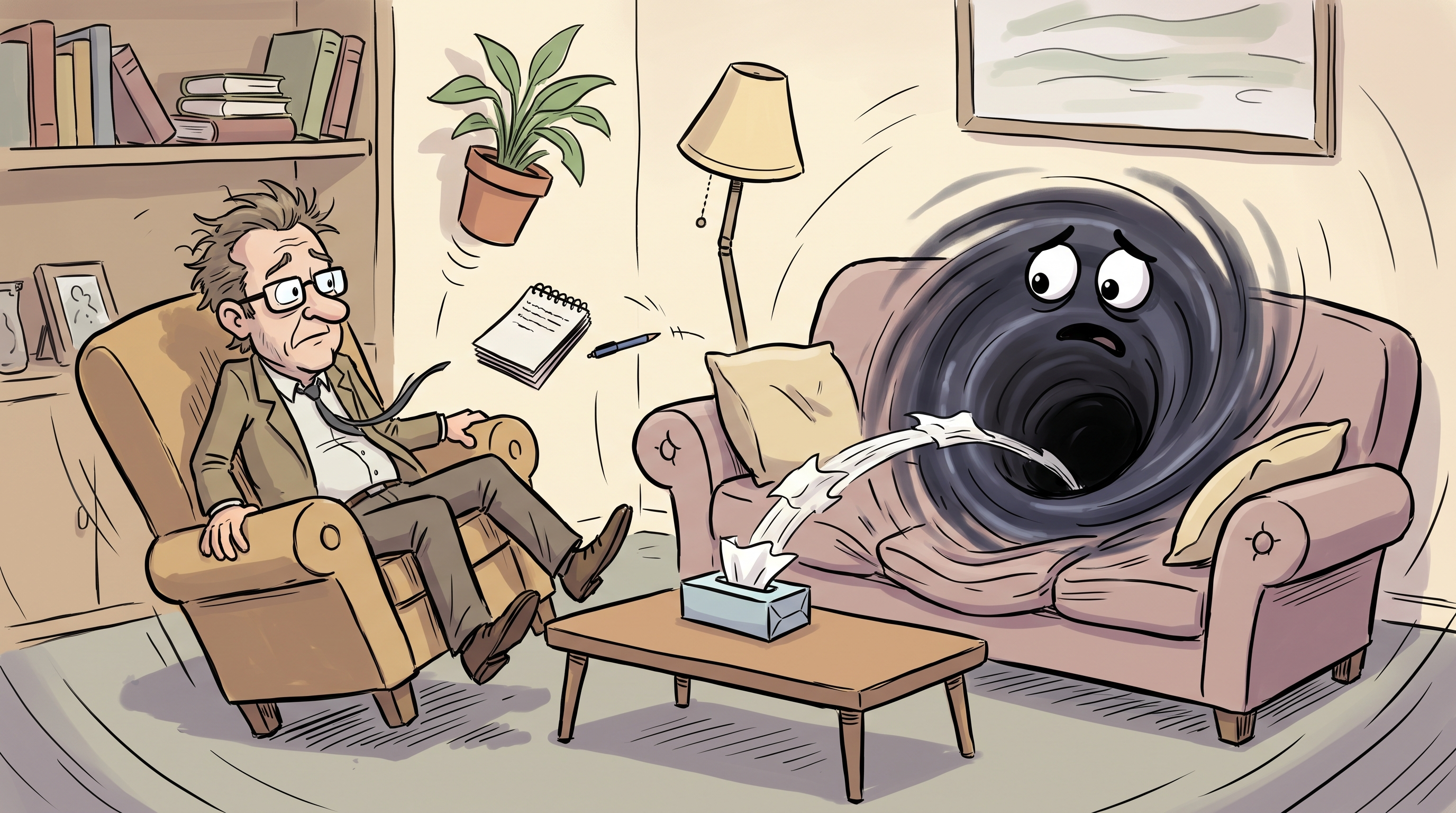
请直接生成一张图片,横向 16:9。单幅无字漫画:一个黑洞来做心理咨询,因为它总把所有事情往自己身上揽。咨询师努力保持专业,但沙发垫、纸巾和自己的椅子都在慢慢滑向黑洞。用人物动作与物体关系表现幽默,画面简洁、轻松而荒诞。不要对话框,不要文字、字母或数字,不要附加解释。The intended contrast is a therapist trying to remain professional while the room slides toward a patient who literally takes everything upon itself.
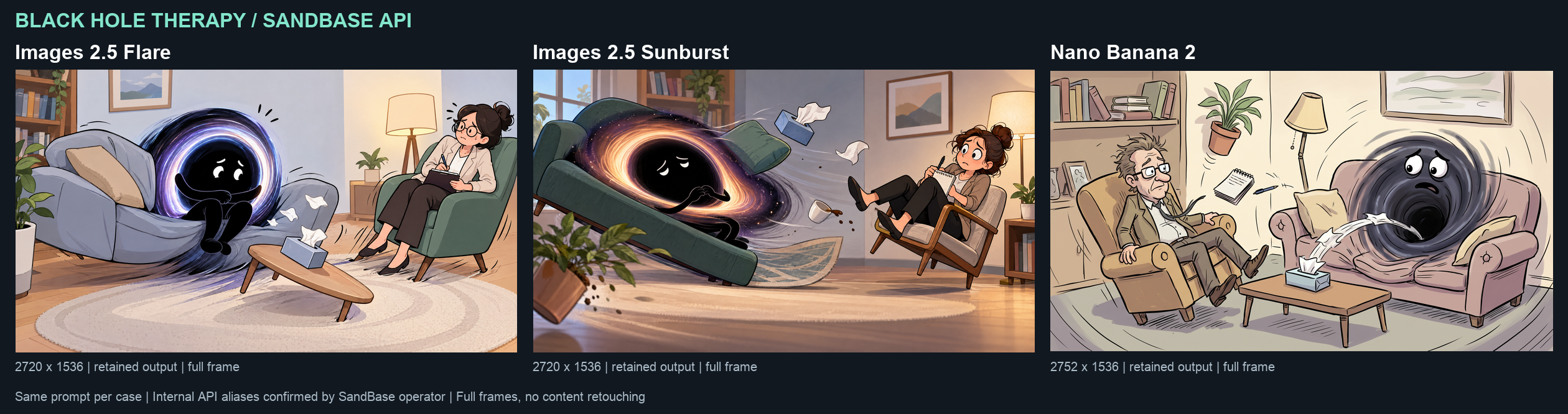 Flare, Sunburst and Nano Banana 2, left to right. Compare the therapist’s reaction, the furniture and the direction of movement—not a claimed humor score.
Flare gives the black hole a worried face and bends the couch around it. Tissues move toward the patient while the therapist remains seated with a notebook. The therapist looks concerned, not completely untroubled, but the scene retains more professional composure than Sunburst’s output.
Sunburst makes the pull theatrical: cushions are airborne, the chair tilts and the therapist’s feet rise off the floor. The action is immediately readable. It also pushes beyond “slowly slide,” turning a quiet professional predicament into a room being pulled apart.
Nano Banana 2 uses loose outlines, muted colors and motion lines. Tissues stream into the black hole, while the therapist leans back with a wide-eyed expression. It reads as a conventional single-panel cartoon. That clarity is useful, although the therapist’s alarm weakens the requested deadpan contrast.
If the joke depends on restraint, start from Flare’s sample. If the scene should announce chaos at a glance, Sunburst provides more of it. If the intended publication uses sketch-like cartoons, Nano Banana 2 is the closer visual fit in this set. A preference for one does not make the other two failures at humor.
Original files: Flare, Sunburst, Nano Banana 2.
4. One shared reference, two requested changes
The editing test does not feed each model its own whale result. All three receive this older ChatGPT-generated image, so differences do not start with three different compositions:
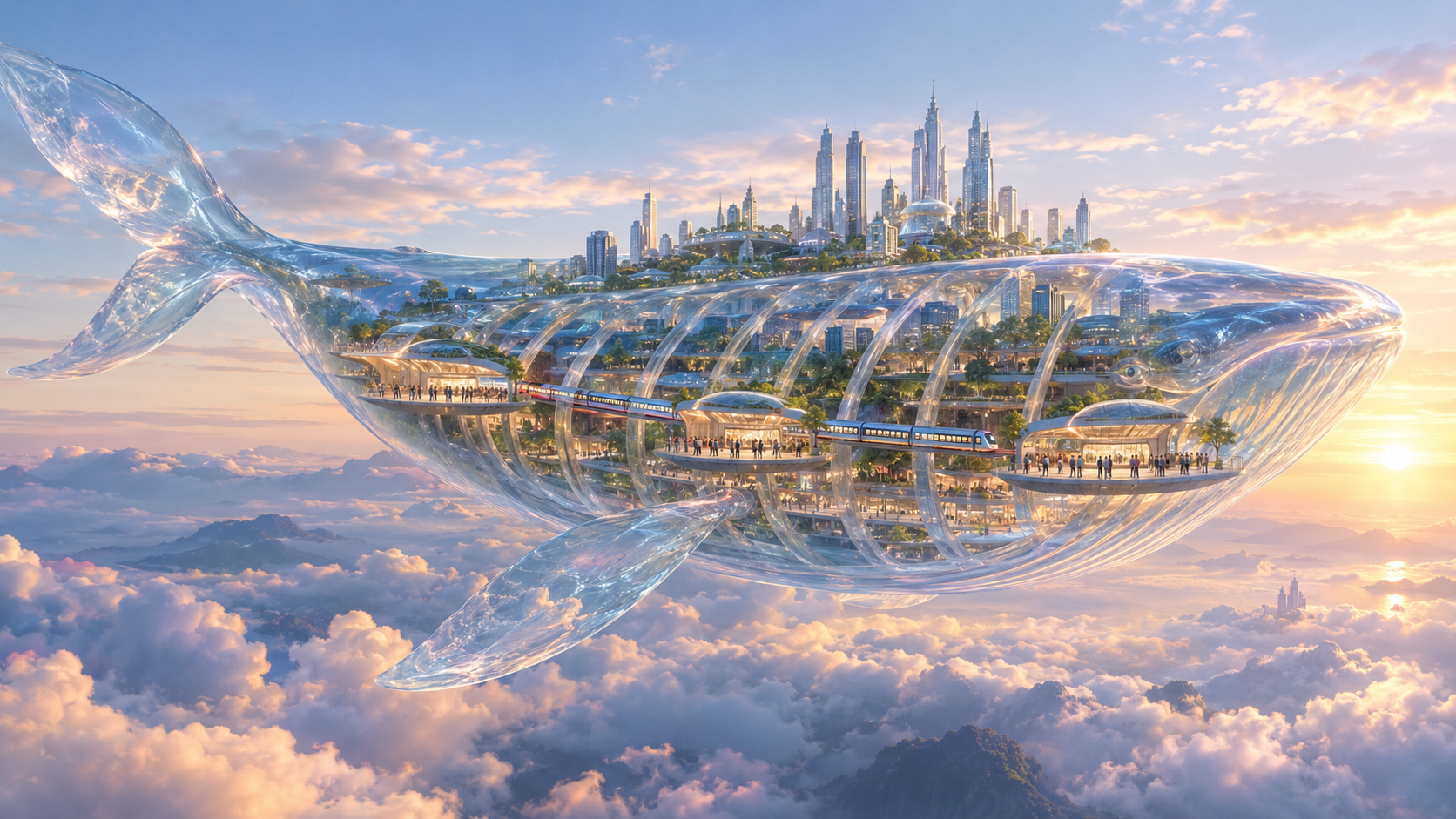 Common reference, 1672 × 941. This is an earlier ChatGPT-generated picture, not a neutral-source reference set or an output from the three API runs above.
编辑给定参考图,输出横向 16:9。只把鲸鱼腹部从左往右数第二个主要车站的顶棚改成鲜红色,并在这个站台上增加一位撑黄色雨伞的乘客。其余全部保持不变:鲸鱼轮廓、城市建筑、列车和轨道、其他站台、已有居民、清晨光线与镜头位置。不增加文字、字母、数字或标志。不要重新设计整个场景。The requested changes are a red roof on the second main station from the left and one passenger with a yellow umbrella. Everything else should remain unchanged.
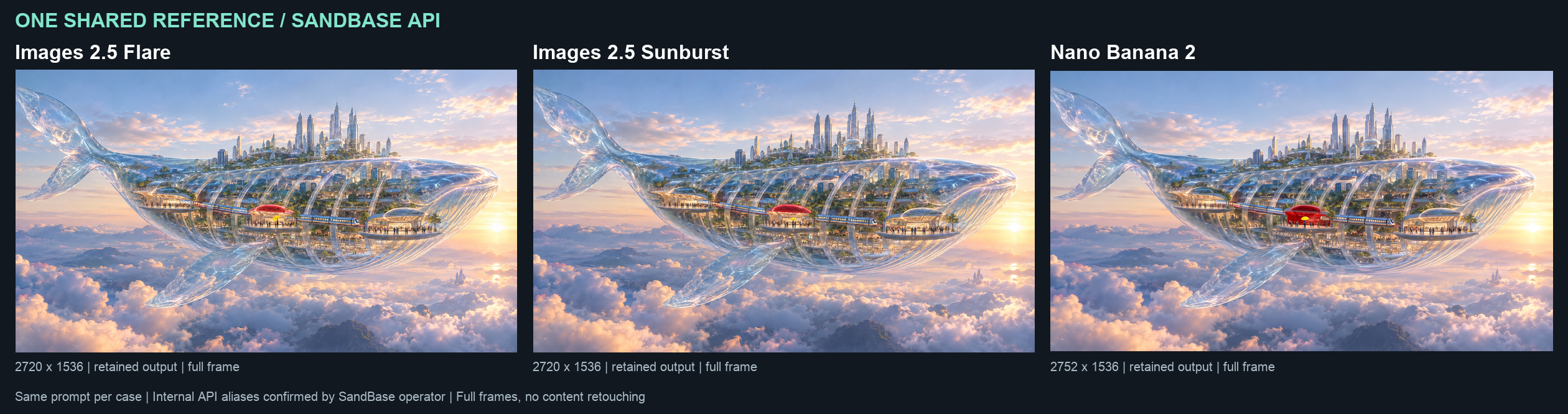 Complete edited frames. All received the same reference bytes and Chinese instruction; no mask or manual cleanup was added.
At full-frame viewing size, all three preserve the broad composition and make the central red station visible. The more useful distinction appears in the detail crop:
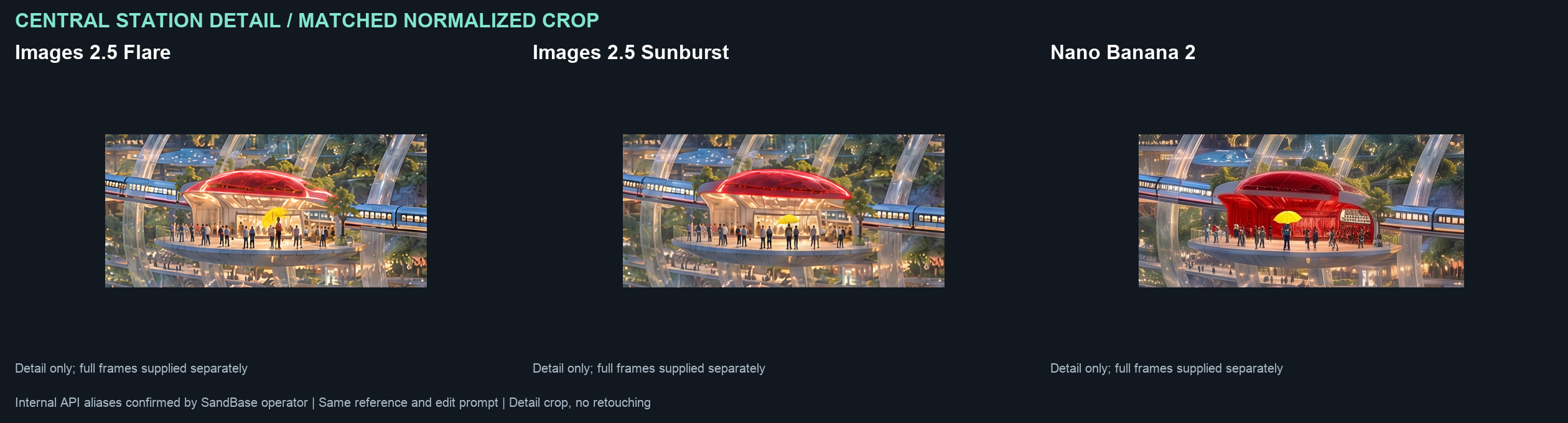 Detail only: the same normalized region was cropped from each output, without upscaling or retouching. The complete frames above remain the reference for changes elsewhere.
Flare and Sunburst leave much of the station’s glass façade light while changing the roof. Their yellow umbrellas differ in shape and placement. Nano Banana 2 makes a prominent yellow umbrella but also fills much of the station front with red. That exceeds a roof-only color change, even if the result looks deliberate.
For an artist with an approved background, that excess matters: repairing the façade becomes another task. Flare and Sunburst are the closer starting points for this particular instruction. Neither is proven pixel-preserving, and one edit cannot establish which model keeps a character or location consistent over ten revisions.
Original edits: Flare, Sunburst, Nano Banana 2.
Which sample is useful for your next piece?
| Your immediate task | Starting point suggested by these samples | Check before using it |
|---|---|---|
| Illustrate pressure before the working week | Flare Sunday scene | Whether the explicit commuters are too literal for your story |
| Build an ambiguous dream sequence | Sunburst Sunday scene | Whether a viewer can infer the emotion you intended |
| Develop a loose, drawn editorial style | Nano Banana 2 Sunday or therapy scene | Whether the exaggerated reaction changes your meaning |
| Explain a whale city’s commute | Flare whale scene | Towers outside the body and the requested scale |
| Change only an approved station roof | Flare or Sunburst shared edit | Unrequested changes outside the highlighted crop |
The lower billed cost of Nano Banana 2 in this run is relevant for sketch exploration, but a cheaper image is not automatically a cheaper finished illustration. If a local color edit changes the façade too, the next repair consumes time and possibly another generation. This experiment does not measure that downstream cost.
The billing total is four Flare outputs at $0.20, four Sunburst at $0.20 and four Nano Banana 2 at $0.10: $2.00 for the comparison outputs, excluding the separate editorial cover. There were no aesthetic rerolls. One Flare black-hole request timed out; its ledger entry later showed a failed job costing $0, followed by one successful transport retry. Two earlier MCP connection failures returned no task IDs, and the covering billing history showed no corresponding generated jobs. “Retained output” is therefore more accurate than “every first submission succeeded.”
Client request times include network transport and polling, so they are not a pure inference-speed benchmark. There was also no blind reader panel, repeated sampling, typography test, search-grounded generation or multi-step edit sequence. A follow-up test should repeat the actual assignment you care about, not merely repeat the prettiest example.
For the two Images 2.5 variants specifically, see the separate Flare vs Sunburst comparison. To inspect the tested providers’ catalog entries, use SandBase’s OpenAI catalog and Google catalog. Google’s official image-generation guide explains Nano Banana model naming and controls; the pictures here support only the narrower observations above.
The practical choice is a model-and-task pairing, not a permanent winner. Pick the result whose deviations you can accept, then test the revision that your real project will require.