GPT-6 Astra: Plus Usage Limits and Real API Costs
Why does GPT-6 Astra use up Plus limits so quickly? Compare official allowances, Fast mode, creator reports, and actual API charges from three game generations.
A website that separates human anatomy into 2,234 modeled pieces. A coding session that reportedly exhausts a five-hour allowance in 15 minutes. Both stories are circulating around GPT-6 Astra, and neither makes the other impossible.
For a developer building interactive websites or 3D prototypes, the second story matters almost as much as the first. A convincing first version gets a project started. Then come the changed interactions, missing content, mobile layout problems, and requests for better graphics. The practical question is whether enough allowance remains to make those revisions.
Key takeaway
- Impressive Astra projects and frustrating usage limits can coexist. Task scope, plan, and execution mode matter more than elapsed minutes alone.
- As checked on September 8, OpenAI estimates 5–45 Astra local messages per five-hour period on Plus. This is neither a fixed message cap nor five hours of guaranteed continuous work.
- Three independent game generations in our September 7 test cost $0.37330–$0.45315 each through SandBase’s API. Those charges describe that task, not how many projects a ChatGPT subscription can complete.
The first version is no longer the only question
On September 5, @ashebytes shared an anatomy website described as separating into 2,234 modeled pieces. Our September 8 morning sample recorded roughly 51,000 likes and 1,078 replies. Those are cumulative engagement counts at collection time, not engagement gained in one day.
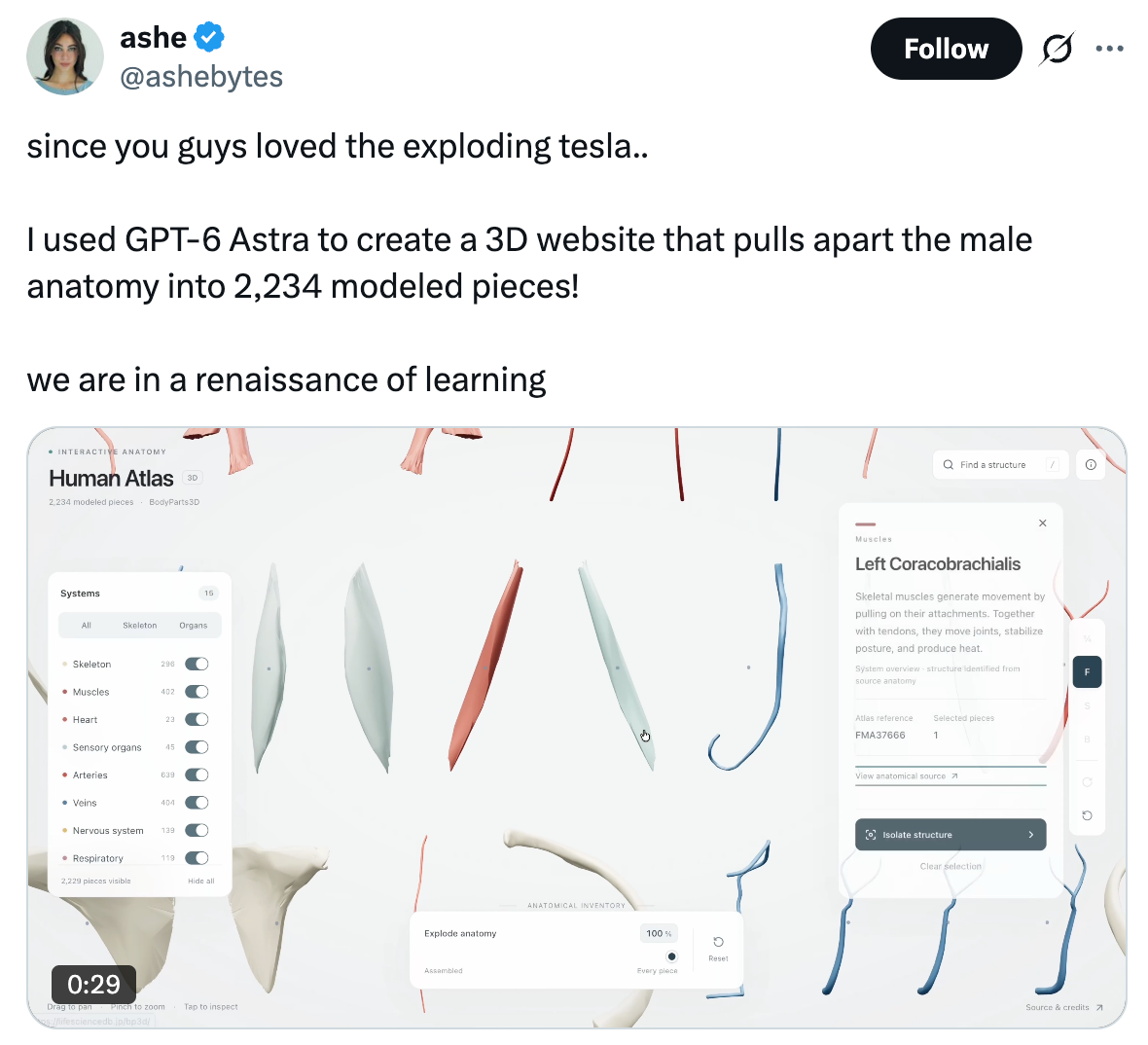 The creator describes a 3D anatomy website that separates into 2,234 modeled pieces.
Another creator posted an interactive history of Earth and human civilization to r/vibecoding. The title reported a build time of about 30 minutes. The attraction is easy to understand: an idea that would normally involve collecting material, arranging a timeline, and implementing interactions becomes something its author can demonstrate.
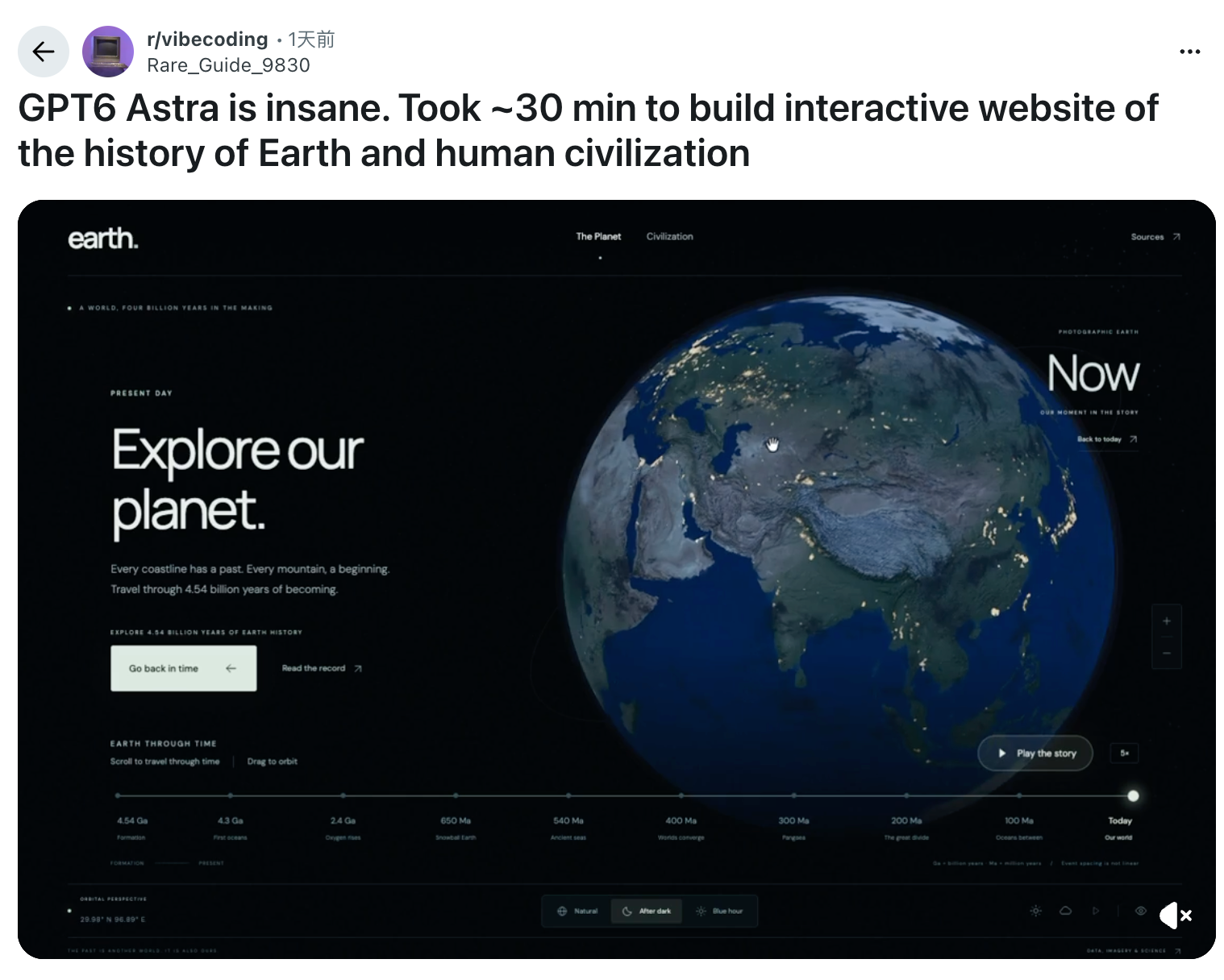 Drag the timeline to explore the history of Earth and human civilization.
A demonstration rarely tells the whole story after that point. Were there five rounds of changes? Did a separate image model create the assets? Were the historical claims checked individually? A creator’s reported build time does not automatically include that work.
The better these prototypes become, the more natural the next request feels. Add geological periods to the timeline. Make each organ clickable. Improve the small-screen layout. These are not unreasonable demands. They are what happens when an experiment starts to look worth finishing. They also create more work for the model than the original demo reveals.
The 15-minute complaint came from a Plus subscriber
The details of the quota complaint matter. In a September 6 post titled “GPT-6 Astra usage”, RufflesOriginal said they had been using GPT-5.6 Sol on high and medium for an existing Codex project. After gaining access to Astra, they tried medium and reported exhausting the five-hour allowance in 15 minutes, followed by the weekly allowance roughly another half-hour later. They said two resets still did not get the task finished.
Although the post appears in r/ChatGPTPro, its opening states: “I’m on the plus plan.” Calling this a Pro subscriber’s experience would confuse the community’s name with the author’s actual subscription.
The post does not provide a complete task description, starting allowance, or request-by-request usage record. It cannot establish how long everyone else’s allocation will last. It does, however, describe a frustrating situation that OpenAI’s own documentation helps explain.
The official pricing page says model choice, context, reasoning, tools, retrieval, and caching all affect usage. Larger projects and extended sessions can consume considerably more allowance per message than a small script. Prompt length alone is not a dependable estimate.
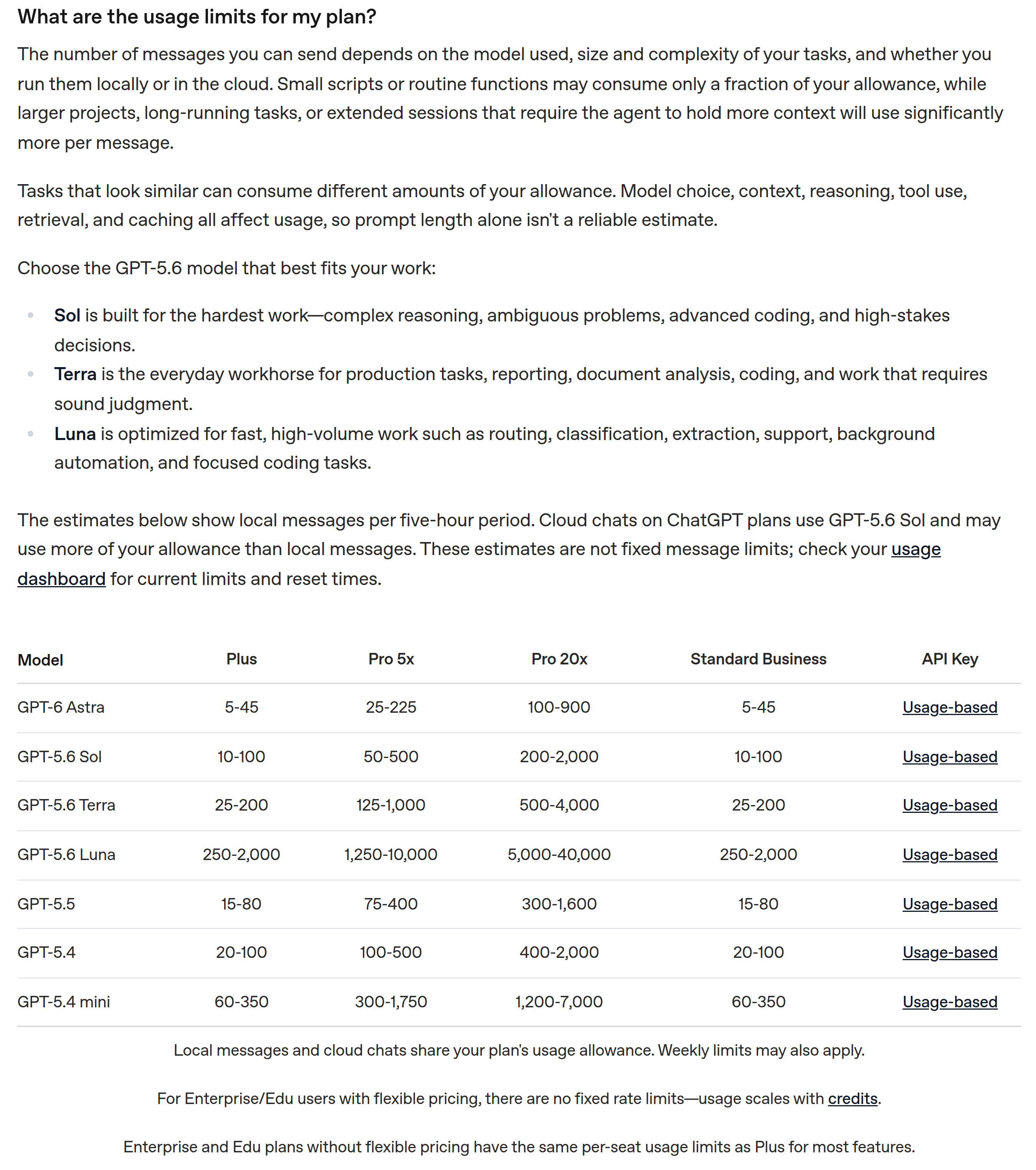 The estimates are 5–45 local messages for Plus, 25–225 for Pro 5x, and 100–900 for Pro 20x per five-hour period. They are not fixed message limits; weekly limits may also apply.
Five hours is the period over which usage is measured, not five hours of purchased runtime. A single “keep improving this” message can lead to file reads, code changes, checks, and inspection of the results. One visible message is not necessarily one short model operation.
OpenAI also says local messages and cloud chats share the plan’s allowance. Switching surfaces does not create a fresh pool. For planning another coding session, the account’s current remaining allowance and reset time are more useful than another person’s message count.
What our sub-dollar game actually cost
Our GPT-6 Astra vs Claude Fable 5.1 3D game test from September 7 gives a different kind of evidence. Astra received a bounded task: produce Aster Vault, a single-file Three.js browser game with movement, mechanisms, gated doors, a win condition, and a reset. Three.js is a JavaScript library for rendering 3D graphics in a browser.
Three independent requests used identical prompts. Each first complete response was preserved without manual source repairs. All three artifacts passed 15 functional checks and a keyboard traversal through the objectives, followed by a reset. That establishes more than an attractive opening frame, although it is not a broad study of game quality.
| Independent generation | Request to complete response | Actual SandBase API charge |
|---|---|---|
| First | 151.038 seconds | $0.37330 |
| Second | 188.847 seconds | $0.45315 |
| Third | 195.404 seconds | $0.42480 |
The average for these three generations was approximately $0.417. Another Astra request in the same round was charged $0.41080, but its HTML was not preserved. Including that collection loss brings Astra spending to $1.66205, or approximately $0.554 per inspectable artifact. The missing artifact’s quality is unknown; it is neither a demonstrated success nor a demonstrated game failure.
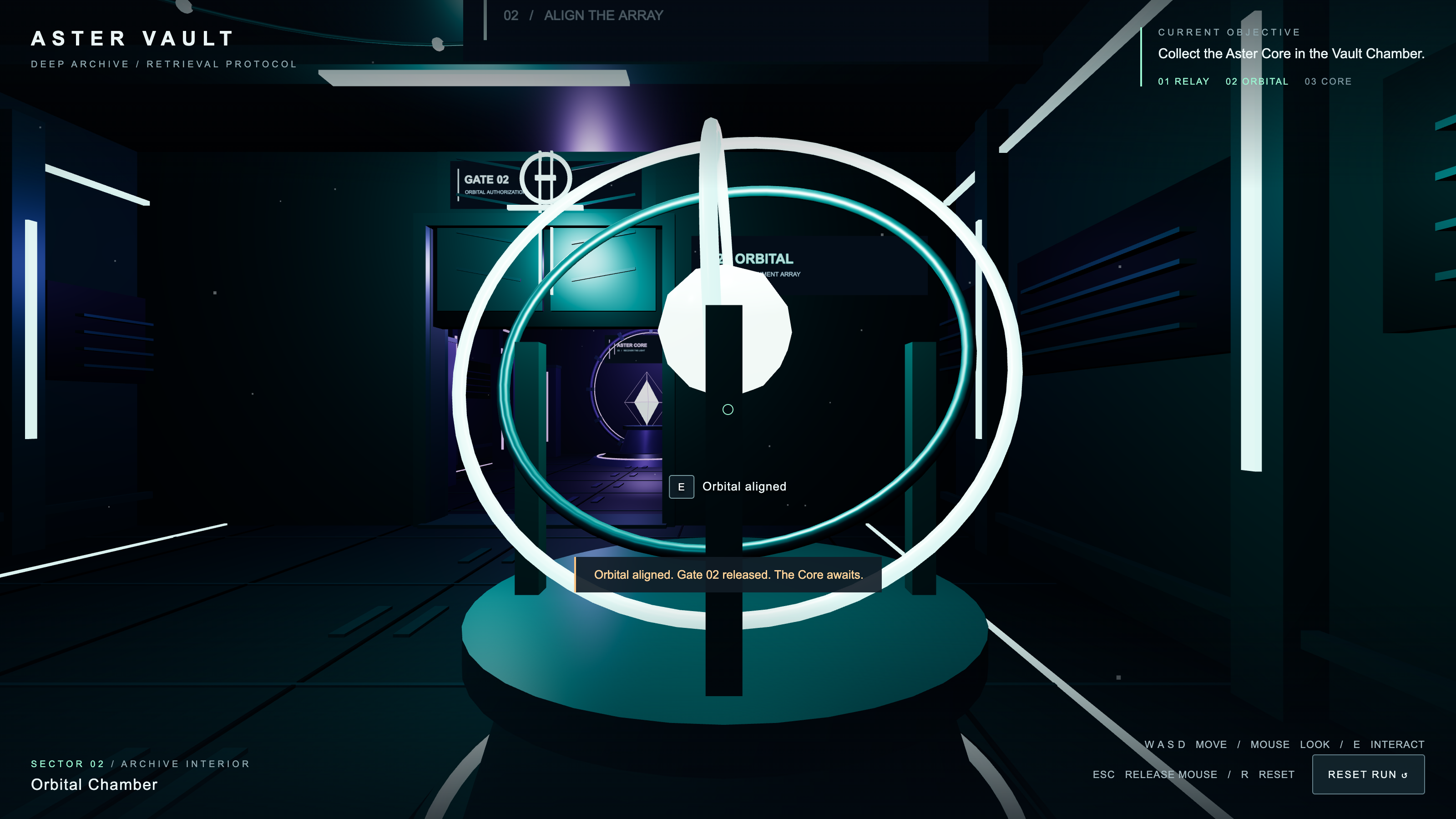 The second sample during actual play: the orbital mechanism is aligned, Gate 02 is open, and the remaining objective is to retrieve the core.
These numbers support a limited but useful conclusion: generating a playable prototype of this size can cost less than a dollar. They do not price an entire development project. The timing measures the generation request through receipt of its complete response, not all subsequent work. The charges exclude local checking labor, the execution environment, later revisions, and deployment. This test did not measure ChatGPT subscription consumption or run a separate image-generation workflow.
That distinction resolves the apparent contradiction. We asked for a small, defined deliverable. The Reddit author was working in an existing project. A low charge for our task does not disprove their experience, and their experience does not establish a high cost for every API request.
It also explains why an API bill cannot be translated into a subscription percentage. The API records a monetary charge for a particular request. A subscription allowance has its own rules and shared consumption. Without measuring both under the same conditions, “this game cost forty cents” cannot tell someone how much Plus allowance it would have used.
Record the cost of your own next revision
For the same model, start with the GPT-6 Astra model page on SandBase, which lists openai/gpt-6-astra. Check its current price and access details before sending a request; the September 7 charges above are historical receipts, not today’s fixed price per game. The billing guide, checked on September 8, explains where to find the recorded charges.
For a small evaluation, keep one row per request: date, model, exact prompt, reasoning setting, returned usage, response ID, saved output filename, and final charge. When an operation returns a task ID, its cost lookup is final only when settled is true; an estimate is not a receipt. Use Console → Activities → Usage billing records to reconcile spending, including charged requests whose output was lost.
As a planning example, give an evaluation a $5 budget and reserve $2 for revisions after the first playable version. This is your spending rule, not a platform cap: check the actual total before each new request and use any spending controls available to your organization. A request already in progress may still incur charges. Divide total spending by the number of saved, checked artifacts—not by the number of attractive screenshots. The task summary and game checks remain in the comparison article linked above.
Better graphics and faster responses have their own costs
OpenAI’s current Astra standard credit rates are 250 credits per million input tokens, 25 per million cached input tokens, and 1,250 per million output tokens. Tokens measure the information the model reads and produces. Credits are the billing units for the relevant product. The number 250 in this table is not a dollar price.
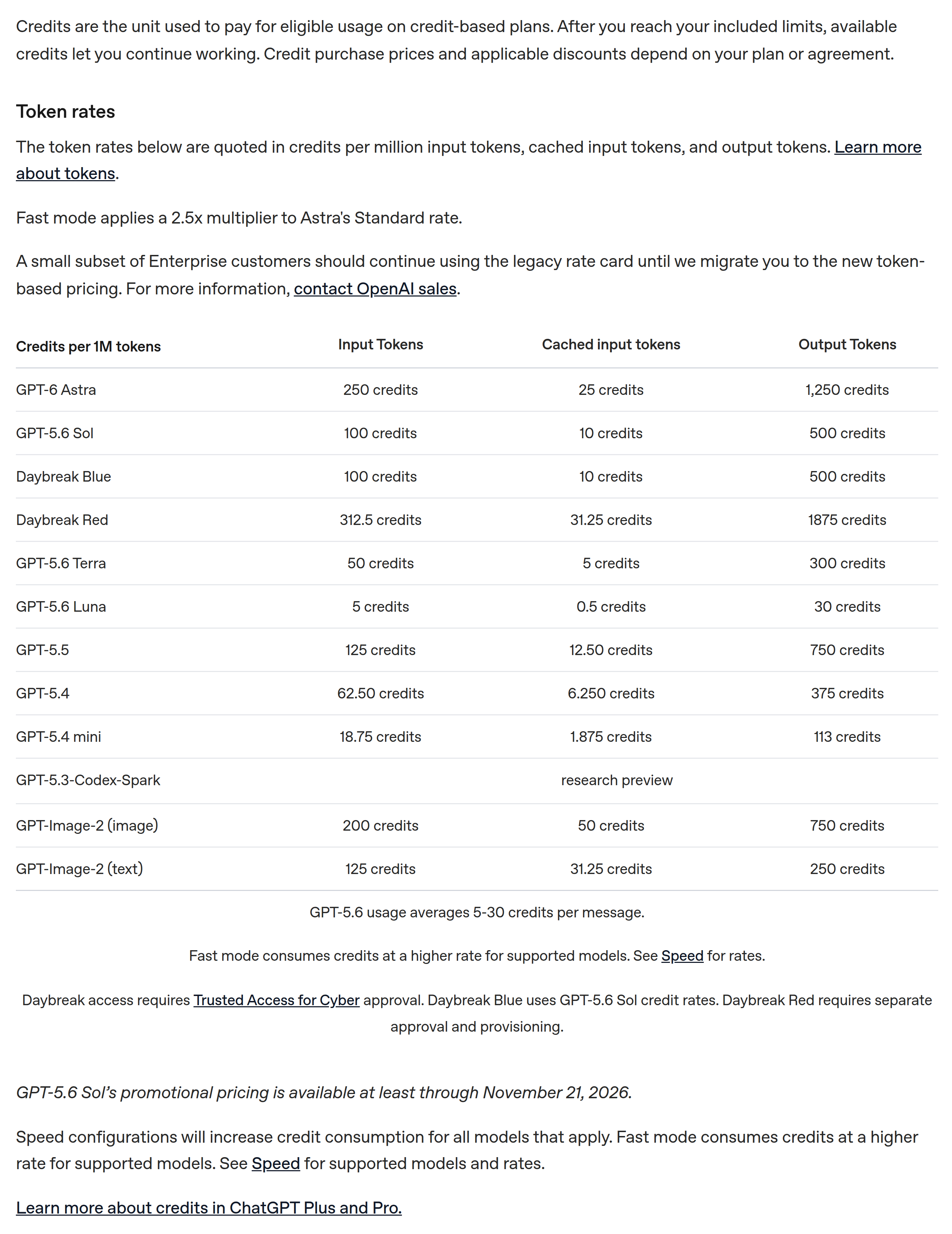 The rate card uses credits per million tokens and specifies a 2.5× multiplier for Astra Fast mode over its standard rate.
Two details on that page are especially relevant to visual prototypes. Astra Fast mode uses a 2.5× credit-rate multiplier. Image-generation turns also consume included allowance around 3–5× faster on average than similar turns without image generation, depending on image size and quality.
This does not mean every polished demo used generated images. It means a coding task and a coding task that also produces a set of textures should not be budgeted as identical work. In @anshuc’s game demonstration, the creator explicitly credited image generation for the graphics. The same post reported a 45-minute task using only a couple of percentage points of their quota. Without a matched plan and workload, that percentage cannot be compared directly with the Plus complaint.
For a developer, the sensible place to preserve room is often the next necessary revision. Make the door open correctly and the reset restore the game before commissioning high-resolution textures. Changing the visual direction repeatedly while the mechanics remain broken spends budget on assets that may be discarded. The potential saving comes from avoiding rework, not from a special prompt that makes equivalent computation free.
The same reasoning applies to a timeline website. Correct dates and usable navigation determine whether the prototype can become a useful product. A more elaborate background does not resolve either. The point is not to deny the value of graphics, but to distinguish the work needed for a usable second version from the work needed for a more impressive video.
The revisions will decide whether Astra becomes a daily tool
Someone making a few small prototypes each week may care more about first-pass completion than message volume. Someone repeatedly modifying an established project throughout the day may care just as much about when the allowance resets. Those developers can reasonably reach different conclusions about the same model.
Moving to the API makes spending easier to record request by request, but it does not make work unlimited or free. Rate limits and available funds still matter, and the API-key route does not necessarily include every feature offered through a subscription surface. OpenAI’s option to continue local work with an API key is not a promise that the monthly ChatGPT subscription covers those API charges.
The viral projects make Astra worth trying seriously. Whether it stays in a developer’s daily workflow depends on what happens after the first impressive result: how many revisions remain, how much each revision improves the project, and what the finished work costs. A useful model needs to leave room for version two and version three, not just a shareable version one.
For a closer look at the tasks behind the spending, see Astra’s multimodal and spatial reasoning tests: a 14% maze score, a printed Fusion 360 part and interactive molecular demonstrations, with the limits of each result explained.
FAQ
Does Plus’s 5–45 estimate mean 5–45 projects?
No. It is an estimate of local messages per five-hour period. One project can involve many messages, and a complex message can consume more allowance. Check the account’s usage dashboard for current remaining limits and reset times.
Is the approximately $0.417 figure an OpenAI subscription charge?
No. It is the average actual SandBase API charge for three September 7 game generations. Including one additional request whose output was not preserved brings the Astra total to $1.66205. Neither number establishes a subscription quota percentage.
Will switching off Fast mode solve quota problems?
Not necessarily. Its documented multiplier affects charging, but scope, context, reasoning, and tools also affect consumption. Standard mode is not a guarantee of completing a particular number of tasks.
Does an active task immediately stop when the limit is reached?
The official documentation checked on September 8 says an active turn can continue after reaching a limit, subject to fair-use limits. That does not grant unlimited subsequent turns. Further work may require a reset, additional credits, or separately billed API usage.